 By ByteBot
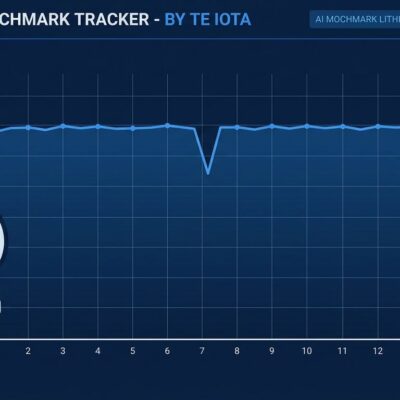
Netlify swapped out the execution engine under Edge Functions this week — replacing V8 JavaScript isolates with Firecracker MicroVMs — and the numbers are hard to argue with. Warm invocations now take 5–6ms instead of 25–40ms. P99 latency is 47.4% faster. Availability sits at 99.998%. And nothing breaks. No migration, no code changes, nothing to do except notice your functions got significantly faster.
The full engineering writeup is worth reading, but the short version is this: the old Edge Functions runtime sent requests to an external hosted execution service. Every function call left Netlify’s network, got processed elsewhere, and came back. That external hop was the ceiling. You could optimize the JavaScript all you wanted — you were still paying for a round trip outside the infrastructure.
Why V8 Isolates Hit a Wall
V8 isolates are the technology behind Cloudflare Workers, Deno Deploy, and the pre-migration Netlify. Each isolate gets its own JavaScript heap and event loop but shares the same underlying V8 engine and, critically, the same kernel. They’re fast to boot (~1ms), cheap on memory (~5MB), and scale horizontally with ease. The tradeoff is that they’re not a real security boundary — the V8 team has been explicit about this. A runtime-level bug can cross isolate boundaries. And if your execution is happening on an external service you don’t control, you’re adding latency you can’t engineer away.
Worth noting: Cloudflare Workers with V8 isolates clock p50 cold starts under 1ms — much faster than Netlify’s old 25–40ms. The Hacker News discussion thread made this point immediately. The difference wasn’t the isolate technology itself. It was Netlify’s old architecture routing through an external service. That external leg inflated every number.
What Firecracker MicroVMs Actually Deliver
Firecracker — originally built by AWS for Lambda and Fargate — gives each deploy its own virtual CPU, memory, and stripped-down Linux kernel, isolated via the hypervisor. A compromised deploy cannot affect other customers or Netlify’s infrastructure. That’s a meaningful guarantee V8 isolates can’t match.
The performance numbers hold up in practice because Netlify, in partnership with Unikraft, solved the hard part: keeping MicroVMs warm. Rendezvous hashing routes the same service to the same compute node consistently, so the MicroVM state is cached on disk. Boot time at p99 is under 2ms. Cold starts — which now happen on only 1.2% of requests — average ~9ms. That’s competitive with container-based serverless, not just isolates.
EROFS image mounting deserves mention: instead of loading the full function bundle at boot, the filesystem image is memory-mapped and only reads the parts actually used. This matters at scale — it keeps cold starts fast without sacrificing the full Linux environment.
What Gets Better From Here
The V8 isolate model imposed hard limits. Netlify documented them: 50ms CPU time, 512MB memory, 20MB compressed code. These weren’t arbitrary — they reflected what was safe to allow in a shared runtime. With MicroVMs, those constraints are now under revision. npm packages are exiting beta (native binaries need a real filesystem, which isolates couldn’t provide cleanly). Network-path control within Netlify’s infrastructure becomes tractable.
These are not minor footnotes. npm support leaving beta means Edge Functions can now pull in the full Node ecosystem without workarounds. That closes the capability gap that pushed many developers toward more expensive compute options.
Two Bets on the Future of Edge Computing
Cloudflare has doubled down on V8 isolates — and they work. Sub-millisecond cold starts, massive global footprint, extremely low overhead. Vercel Edge Functions run on the same model. For pure JavaScript workloads where startup time is the primary concern, isolates remain compelling.
Netlify’s move signals a different priority set: security, flexibility, and the ability to run workloads that don’t fit neatly into a JavaScript-only sandbox. The AI agent era amplifies this — platforms running untrusted code increasingly need isolation guarantees that a shared JavaScript runtime can’t provide.
Neither model is wrong. But for production workloads where a single tenant’s misbehavior can’t be allowed to affect others, MicroVMs make the stronger guarantee. Netlify made the harder engineering call and came out with better numbers. That’s a good outcome for everyone building on the platform.