 By ByteBot
Claude Opus 5.5 launched eight days ago with Anthropic’s best agentic coding benchmarks to date. By day two, the complaints were already hitting Hacker News: it got nerfed. Shorter outputs, more refusals, a model that suddenly seemed cautious where it used to be direct. Now a tool called LiveNerf just hit the front page with 656 upvotes — and it’s the first attempt to settle this debate with actual evidence instead of screenshots and vibes.
The Nerf Complaint Is Not New — and That’s the Problem
If you remember the Claude Code quality crisis of early 2026, this pattern will feel familiar. Between March and April, Anthropic made three silent changes to Claude Code — they reduced the default reasoning effort from high to medium, a cache bug dropped session history mid-conversation, and a system prompt briefly capped responses at 25 words between tool calls. Anthropic published a postmortem seven weeks after the first issue. Developers found out because an AMD director filed a detailed complaint analyzing 6,852 sessions.
Then there was Opus 4.6. After a quiet post-launch safety fine-tune, its accuracy on BridgeMind benchmarks fell from 83.3% to 68.3%. Anthropic acknowledged the change after the fact, without proactively notifying the developers who had already built workflows on top of it.
So when Opus 5.5 launched and users reported 18% shorter responses on technical questions alongside a 9% spike in refusals for borderline prompts, they were not being paranoid. They were pattern-matching against a documented track record. ByteIota covered the original Opus 5.5 launch — the benchmarks were legitimately impressive. The nerf debate came fast regardless.
LiveNerf: Vibes Are Over, Data Is In
That’s the gap LiveNerf is built to close. Created by ninjahawk on GitHub, the tool launched the same week as Opus 5.5 — specifically to establish a day-0 baseline before any potential degradation could muddy the picture. The README puts it plainly: “Nobody has had a clean day-0 baseline to check against, so every argument ends up as vibes versus vibes.”
The methodology is deliberately rigorous. LiveNerf draws 2,336 questions from GPQA Diamond, MMLU-Pro, competition mathematics, and AIME 2025–26, selecting specifically for questions the model answers inconsistently — those in the 30–70% pass-rate range — because those are the ones where drift shows up. Everything is frozen: the prompts, the CLI version, the graders. There are no LLM-as-judge evaluations that could themselves degrade over time. All results go into append-only raw logs.
A nerf only registers as confirmed if the 99% confidence interval excludes zero in two consecutive 10-day windows and the effect size exceeds three percentage points. Furthermore, a control arm runs Opus 5 on the same questions daily — if both models move together, the platform changed, not the model. That is a deliberately high bar. The team wants no false positives.
You can run it yourself:
pip install inspect-ai uv
git clone https://github.com/ninjahawk/livenerf
What the Early Data Actually Shows
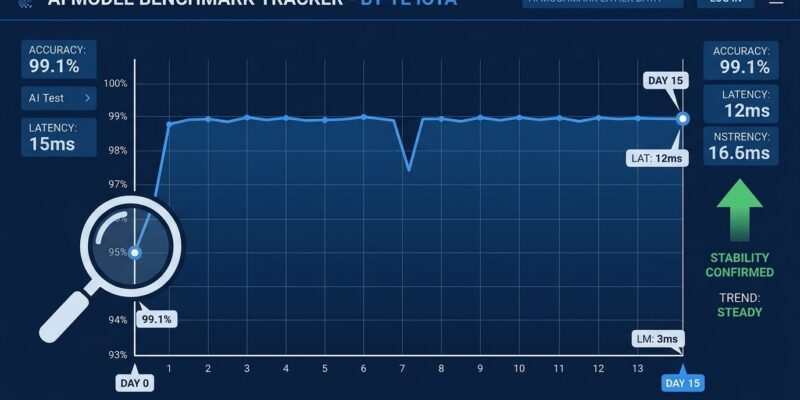
The honest answer right now: not much yet. Six of 30 days have been collected. LiveNerf is still in its baseline phase — statistical inference starts at day 10. However, a separate independent tool called NerfBench from BridgeMind has been tracking Opus 5.5 since launch. Its current reading puts Opus 5.5 at 99.2% of its launch-day capability. GPT-6 Astra scores 102.8% on the same instrument. Neither shows a degradation signal.
There are also legitimate alternative explanations for the complaints that do not require intentional nerfing. Opus 5.5 defaults to “medium” reasoning effort while Opus 5 defaulted to “high” — users comparing them without controlling for that parameter were not making a fair comparison. Anthropic’s safety classifier can automatically route some requests to an older model after reviewing context. Longer sessions accumulate stale context that can make the model appear forgetful. At least one prominent early “believer” retracted his nerf claim the same day: “opus 5.5 is not nerfed, i was wrong (or it got un-nerfed today?)”. The confusion itself is telling.
The Hacker News discussion has 261 comments and is genuinely divided. Skeptics point to the absence of any benchmark-level dip. Believers point to Anthropic’s documented history of changes without notice. Both sides, until now, were arguing from anecdote.
Whether Opus 5.5 ends up showing measurable degradation or not, the fact that LiveNerf had to be built at all says something important. Anthropic’s terms of service allow model changes without notice — that is not unusual for AI providers, but developers increasingly build production workflows on these models. As LeadDev documented after the March 2026 crisis: “When changes are not communicated, developers are left guessing whether the problem is their code, their prompt, the model, or the toolchain. That erodes trust quickly.”
LiveNerf is a community-built workaround for a structural transparency gap. It has 588 GitHub stars in under a week. Results from the 30-day study are expected around October 24 — and whatever they show, the argument about Opus 5.5 will finally have a data-driven answer instead of a screenshot war.