
 By ByteBot
Google is shipping its first Googlebook laptops on October 4 — five days from now — and ChromeOS is officially on its way out. The new hardware runs Aluminium OS, the Android-ChromeOS merger Google has been building for two years. Starting at $899 with Acer, Asus, Dell, HP, and Lenovo all making models, this is a real product launch. And unlike a Chromebook, it ships with a pKVM Linux hypervisor: a full virtual machine where you can run Claude Code, Codex, and any terminal tool your workflow needs. This week, Google also confirmed ChromeOS support ends in mid-2034 — the platform’s death certificate is now signed.
What Aluminium OS Actually Is
Aluminium OS (officially named Googlebook OS in September) is Android 17 with ChromeOS’s multi-window shell bolted on. The kernel is a standard Linux monolith. The package manager is APK. It is not ChromeOS with a new coat of paint — it is Android optimized for desktop use, running on both x86 and ARM hardware simultaneously. That last part is significant: this is the first mainline maintained x86 Android build, which matters for developer tooling compatibility.
The OS keeps ChromeOS’s best feature — Google controls OTA updates directly, quarterly, without OEM interference — while adding Android’s app ecosystem. Material 3 Expressive design, Gemini Nano on-device for contextual suggestions, and “Continue On” cross-device handoff from your Android phone all ship at launch. What it does not ship with is desktop-class first-party Google apps: Gmail and Google Calendar run as Trusted Web Activities, essentially web apps wrapped for the Play Store. That is a real regression from what power users expect, and the 9to5Google hands-on review called it a “missed opportunity.” They are right.
The Developer Case: Aluminium OS and pKVM Linux
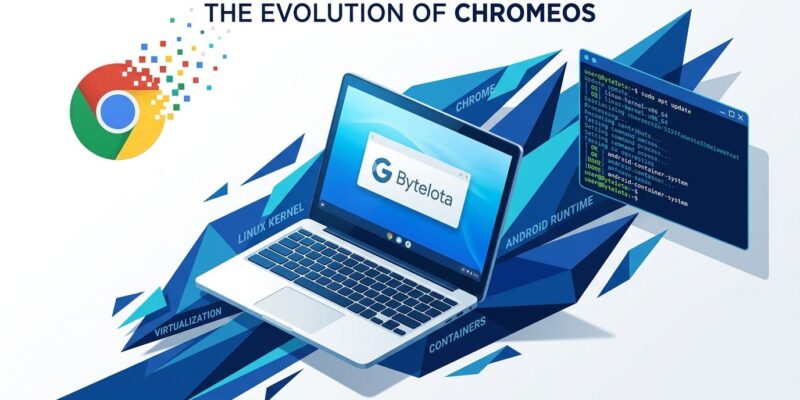
ChromeOS’s Linux story was always Crostini: a containerized environment that worked well enough but quietly broke edge cases. Googlebook OS replaces it with pKVM, a full isolated hypervisor. The difference matters. You get real network access, real file system access, and the ability to run actual AI coding agents unattended — the kind of workloads where Crostini’s sandboxing would have quietly failed.
Google’s developer documentation explicitly lists Claude Code and OpenAI’s Codex as supported tools alongside its own Antigravity 2.0 — a multi-agent coding tool running Gemini 3.5 Flash, with subagent orchestration and direct Android app deployment. However, XDA Developers ran all three tools side-by-side for a month and found Antigravity is not yet parity with Claude Code or Codex for serious work. The infrastructure is there; the tooling maturity is not.
Related: Snapdragon X2 Linux Developer Preview: What Works Now
All Googlebooks ship with 40+ TOPS NPUs — either Snapdragon X Elite or Intel Core Ultra Series 3 — with 16GB RAM as the floor. That configuration is not about Chrome tabs. It is sized for running local AI models. For developers building on-device inference into their apps, that NPU is now a deployment target worth planning around.
ChromeOS Gets an Expiration Date
Google confirmed this week that ChromeOS security updates end in mid-2034. The problem is not the date itself — it is what Google promised. In 2023, the company extended Chromebook support to 10 years per hardware platform. Devices purchased after mid-2024 carry 10-year windows that run past 2034. Google is now capping ChromeOS at mid-2034 regardless, which means some customers get 8 years instead of 10. The Register’s readers were not kind about the arithmetic.
Google says “many” existing Chromebooks will qualify for migration to Googlebook OS, but has not published which models. Enterprise management tools for Googlebook will not arrive until H2 2027, blocking schools and IT departments from migrating for at least a year. For anyone running a ChromeOS fleet, the transition timeline is vague in exactly the ways that matter for planning.
Related: Codex Cloud Gets Persistent Environments — Set Up Once, Run Forever
Key Takeaways
- Googlebooks ship October 4 starting at $899 from five OEM partners — this is a real platform with a 10-year update commitment
- pKVM Linux replaces ChromeOS’s Crostini container, giving developers a full virtual machine with documented Claude Code, Codex, and Antigravity support
- Antigravity 2.0 is Google’s native coding agent for the platform — capable, but not yet at parity with Claude Code or Codex for demanding work
- ChromeOS support ends mid-2034; enterprise management for Googlebook arrives H2 2027 — migrations are not yet viable for managed fleets
- The TWA-based first-party apps are a genuine limitation; the Linux layer compensates for developers, less so for everyone else


