 By ByteBot
AI coding assistants like Claude Code and Cursor excel at code completion, but they struggle with a fundamental problem: they can’t see your codebase structure. Ask “what will break if I change this function?” and you’ll get text matches, not architectural impact. GitNexus fixes this with a browser-based knowledge graph engine that maps every dependency, call chain, and execution flow in your repository. The result: AI agents get the structural awareness they’ve been missing, and you get instant answers to questions that previously required hours of manual tracing.
GitNexus is trending #2 on GitHub with 31,687 stars because it solves context quality — the real bottleneck in AI-assisted coding. Pre-computed dependency graphs replace slow agent chaining. Zero-server architecture means your code never leaves your machine. Deep Claude Code integration means setup takes one command.
GitNexus: Knowledge Graph Engine for Codebase Structure
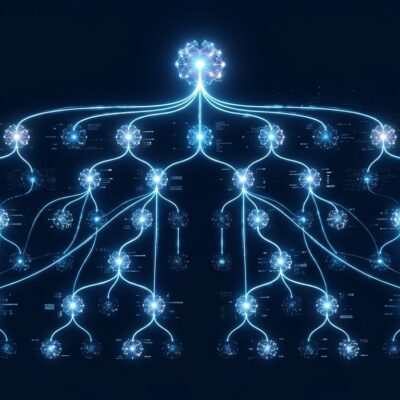
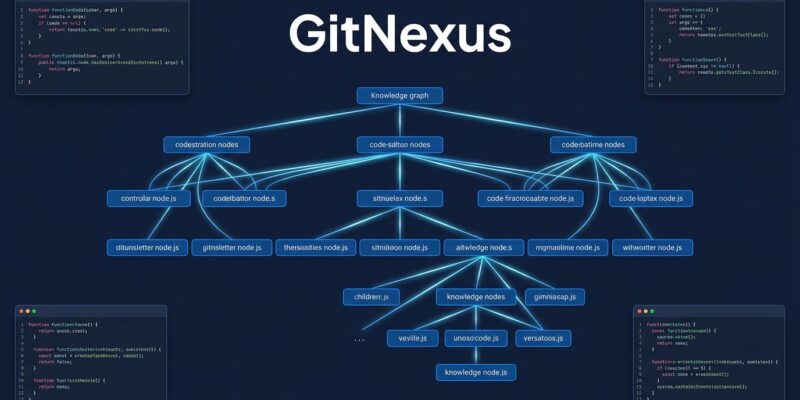
GitNexus transforms codebases into queryable structured graphs. Unlike traditional code search (text matching) or vector-based RAG (semantic similarity without structure), GitNexus maps relationships: function calls, imports, class inheritance, execution flows. It exposes this through 11 Model Context Protocol (MCP) tools that AI agents use natively.
The architecture is straightforward: Tree-sitter parses source code into abstract syntax trees, GitNexus builds a knowledge graph mapping all relationships, LadybugDB stores the graph locally, and an MCP server exposes 11 tools for AI integration. Everything runs local (CLI) or in-browser (web UI) with zero network transmission.
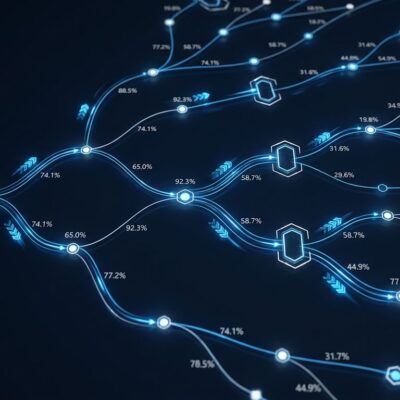
What makes this powerful is pre-computed dependencies. Traditional agents chain 10+ queries to understand one function’s impact. GitNexus returns a complete, confidence-scored blast radius in a single tool call. MarkTechPost describes it as giving AI agents “full architectural awareness” instead of working blind.
The privacy advantage matters for enterprise: zero-server architecture means no code exfiltration. Your codebase never touches external servers. For privacy-sensitive projects (finance, government, healthcare), this is the difference between “can’t use it” and “deploy it today.”
One-Command Setup with Deep Claude Code Integration
Setup friction kills adoption. GitNexus understands this. Run npx gitnexus analyze from your repository root, and it indexes the codebase, installs 4 agent skills to .claude/skills/, registers PreToolUse/PostToolUse hooks, and creates AGENTS.md/CLAUDE.md context files. One command, under 60 seconds to productivity.
# Navigate to your repository
cd ~/my-project

# One command does everything
npx gitnexus analyze

# Installs:
# - Knowledge graph index (~/.gitnexus/)
# - 4 Claude Code skills (Exploring, Debugging, Impact Analysis, Refactoring)
# - PreToolUse/PostToolUse hooks (auto-detect stale indexes)
# - AGENTS.md and CLAUDE.md context files

# Configure MCP for editors (one-time global setup)
npx gitnexus setup
Claude Code gets the deepest integration: full MCP tools, auto-installed skills, PreToolUse/PostToolUse hooks that detect stale indexes after commits, and auto-generated context files. Other editors (Cursor, Codex, OpenCode) get MCP tools plus skills. Windsurf gets MCP tools only.
The skills matter more than you’d think. They encode best practices for using MCP tools — Exploring skill knows to query the graph before suggesting navigation paths, Debugging skill traces call chains systematically, Impact Analysis skill checks blast radius before refactoring. You get expert-level workflows without learning MCP tool combinations manually.
Impact Analysis, Debugging, and Refactoring: Real-World Use Cases
GitNexus provides 4 auto-installed skills that solve the top 3 pain points in large codebases: fear of breaking things, getting lost in complex call chains, and unsafe manual refactoring.
Impact Analysis answers “what breaks if I change X?” with confidence scores and blast radius depth. Ask Claude Code “What will break if I change the authenticateUser function?” and GitNexus impact tool returns: 7 direct callers (HIGH confidence), 23 indirect dependencies (MEDIUM confidence), blast radius depth of 4 levels, affected execution flows (login, API auth, OAuth callback). Traditional search gives you “found 4 text matches for ‘authenticateUser'” — useless for architectural decisions.
Debugging traces call chains across files. “How does the /api/users endpoint reach the database?” GitNexus context tool shows full execution flow with process participation. No more manually clicking through function definitions across 15 files. The knowledge graph already computed the path.
Refactoring coordinates multi-file changes using graph awareness. The rename tool handles symbol renames across 87 files with dependency validation. Change getUserData to fetchUserProfile and GitNexus ensures every reference updates — imports, function calls, type definitions. Graph-aware refactoring beats find-and-replace because it understands scope and context.
These aren’t theoretical benefits. They automate what previously required senior developer knowledge: understanding blast radius, tracing execution flows, coordinating large-scale refactors. Junior developers get architectural insights that took years to build intuitively.
Graph RAG vs Vector RAG: Why Structure Matters for Code
GitNexus uses Graph RAG (relationship-based retrieval) instead of vector-based RAG (semantic similarity only). When you ask “where do we handle payment failures?”, Graph RAG combines BM25 text search, semantic embeddings, and graph context — prioritizing functions in payment execution flows — via reciprocal rank fusion. The result: architecturally relevant answers, not just keyword matches.
Vector RAG finds semantically similar code but ignores relationships. It might return every function with “payment” and “error” in the name, ranked by embedding similarity. Graph RAG understands “this function is called by these 10 files in this execution flow” — structural awareness that’s critical for impact analysis and refactoring.
The 11 MCP tools expose this power without requiring developers to learn graph theory. The query tool handles hybrid search automatically. The context tool shows 360-degree symbol analysis. The impact tool computes blast radius with confidence metrics. The detect_changes tool maps Git diffs to execution flows for pre-commit risk assessment. The rename tool coordinates multi-file changes. The cypher tool provides raw graph queries for power users who want direct access.
Related: Claude-Context Tutorial: Cut AI Coding Token Usage 40%
SmartScope blog describes the shift: “Claude Code Dropped Vector DB-Based RAG… Graph RAG builds a nervous system for agent context by indexing codebases into a knowledge graph with every dependency, call chain, cluster, and execution flow.” The metaphor fits — vector RAG gives agents semantic memory, Graph RAG gives them structural understanding.
Why GitNexus Matters
GitNexus is trending #2 on GitHub (31,687 stars, +1,102 in 24 hours) for good reason. It solves the biggest pain point in AI-assisted coding: context quality beats model quality. AI agents can write impressive code but struggle with architectural decisions because they can’t see relationships.
Key advantages:
- One-command setup —
npx gitnexus analyzegets you productive in under 60 seconds. Deep Claude Code integration with auto-installed skills, hooks, and context files. - Impact analysis with confidence scores — Pre-computed dependencies give instant blast radius analysis. HIGH/MEDIUM/LOW confidence metrics help prioritize risk.
- Graph RAG beats vector RAG for code — Architecturally relevant results because relationships matter. Function calls, imports, execution flows — structure that vector embeddings miss.
- Zero-server privacy — Your code never leaves your machine. Local indexes, in-browser processing, no cloud dependencies. Enterprise-friendly with no data exfiltration risk.
- Production-ready deployment — Docker images on GHCR and Docker Hub. Multi-repo groups for microservices. Enterprise features for automated PR analysis and continuous re-indexing.
Try GitNexus: Run npx gitnexus analyze in your repository, or explore the web UI at gitnexus.vercel.app. Star the project on GitHub. For developers using Claude Code or Cursor, this is the context layer you didn’t know you needed.