 By
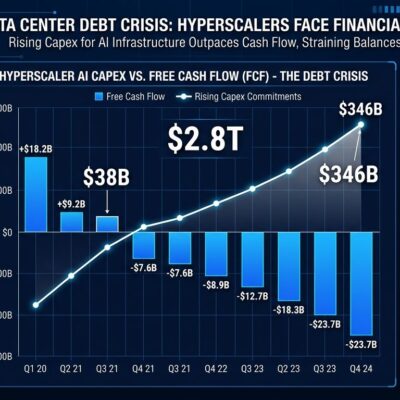
By More than half of U.S. data center builds scheduled for 2026 face delays or cancellations, according to industry reports published this week. Of 140 planned projects targeting 16 gigawatts of capacity, only 5 gigawatts are actually under construction. The bottleneck is physical infrastructure, not capital: power transformer lead times have ballooned from 24-30 months pre-2020 to 3-5 years today, while AI data centers require 18-month deployment cycles. Big Tech is spending $650-700 billion on AI infrastructure in 2026, but money can’t manufacture transformers faster than physics allows.
This explains why developers face unavailable GPU access and cloud pricing spikes. The AI infrastructure boom just hit physical reality.
The Transformer Bottleneck Explained
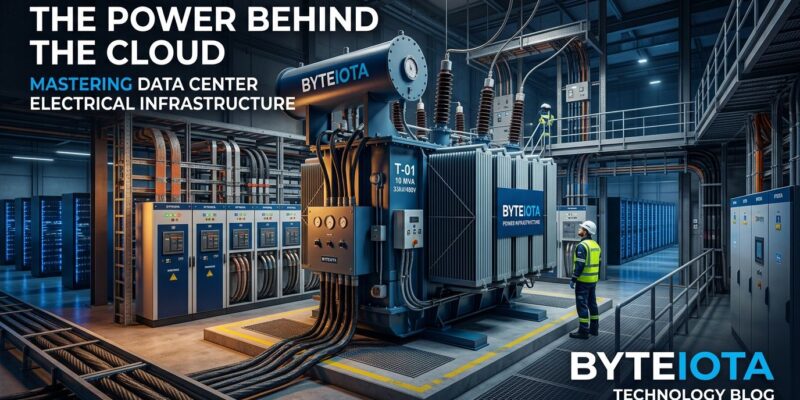
Power transformers are custom-built equipment weighing 100-400 tons that step down high-voltage grid power to usable data center voltages. Each unit takes 3-5 years to manufacture, costs $2 million to $10 million, and cannot be rush-produced. AI data centers need 10x-20x the power density of traditional facilities, requiring specialized transformers with even longer lead times.
Industry surveys reported by Power Magazine in April 2026 show lead times that were 24-30 months before 2020 now stretch to 128 weeks for power transformers and 144 weeks for GSUs (Generator Step-Up transformers). The U.S. imported over 8,000 high-power transformers from China through October 2025—up 533% from fewer than 1,500 in 2022. That dependency creates geopolitical risk nobody planned for.
The impossible math: AI data centers target 18-month deployment cycles, but transformers require 60+ months. Projects ordering equipment in April 2026 won’t deliver until 2029-2031. That’s not a supply chain hiccup. That’s a multi-year structural constraint.
Big Tech’s $650B Spending Can’t Overcome Physics
Alphabet, Amazon, Meta, and Microsoft collectively plan $650-700 billion in AI infrastructure spending for 2026, with approximately $450 billion earmarked for AI-specific data centers, GPUs, and servers. Amazon leads at $200 billion, followed by Alphabet at $175-185 billion, Microsoft at $145 billion for Azure expansion, and Meta at $135 billion.
Yet Alphabet CEO Sundar Pichai told investors the company expects to remain “supply constrained throughout 2026” despite record infrastructure investment. The problem isn’t capital—it’s that transformer manufacturing capacity is a fixed constraint that money can’t instantly expand.
Only 5GW of 16GW planned capacity is under construction—a 69% execution gap. Financial commitments don’t guarantee execution when physical infrastructure can’t keep pace. Projects announced this month without transformer orders already in place are vaporware. The AI boom narrative just hit a reality wall, and that wall is made of electrical steel.
Developer Impact: The Cloud Capacity Crunch
The data center construction crisis directly causes the GPU access problems developers face in 2026. On-demand GPU rental capacity is sold out across all types, with lead times for data center GPUs hitting 36-52 weeks. Microsoft, Google, Meta, and Amazon locked in forward orders for NVIDIA Blackwell GPUs through end of 2027, but can’t deploy them without data center infrastructure to house them.
Industry analysis from March 2026 notes that “trying to find GPU compute in early 2026 has been like trying to book airplane tickets on the last flight out.” On-demand pricing runs 2-3x more expensive than reserved capacity when available at all. Training runs budgeted at $40,000 on reserved capacity now cost $80,000-120,000 on on-demand.
The market has bifurcated: hyperscalers with guaranteed contracts receive chips, while smaller companies and hobbyists hunt secondary markets or face unavailable capacity. This isn’t a platform bug. It’s the downstream effect of transformer shortages blocking data center construction.
Alternative Solutions Emerging
The data center capacity crunch is accelerating alternative infrastructure models. Edge computing is growing 28% annually, reaching $28.5 billion in 2026 and projected to hit $263.8 billion by 2035. Over 30% of data center projects announced in 2024 plan to use on-site power generation as primary source by 2030, bypassing 2-5 year grid connection delays.
Bloom Energy can provide fuel cell systems in as little as 90 days, while traditional grid connections take 2-5 years. Siemens Energy and Eaton’s modular power systems reduce deployment timelines by 2 years. Modular data centers built off-site bypass construction delays entirely, supporting high-density AI workloads in distributed edge infrastructure deployed in weeks rather than years.
Amazon, Google, and Microsoft are investing in Small Modular Reactor ventures targeting 2028-2030 deployment for behind-the-meter nuclear power. For teams blocked by hyperscale capacity constraints, these alternatives offer faster deployment paths. Edge computing delivers 6-18 month timelines versus 3-5 years for hyperscale. The infrastructure bottleneck is forcing innovation that may outlast the crisis itself.
Timeline Reality: No Quick Fix
Despite $2 billion in U.S. transformer manufacturing capacity expansion announced since 2023, new factories won’t provide relief for 2026-2027 projects. Eaton’s $340 million South Carolina facility targets 2027 launch, Siemens Energy’s $150 million Charlotte plant early 2027, and Hitachi Energy’s $457 million Virginia facility (largest in U.S.) won’t complete until 2028.
Nearly $1.8 billion in announced North American manufacturing expansions are underway, but even optimistic projections show multi-year deficits in transformer supply. Lead times may compress from 5 years to 3-4 years by 2028, but that’s still double pre-2020 norms and misaligned with 18-month AI data center deployment cycles.
The 11GW of announced but not-yet-under-construction capacity has zero chance of meeting 2026 targets. Teams planning infrastructure for 2026-2027 need to recognize that hyperscale capacity won’t improve until late 2027 at earliest, more likely 2028-2029. This isn’t a temporary blip—it’s a multi-year structural constraint requiring strategic adaptation: edge computing, on-site generation, reserved capacity commitments, or accepting delays.
Infrastructure planners evaluating multi-year data center projects need to factor transformer lead times as the critical path, not construction or IT equipment availability. Money solves many problems. Five-year transformer manufacturing timelines aren’t one of them.