tRPC delivers 89% fewer bugs and 37% faster development than traditional APIs by eliminating code generation entirely. Frontend and backend types stay automatically synced through TypeScript inference—no schema files, no codegen step, no manual coordination. With TypeScript reaching 69% adoption among JavaScript developers and becoming GitHub’s #1 language, tRPC adoption is accelerating rapidly. Industry predictions estimate 60%+ of new TypeScript full-stack applications will use tRPC by 2027.
However, the real story isn’t “tRPC vs GraphQL”—it’s the emergence of hybrid API architectures. 67% of large organizations now strategically use multiple patterns: public REST for integrations, internal tRPC for TypeScript-to-TypeScript communication, and backend gRPC for service-to-service calls. The API wars are over. Pragmatic teams stopped picking sides and started picking the right tool for each use case.
The Hybrid Architecture Pattern Wins
The typical 2026 SaaS architecture uses three API patterns strategically. Public REST APIs handle third-party integrations, webhooks, and external SDKs where documentation and wide compatibility matter. Internal tRPC connects TypeScript frontends to TypeScript backends where velocity and type safety trump everything else. Backend gRPC or REST handles service-to-service communication between microservices, often in different languages.
Netflix and Pleo run tRPC in production for their internal TypeScript applications while maintaining REST APIs for public consumption. This isn’t compromise—it’s recognition that different use cases have different requirements. GraphQL grew 340% since 2023, yet 93% of companies still use REST. The technologies coexist because they solve different problems.
The shift from religious debates to use-case-driven decisions marks API architecture maturation. Moreover, developers waste time arguing “GraphQL vs REST” when the answer is “both, strategically deployed.” tRPC excels for internal TypeScript apps. REST remains ideal for public APIs. GraphQL shines for flexible client queries. Pick the right tool for the job.
Measured Performance Gains That Actually Matter
Real-world data shows tRPC delivers 89% bug reduction by catching type errors at compile time instead of runtime. That’s not marketing hyperbole—it’s measured impact from teams using tRPC in production. Type mismatches that would ship to production and trigger incidents get caught during development, before code review, before deployment.
Furthermore, the 37% development speed increase comes from eliminating API boilerplate entirely. No schema files to maintain. No code generation step adding 5-30 seconds per iteration. No manual type coordination between frontend and backend. Change a backend function signature, and your IDE immediately shows every frontend call that needs updating. Fix it before git commit. This is what end-to-end type safety delivers.
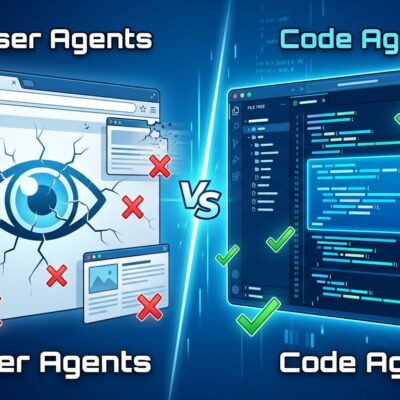
GraphQL requires running codegen after every schema change. REST requires maintaining OpenAPI specs or manually writing type definitions. In contrast, tRPC requires nothing—TypeScript inference handles everything automatically. The productivity difference compounds over hundreds of API changes across a project’s lifetime.
TypeScript’s Dominance Creates Perfect Timing
TypeScript reached 69% adoption among JavaScript developers according to Stack Overflow’s 2025 survey and became GitHub’s #1 language by contributor count, surpassing both Python and JavaScript. TypeScript added over 1 million contributors in a single year—66% growth. This isn’t a trend. It’s the new baseline.
Related: TypeScript Becomes GitHub’s #1 Language: AI Coding Drives 66% Growth
The “full-stack TypeScript” pattern is becoming standard for new SaaS products. Next.js or Remix on the frontend, TypeScript on the backend, tRPC connecting them, Drizzle or Prisma for type-safe database access. Consequently, the entire stack maintains type safety from database to browser. Industry analysts predict 60%+ of new TypeScript full-stack applications will use tRPC by 2027, with 75% confidence.
tRPC’s success rides the wave of TypeScript’s dominance. As more teams adopt TypeScript for both frontend and backend, tRPC becomes the obvious choice for type-safe communication between them. Additionally, the ecosystem has matured: TypeScript is production-ready, tRPC is stable, monorepo tools like Turborepo and Nx make type sharing efficient. The timing is perfect.
When to Use tRPC TypeScript and When to Skip It
Use tRPC for internal TypeScript applications—Next.js + backend stacks, admin panels, SaaS dashboards, internal tools. If your entire stack is TypeScript and the same team owns frontend and backend, tRPC delivers maximum velocity with minimum bugs. The 89% bug reduction and 37% development speed gains are real for this specific use case.
However, skip tRPC for public APIs. It offers no auto-generated documentation like OpenAPI, and external consumers need TypeScript to get any benefits. Don’t use it for mobile apps in Swift or Kotlin—they can’t leverage TypeScript types. Avoid it for multi-language backends where services are written in Go, Python, or Rust. In those scenarios, gRPC or REST with clear contracts wins.
The decision framework is straightforward. Internal TypeScript-to-TypeScript communication? tRPC wins. Public APIs or multi-language teams? REST or GraphQL wins. Therefore, the key is matching architecture to constraints rather than forcing one solution everywhere. Hybrid approaches beat one-size-fits-all every time.
Production-Ready Ecosystem Integration
The modern TypeScript stack has converged. Next.js 15 or Remix for full-stack frameworks. tRPC for the API layer. Drizzle or Prisma for type-safe database access. TanStack Query for client-side data fetching. Turborepo or Nx for monorepo management. This isn’t experimentation—teams are shipping production code with this stack.
Netflix and Pleo validate the production readiness. The ecosystem maturity shows in the details: tRPC has adapters for Next.js, Express, Fastify, AWS Lambda, and Cloudflare Workers. Moreover, it integrates tightly with TanStack Query for automatic caching and refetching. Monorepo tools reduce build times by 70% and dependency bugs by 40% when configured properly.
The T3 Stack (Next.js + tRPC + Prisma + NextAuth) has become popular for bootstrapping new projects. Consequently, developers aren’t debating stack choices anymore—they’re picking proven combinations and focusing on building features. The decision fatigue has decreased because the ecosystem consolidated around patterns that work.
Key Takeaways
- Hybrid API architectures beat one-size-fits-all approaches—67% of large organizations strategically use REST for public APIs, tRPC for internal TypeScript apps, and gRPC for backend services
- tRPC delivers measured productivity gains for TypeScript teams: 89% fewer bugs through compile-time type safety and 37% faster development by eliminating code generation overhead
- TypeScript’s dominance (69% adoption, GitHub #1 language) creates perfect conditions for tRPC’s growth, with 60%+ of new full-stack TypeScript apps predicted to use tRPC by 2027
- Use tRPC for internal TypeScript-to-TypeScript communication where velocity and type safety matter most; skip it for public APIs, non-TypeScript clients, or multi-language backends
- The ecosystem has matured for production: Netflix and Pleo run tRPC at scale, modern stack (Next.js + tRPC + Drizzle + Turborepo) is proven, and developer focus has shifted from experimentation to shipping features
The API architecture landscape has matured beyond religious debates. Teams that understand when to use each pattern—and combine them strategically—ship faster, break less, and waste less time arguing about tools.