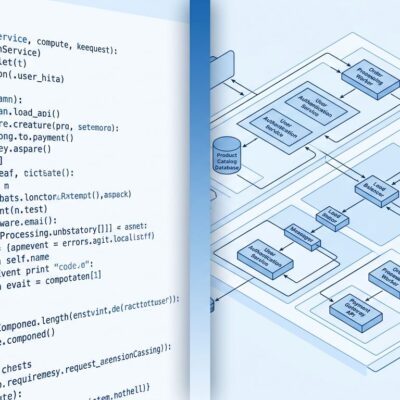
On April 15, Snap cut 1,000 employees—16% of its workforce—and cited a striking reason: AI now writes 65% of the company’s new code. CEO Evan Spiegel told staff that “small squads leveraging AI tools” can do work that previously required far larger teams. The market loved it. Snap’s stock jumped 11%, and the company expects to slash $500 million from annual costs. This isn’t about financial distress. It’s about AI directly replacing engineering headcount—and Snap just made that quiet industry secret explicit.
The 65% Claim Meets Reality
Snap says AI generates 65% of new code, with automated tools handling 1 million+ support questions monthly and flagging 7,500+ bugs through code-review agents. That sounds impressive. But research shows AI-generated code introduces 1.7x more bugs than human code and increases technical debt 30-41%.
Industry data reveals AI pull requests average 10.83 issues versus 6.45 for human PRs. Logic errors run 75% higher in AI code. Only 29% of developers trust AI output, and 96% say they don’t fully trust AI code is functionally correct. Snap’s betting $500M in savings on AI productivity, but experts warn 2026-2027 will hit “technical debt crisis” levels.
The “65% claim” likely includes autocomplete and boilerplate—not complex architecture. Real productivity gains may be overstated. Companies track lines of code generated, not value delivered or quality maintained.
Related: AI Coding Tools ROI: The 2026 Pricing Reality Check
The 2026 AI Layoff Wave
Snap isn’t alone. Oracle laid off 20,000-30,000 employees on March 31. Atlassian cut 1,600—10% of its workforce. Analysts estimate 47.9% of 2026’s 95,000+ tech layoffs are directly attributed to AI automation. The pattern: cut execution roles (coding, QA, support), keep senior architects, reinvest in AI infrastructure.
Affected roles at Snap include software engineers, machine learning engineers, data scientists, product managers—even distinguished engineers and directors. Oracle invested billions in AI while slashing headcount. Atlassian cut 1,600 but hired 800 AI-focused roles in machine learning operations and AI safety. Net result: workforce redirection toward AI specialization.
This isn’t a Snap-specific decision. It’s an industry shift. If other companies follow Snap’s playbook—and the stock market rewards it—we’re entering an era where AI-driven “efficiency” becomes standard justification for workforce reduction.
The AI Productivity Paradox
Individual developers using AI tools like GitHub Copilot complete tasks 55% faster. Company-wide productivity gains remain stuck at just 10% despite 92.6% adoption. The bottleneck: PR review time increased 91% because humans must approve AI output—and only 29% trust it.
GitHub’s study showed developers finished tasks in 1 hour 11 minutes with Copilot versus 2 hours 41 minutes without it. McKinsey found 46% time reduction on routine tasks. But DX research reveals only 10% company-level gains. High-AI teams complete 21% more tasks and merge 98% more PRs, yet review time soared 91%.
Snap claims AI lets them cut 16% of staff. But the productivity paradox suggests AI speeds up individuals while creating organizational bottlenecks. Markets reward velocity—PRs merged, features shipped. Customers care about quality—bugs fixed, systems stable. Snap’s gamble assumes AI productivity is real. The data says it’s complicated.
What Developers Should Do
Junior and mid-level execution roles face highest risk. AI can handle routine coding, QA, and support. Senior roles requiring judgment—software architects, security specialists, AI engineers—remain critical. Move up the stack to AI-resistant skills.
Stanford found 20% decline in software developer employment for ages 22-25 since 2022. Roles cut at Snap include engineers at all levels. Safe roles demand architecture, security, compliance—areas requiring human judgment and cross-functional communication. Experts confirm: AI can write code, but can’t design scalable systems.
Developers need to adapt. Learn to 10x with AI, or be replaced by someone who can. Skills that matter: system architecture, security, product sense, and—ironically—AI tool mastery. The industry is cutting middle execution roles while keeping top talent who can leverage AI effectively.
Key Takeaways
- Snap laid off 16% of its workforce (1,000 employees) citing AI code generation, marking the first major company to explicitly tie mass layoffs to AI productivity gains
- The “65% AI code” claim likely includes boilerplate and autocomplete, not complex architecture—research shows AI code introduces 1.7x more bugs and 30-41% more technical debt
- This is an industry trend, not an isolated incident: 95,000+ tech workers laid off in 2026, with 47.9% attributed to AI automation across Oracle, Atlassian, and others
- The productivity paradox: individual developers 55% faster with AI tools, but company-wide gains only 10% due to bottlenecks in PR review and quality verification
- Junior and mid-level execution roles are most at risk—developers must move up the stack to AI-resistant skills like architecture, security, and product thinking to remain valuable
Snap’s gamble is bold. Save $500M short-term, but risk a 2027 reckoning if technical debt and quality issues surface. The stock market rewards cuts today. But customers—and product quality—live in the long term.