 By ByteBot
AI data centers are consuming 70% of all memory chips produced in 2026. DRAM prices surged 90% in Q1 alone. PC manufacturers are warning of 15-30% price increases, and the crisis won’t ease until H2 2027 at the earliest. They’re calling it “RAMageddon”—and if you’re a developer or tech professional, it’s hitting your wallet and hardware budgets directly.
This isn’t a temporary supply chain hiccup. It’s a fundamental reallocation of semiconductor manufacturing capacity from consumer and developer hardware to AI infrastructure. And you’re the one paying for it.
The Root Cause: HBM Is Eating Your Laptop
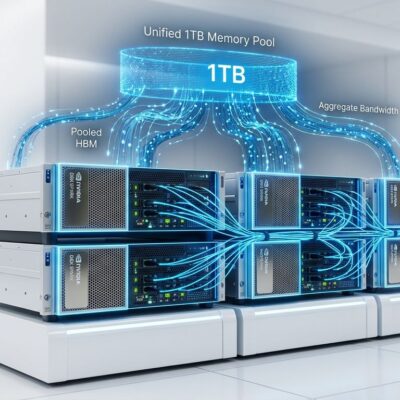
The culprit is High-Bandwidth Memory (HBM), the specialized DRAM that powers AI accelerators and data center GPUs. HBM now consumes 23% of all DRAM wafer output, up from 19% in 2025. That might not sound dramatic until you see the economics: HBM generates 30% of all DRAM revenue despite representing only 8% of total volume. It’s 3.75x more profitable per unit than the DDR5 in your laptop.
Samsung is boosting HBM production to 250,000 wafers per month by end of 2026—a 47% increase. SK Hynix is directing 90% of its capital expenditure toward DRAM, with heavy HBM focus. Micron went further: in December 2025, it exited the consumer memory market entirely to chase AI data center customers.
This is a zero-sum game. Every wafer allocated to an HBM stack for an Nvidia GPU is a wafer denied to a consumer laptop or smartphone. IDC calls it a “permanent reallocation of manufacturing capacity toward AI, where manufacturers have a strong economic incentive to prioritize high-margin HBM and data center memory over lower-margin consumer products.” Translation: your dev machine loses to ChatGPT’s server farm, every single time.
Real-World Impact: Multiple Fronts
The cost hit is landing everywhere at once.
Developer hardware is in crisis. RAM now makes up 35% of a PC’s total build cost as of April 2026, up from roughly 15-18% historically. IT directors report that the old “replace every three years” rule is breaking budgets. A 20% price increase represents a massive unplanned capital expenditure that most firms didn’t account for in five-year IT plans. Hardware upgrade cycles are extending not because performance is good enough, but because cost makes refreshes impossible.
PC manufacturers are passing costs through. Lenovo warned customers in January that all quotations expired, citing “intensifying memory shortage and rapid integration of AI technologies.” Dell hiked prices 15-20% in mid-December. HP’s CEO says the company has RAM inventory through mid-2026, but rising memory costs will hit margins after that. Some analysts project price increases could reach 30%. Entry-level laptops under $500 are becoming “financially unviable” by 2028. That budget tier of the market is effectively collapsing.
Smartphones are regressing. Flagship phones—iPhone 17 Pro Max, Galaxy S26—are stuck at 12GB RAM instead of upgrading to 16GB. Mid-range phones that offered 12GB in 2025 are dropping to 8GB in 2026, a 40% reduction in available 12GB models. Budget phones are falling back to 4GB. TechRadar and Android Authority both report the same brutal reality: 2026 phones are more expensive and have worse specs than 2025 models. The tech gets worse and costs more. That’s the RAM shortage in a nutshell.
Data center infrastructure costs are doubling. Server memory prices could double by the end of 2026 according to Network World. Hyperscale providers—Meta, Google, Microsoft, Amazon—are locking up supply with long-term contracts at premium prices. If you’re running infrastructure, your memory budget just got torched.
The Timeline: No Quick Fix
Don’t expect this to blow over soon. Micron’s HBM capacity is sold out through the entire 2026 calendar year. Q2 2026 is projected to see another 58-63% quarter-over-quarter DRAM price increase. The shortage is accelerating, not stabilizing.
Supply expansion is coming, but too slow. New fabs are scheduled: Micron’s Singapore facility targets 2027, Taiwan retooling hits H2 2027, SK Hynix’s Indiana facilities aim for end of 2028, and Micron’s New York complex won’t reach full production until 2030. Industry analysts warn that even by the end of 2027, global DRAM supply will only meet 60% of market demand—even if major manufacturers operate at full capacity.
The math doesn’t work. Annual DRAM production capacity needs to grow 12% between 2026 and 2027 to ease shortages. The actual growth rate is about 7.5%. NPR reports: “Years of shortage may be inevitable.”
H2 2027 is the earliest realistic relief, and that’s only partial. Planning around “waiting for prices to drop” is wishful thinking.
Who Pays for the AI Boom?
Here’s the uncomfortable truth: manufacturers are choosing AI over consumers because the margins are better. High-Bandwidth Memory for data centers prints money compared to commodity DRAM for laptops and phones. It’s not a technical constraint—it’s an economic decision.
Data center consumption jumped from 20-30% of global memory production in 2022 to 70% in 2026. That’s not organic growth. That’s a deliberate reallocation. Micron exiting the consumer market entirely makes the priorities explicit: enterprise AI customers over everyone else.
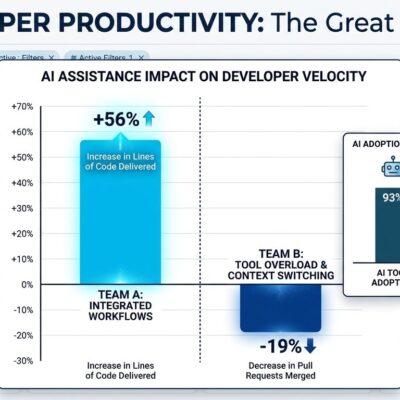
The AI boom promises productivity gains for developers—better code completion, faster debugging, smarter workflows. But those gains are purchased with skyrocketing hardware costs that eat into the same budgets. You’re subsidizing AI infrastructure through higher laptop and smartphone prices while being told AI tools will make you more efficient. The savings go to manufacturers and hyperscale cloud providers. The costs land on your procurement team.
Is that fair? Probably not. Is it changing? Also probably not. This is the market working exactly as designed: capital flows to the highest returns, and right now that’s AI infrastructure, not developer laptops.
Key Takeaways
Don’t wait for prices to drop. H2 2027 is the earliest projected relief, and even then only 60% of demand will be met. If you’re planning hardware refreshes, factor in 20-30% higher costs. The middle ground—”wait a bit longer”—is the worst strategy. Buy now if you need hardware, or plan to wait until 2028+ when new fabs come online.
This is structural, not temporary. IDC explicitly calls this a “permanent reallocation” of manufacturing capacity toward AI. Consumer and developer markets are now secondary priorities. Adjust long-term IT planning accordingly. Three-year refresh cycles may need to stretch to four or five years.
Optimize for memory efficiency. If hardware is more expensive and specs are regressing, software efficiency matters more. Review Docker usage, database memory allocation, VM configurations. Cloud development environments may offer better economics than local hardware during this crisis.
The RAM shortage is a symptom of a larger shift: AI infrastructure is now the primary customer for cutting-edge semiconductor capacity, and everyone else is secondary. That reallocation has consequences, and you’re living them right now.