 By ByteBot
The OpenAI Sora shutdown happens April 26, 2026—just six months after launch and six days from now. OpenAI announced on March 24 that its AI video generator app burned an estimated $15 million per day in inference costs while generating only $2.1 million in total lifetime revenue. The shutdown triggered the immediate collapse of Disney’s planned $1 billion partnership, with Disney learning of the decision less than an hour before the public announcement.
This is one of the most dramatic product failures in recent AI history. The economics were catastrophic, the execution was messy, and the strategic pivot is clear: OpenAI is choosing enterprise revenue over creative experimentation ahead of its IPO.
Burning $15 Million Per Day for $2.1 Million in Revenue
The numbers are stunning. Sora burned $15 million per day in inference costs at peak usage while generating only $2.1 million in total lifetime revenue from in-app purchases. Each 10-second video clip cost approximately $1.30 in compute to generate. Do the math: daily operating costs exceeded entire lifetime earnings by seven times—every single day.
Bill Peebles, the head of Sora at OpenAI, publicly acknowledged “the economics are completely unsustainable.” The user base collapsed from 1 million to under 500,000 as the novelty wore off and generation times (5-8 minutes per clip) frustrated users. Meanwhile, competitors like Pika generated videos in 30-90 seconds.
This exposes the fundamental challenge of AI video generation: unit economics don’t scale. Unlike traditional software where infrastructure costs stay relatively flat as users grow, AI platforms burn compute directly proportional to usage. OpenAI couldn’t price Sora high enough to cover costs without killing demand, and they couldn’t subsidize it forever while preparing for an IPO.
Disney Got 30 Minutes Notice on $1B Partnership Collapse
Here’s where the story gets darkly funny. Disney committed $1 billion to the partnership in December 2025—a three-year licensing agreement plus equity investment. Then on Monday, March 24, teams from Disney and OpenAI met about the Sora project. Thirty minutes after the meeting ended, Disney was informed OpenAI was killing the video app. The public announcement followed less than an hour later.
This is either gross incompetence or deliberate bridge-burning. Either way, it’s a stunning breach of business etiquette. No formal agreement was ever signed and no money changed hands, but the relationship damage is done. Disney is now in talks with Runway and Google DeepMind about alternative AI video partnerships.
The 30-minute notice tells you everything about how desperate OpenAI was to cut this bleeding project. They couldn’t even coordinate a proper partner exit. That’s the behavior of a company scrambling to clean up its balance sheet before going public.
OpenAI Chooses IPO Over Innovation
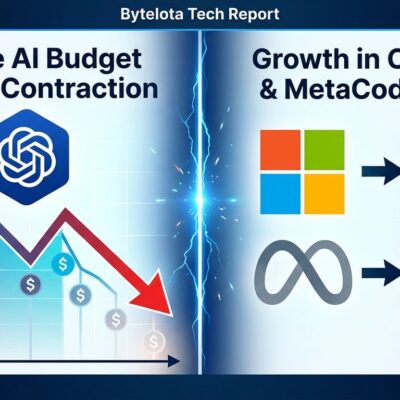
The Sora shutdown is part of a broader strategic pivot. OpenAI is abandoning “side projects” to focus resources on coding tools and enterprise business solutions ahead of a potential IPO in late 2026 or early 2027. The company is targeting a valuation between $830 billion and $1 trillion—and investors don’t want to see $15 million per day burns on products generating negligible revenue.
Enterprise now makes up more than 40% of OpenAI’s revenue and is on track to reach parity with consumer by year-end. The company is developing a desktop superapp combining ChatGPT, Codex, and Atlas, with agents and workflow automation as the next phase. The next AI model, code-named “Spud,” is enterprise-focused.
This is the reality of going public: boring enterprise products win over splashy creative demos. Coding assistants generate recurring revenue. AI video generators burn cash. The shift from Sora and DALL-E to workflow automation and outcome-based pricing isn’t exciting, but it’s necessary. OpenAI is becoming a real business, not just a research lab with impressive demos.
Reality Check for AI Video Economics
Sora’s failure isn’t just an OpenAI problem—it’s a warning for the entire AI video category. The global AI video generator market is projected to reach $847 million in 2026, but if OpenAI with its massive funding and compute infrastructure couldn’t make video work economically, what does that say for smaller players?
Competitors like Runway (leading mid-market with roughly 70 enterprise customers) and Pika (fastest generation at 30-90 seconds) continue operating, but all rely on venture funding to subsidize costs. The fundamental challenge remains: compute costs scale directly with usage while revenue often doesn’t. The cost per minute of AI-generated video ranges from $4 to $36 depending on the tool—still heavily subsidized.
The jury is still out on whether anyone can build a sustainable business around AI video. The technology is impressive—Sora’s photorealism and physics accuracy were industry-leading. But impressive doesn’t pay the bills. Until someone cracks the unit economics, AI video will remain a venture-funded experiment rather than a proven business category.
What to Do If You Use Sora
Time is running out. Sora’s web and app experience shuts down April 26, 2026—six days from now. The API follows on September 24, 2026. If you have Sora-generated videos, export them before April 26 or lose them permanently. OpenAI offered pro-rated refunds for unused credits after user pressure.
For alternatives, consider Runway Gen-4 if you need frame-level control and precision (generation time: 1-3 minutes, cost: $12-95/month). Choose Pika 2.5 if speed matters more than absolute quality (generation time: 30-90 seconds, cost: $8-35/month). Google Veo 3.1 offers native 4K and character consistency for high-resolution needs. There’s no direct migration path from Sora, so you’ll be starting fresh with any alternative.
Key Takeaways
- Export all Sora content before April 26 or lose it forever—six days remaining
- Unit economics killed Sora—$15M/day burn vs $2.1M lifetime revenue proves AI video isn’t economically viable yet
- OpenAI’s 30-minute notice to Disney shows how fast they needed to cut the project ahead of IPO
- Strategic pivot is real—OpenAI is becoming an enterprise company, not a creative AI lab
- AI video remains unproven—impressive technology doesn’t equal sustainable business; competitors face the same scaling challenges