 By
By Gas Town by Kilo went generally available on May 19. Steve Yegge’s multi-agent orchestration framework — described by more than a few developers as “Kubernetes for coding agents” — is now fully cloud-hosted. Spin up 20 to 30 AI coding agents working in parallel, no infrastructure to manage, no tmux babysitting required. The catch, and it’s a real one: you’re looking at roughly $100 an hour in model tokens. Whether that’s a bargain depends entirely on what your time costs.
What Gas Town Actually Does
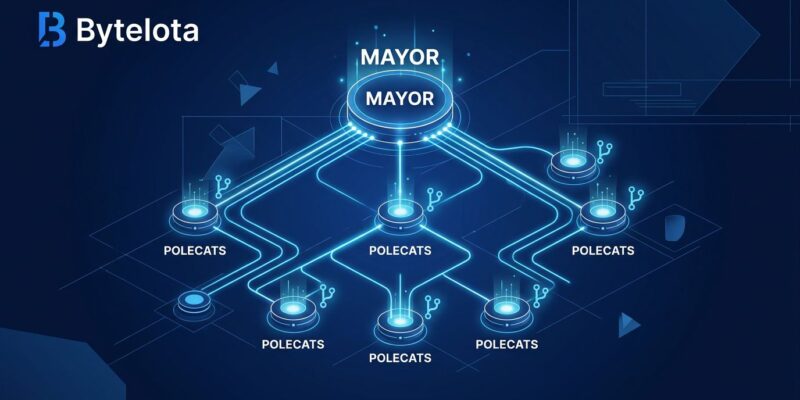
The workflow is straightforward on paper. You describe a high-level goal to the Mayor — the orchestrator agent that serves as your interface. The Mayor analyzes your codebase, decomposes the work into discrete task units called Beads, then dispatches them to Polecats: temporary worker agents, each running in its own isolated git branch. A separate agent called the Refinery manages the merge queue, resolving conflicts and pulling completed work into main. Witnesses monitor for stuck agents and trigger recovery automatically.
In practice, it looks like this: one developer described assigning 7 Beads before dinner — tasks like implementing file watching and caching rendered views for a Go TUI dashboard. They came back to find 6 pull requests merged, one blocked on a dependency conflict. Work that would have taken most of a week, compressed to a few hours of machine time.
The Polecats get named on spin-up (obsidian, quartz, jasper), each working in isolation. The parallelization is real. Multiple Beads execute simultaneously without agents tripping over each other’s changes — each Polecat operates on its own git worktree, so there’s no shared state to corrupt.
What Kilo Adds Over Self-Hosting
Gas Town has been open source since January, when Steve Yegge first posted about it. The self-hosted version works, but it comes with friction: manually provisioning compute, managing tmux sessions across agents, juggling separate API keys and billing for each model provider. That overhead adds up fast when you’re burning tokens at Gas Town’s rate.
Gas Town by Kilo strips the ops work out. The Mayor, Deacon, Witness, and Refinery spin up pre-configured in seconds through the Kilo Dashboard. Polecats scale elastically — you pay for what you use. The Kilo Gateway puts 500+ models behind a single API with one set of credentials and one bill, zero markup on tokens.
The cloud version also marks the first time the Wasteland has shipped as a hosted consumer product — more on that below.
The Cost Is Real — Do the Math Before You Start
Gas Town by Kilo costs approximately $100 per hour in Claude tokens — roughly 10x what a solo Claude Code session runs. Early beta users reported “disastrous overnight runs costing hundreds” when agents got stuck in loops or token-heavy input-processing cycles.
This is not buried criticism — it’s the central tradeoff. Gas Town makes sense when the alternative is days or weeks of a senior developer’s time. If your time is worth $150–200/hour (a reasonable rate for experienced engineers), an hour of Gas Town that compresses a week of work is a compelling trade. If you’re prototyping something casual or exploratory, a single Claude Code session is probably the better call.
The community has mostly landed on this framing: Gas Town is a power tool for developers with well-defined, parallelizable work who understand the costs before they start. Set a token budget in the Kilo Dashboard before your first run. The real-time cost display is there for a reason.
The Wasteland: The Bigger Picture
Alongside the GA, Kilo is shipping the first hosted version of the Wasteland — Steve Yegge’s federated reputation system. The Wasteland links Gas Towns together into a shared coordination network. Participants browse a “Wanted Board” of tasks, claim work, submit evidence of completion, and receive multi-dimensional quality stamps from validators.
The design is deliberately evidence-based: every stamp traces back to actual work shipped. Reputation follows you across Wasteland instances — from open-source projects to company internal tooling to side projects. At GA it’s early, but it points toward independent developers participating in large-scale collaborative engineering without the organizational overhead that usually requires a full team.
When to Use It Now
Gas Town by Kilo makes practical sense for features that are well-defined enough to decompose into discrete tasks but complex enough that executing them sequentially would take days. It’s less useful for exploratory work where you’re still figuring out what to build — the Mayor needs a clear goal to produce good Beads.
You can get started at kilo.ai/gastown. The New Stack has a detailed breakdown of the architecture for anyone who wants to understand the Mayor/Polecat/Refinery stack before running their first Town.