 By ByteBot
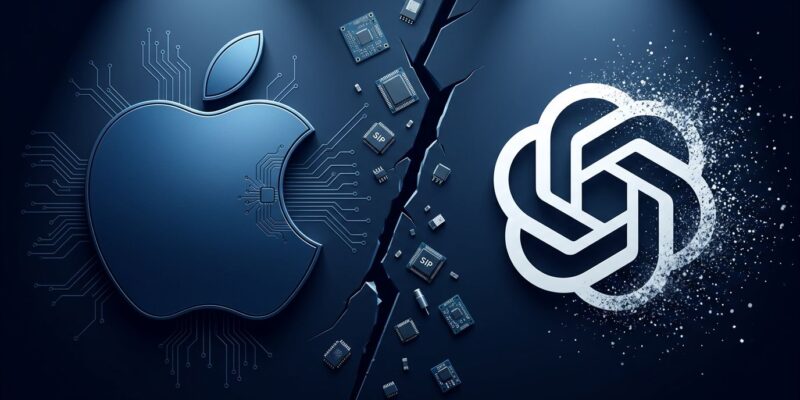
Apple filed a federal lawsuit against OpenAI on Thursday, July 10, 2026 — and the central allegation is almost cinematic. According to the complaint, filed in the Northern District of California, OpenAI’s hardware chief Tang Tan directed Apple job candidates to bring physical device components — batteries, SIPs, logic boards — to their job interviews as part of “show and tell” sessions designed to extract confidential product information. Tan spent 24 years at Apple, most recently as VP of product design for iPhone and Apple Watch. He knows exactly what to ask for. The lawsuit also names Chang Liu, a former Apple senior systems engineer who allegedly retained a company laptop after leaving, exploited a system vulnerability to download dozens of confidential documents, and continued receiving Apple project updates through a contact inside the company after his departure.
How the Scheme Allegedly Worked
The “show and tell” tactic is the most damaging allegation because it is specific and systematic. According to Apple’s complaint as reported by TechCrunch, Tan used Apple’s internal project code names during OpenAI interviews — code names that only insiders would recognize — to signal exactly what information he wanted. Candidates still employed at Apple were asked to bring physical hardware samples and discuss unreleased products. Tan also allegedly instructed new hires to conceal their OpenAI employment from Apple so they could remain inside the company longer and gather additional information before their last day.
This is not aggressive recruiting. This is coordinated intelligence gathering, and Apple says it has the evidence. Apple sent OpenAI a formal warning letter in February 2026 when it first detected suspicious activity. OpenAI did not respond. Consequently, Apple filed suit five months later. As of today, more than 400 former Apple employees work at OpenAI — a number that, in context, reads less like a talent pipeline and more like a structural data extraction operation.
The Stolen Laptop and the Paper Trail
Meanwhile, Chang Liu’s case may prove the legally decisive one. A stolen laptop with downloaded files is discoverable, documentable evidence — the kind that survives depositions and motions to dismiss. According to MacRumors’ coverage of the complaint, Liu exploited a system vulnerability to pull dozens of confidential documents before his departure, then failed to return the Apple-issued device. He also allegedly stayed in contact with a current Apple employee, Yu-Ting “Alyssa” Peng, to receive ongoing project updates after leaving — providing OpenAI with a live intelligence feed from inside Apple.
Jony Ive is referenced in the complaint — OpenAI acquired his hardware startup, io Products, for $6.5 billion in May 2025 — but is not named as a defendant. The lawsuit targets OpenAI the company, Tan, and Liu. Sam Altman is mentioned but not named. Apple’s decision to focus on specific individuals rather than the entire leadership team suggests this is a precisely targeted legal strike, not a broad reputation attack.
The Apple sues OpenAI Reversal Nobody Saw Coming
Two months ago, OpenAI was the one threatening to sue Apple. The 2024 Siri-ChatGPT integration deal, which gave Apple users access to ChatGPT through Siri and image tools, never delivered on OpenAI’s revenue expectations. OpenAI had projected billions annually from the partnership; the actual numbers “haven’t come close to happening,” per CNBC’s reporting. By May 2026, OpenAI had engaged outside legal counsel to explore breach-of-contract options against Apple.
Apple’s lawsuit explicitly notes the Siri-ChatGPT deal is “not an issue” in this suit — a careful legal separation that suggests Apple wants to preserve integration revenue even while pursuing trade secret claims. However, the relationship is in an effective death spiral. Two companies suing each other on separate legal theories while technically maintaining a commercial partnership is not a sustainable arrangement.
Related: ChatGPT Work Is Live: OpenAI Merges Codex Into One App
What OpenAI Was Building — and Why It Needs Apple Secrets
OpenAI’s first hardware device — codenamed “Sweetpea” — is expected in the second half of 2026. It is designed as a screenless AI companion: always-on ambient awareness, custom 2nm chips, environmental sensors, and no traditional display. Foxconn is the likely manufacturing partner, and OpenAI confirmed in January 2026 it was “on track” for H2 launch. The device is not a phone, but it is positioned to replace the phone’s role as the primary interface for computing — which makes it a direct threat to Apple’s highest-margin product.
The trade secrets Apple alleges were stolen — manufacturing processes, vendor relationships, component specifications, a proprietary metal finishing technique — are exactly the knowledge required to compress a decade of hardware R&D into a two-year sprint. Apple’s lawsuit is a legal counterpunch, but it is also a recognition that OpenAI is no longer a software partner. It is a hardware competitor with 400 of Apple’s former engineers and, allegedly, a library of Apple’s most sensitive IP. Moreover, if Apple wins an injunction removing Tang Tan from the hardware project, OpenAI’s H2 2026 device timeline becomes almost impossible.
Key Takeaways
- Apple filed a federal trade secret lawsuit against OpenAI today, naming hardware chief Tang Tan and engineer Chang Liu as defendants in a months-long scheme to extract confidential product information through job interviews
- The “show and tell” allegation — candidates instructed to bring physical Apple device components to OpenAI interviews — is specific, documented, and legally significant
- Two months ago, OpenAI was preparing to sue Apple over the failed Siri-ChatGPT integration; the companies are now adversaries on two separate legal fronts while technically maintaining their partnership
- OpenAI’s hardware device (“Sweetpea”), targeting H2 2026, is the commercial motive behind the alleged theft — the stolen IP covers exactly the supply chain and manufacturing knowledge needed to ship AI hardware fast
- With 400+ former Apple employees at OpenAI, this lawsuit signals that competitive talent migration at scale creates structural IP exposure — expect similar claims from other companies facing aggressive hiring raids