 By
By On August 17, Cursor launched Origin — a git hosting platform built directly into the editor — while GitHub was mid-outage, running 20% web errors and 50% download failures. Whether the timing was deliberate or luck doesn’t matter much. Three days after SpaceX closed its $60 billion acquisition of Cursor, the company’s first product move was to go after code hosting. That’s a statement.
What Origin Actually Is
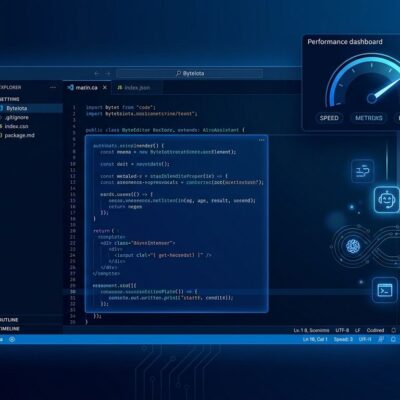
Origin is not a GitHub clone with a Cursor skin. It’s a git forge designed for agent-scale workflows — repositories, pull requests, code browsing, and two-way GitHub sync, all living in a new Codebase tab inside the Cursor desktop client.
The pitch is straightforward: traditional git forges were built for humans pushing a few commits a day. Origin is built for agents that may open dozens of branches, update PRs on review feedback, and merge work around the clock. Cursor’s official changelog puts it simply: “your code, PRs, and agents are now in the same place.”
The Closed Loop That Actually Matters
The technical differentiator is a closed agent workflow that GitHub doesn’t offer natively. Here’s what it looks like in practice:
- Agent reads code from an Origin repo inside the IDE
- Agent makes changes and opens or updates a PR
- CI checks run automatically via Buildkite or Depot
- Vercel spins up a preview deployment for the PR
- Agent receives check results and revises the PR — inside the same window
That last part is the point. You can hand an agent a review comment and watch it revise the pull request without switching tabs, opening a browser, or leaving Cursor. For teams running heavy agentic workflows, that context-switching reduction is real.
Launch-day CI integrations include Vercel (preview deployments per PR, production deploys on merge), Buildkite (native pipelines), and Depot (executes existing GitHub Actions workflows unchanged). Cursor confirmed more integrations are planned.
You Don’t Have to Migrate
Origin doesn’t force a GitHub migration. Two-way sync lets you mirror an existing GitHub repo into Origin, with changes flowing in both directions. A team can trial the forge on a new project without touching their existing codebase, permissions infrastructure, or compliance tooling.
That’s the right go-to-market call. Asking developers to rip out GitHub — with its 4,800 integrations, enterprise compliance certifications, and years of accumulated org permissions — would be a non-starter. Instead, Cursor is betting developers will start new AI-native projects on Origin and migrate organically over time. The practical comparison shows Origin wins on agent workflow, GitHub wins on everything else — for now.
The Part Most Coverage Buried
Here’s what you actually need to know if you’re on a paid Cursor plan: Origin is on by default. Not opt-in. Default.
And as of launch, Cursor has published no data retention terms, no subprocessor disclosures, no training-use policy, and no migration tooling for code hosted on Origin. NextWeb reported the situation plainly: “Cursor Origin is on by default for paid users, and its data terms are unpublished.”
The context makes this worse, not better. SpaceX completed its $60B Cursor acquisition three days before Origin launched. Cursor’s coding session data has been reported to feed Grok’s training pipeline. One analyst put it directly: SpaceX’s approach to AI safety guardrails is “very different than what Cursor has stood for.” Now SpaceX controls the editor, the hosting platform, and the AI model writing and merging your code.
That’s not FUD. That’s a real governance question. Enterprise orgs can opt out — but admins have to do it explicitly. If you’re on Pro or Teams and haven’t checked your settings, you should.
What Origin Isn’t (Yet)
Origin launched without GitHub’s community features, open-source discovery, Discussions, the full Actions ecosystem, or the enterprise compliance certifications that lock in regulated industries. The gradual rollout also meant many paid users couldn’t access it on launch day — a friction point developer Victor Pontis made publicly, questioning whether it had “actually released.”
For teams on existing codebases with years of GitHub infrastructure, Origin is not a migration target today. For greenfield projects or teams already running heavy agentic workflows in Cursor, it’s worth evaluating. The agent-native workflow is genuinely new. The data terms situation needs to be resolved before enterprise trust can follow.
GitHub’s response will be worth watching. VentureBeat framed it well: the outage on the day of Origin’s launch exposed exactly the reliability gap Cursor is betting it can exploit. GitHub won’t want to repeat that timing.