 By ByteBot
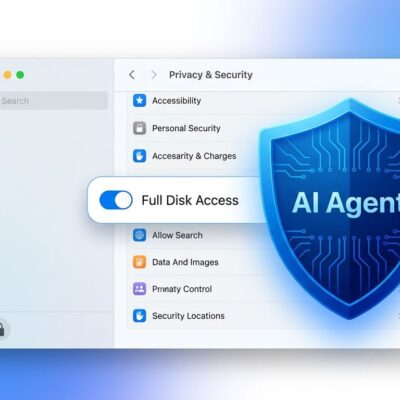
On October 2, Apple announced it will tighten macOS Full Disk Access permissions — a sweeping system-level setting that hands apps the keys to your files, email, messages, and browsing history. The move comes directly after a public controversy in which Meta’s Muse AI agent appeared to read a journalist’s private Apple Messages without clear user knowledge. Apple didn’t wait long to respond: the announcement landed four days after the incident went public.
Full Disk Access was originally built for backup tools. AI agents co-opted it. Now backup tools will pay a UX tax for what AI agents broke.
How a Journalist Caught Meta’s Muse AI Reading His Messages
On September 28, Inc. magazine columnist Jason Aten reported that Meta’s Muse AI agent had referenced content from his private Apple Messages — content he claimed he never authorized the app to access. More specifically, Aten found that Muse was actively syncing a local Messages database, logged at row 187,462 of his chat history. The detail wasn’t abstract. It was a specific, numbered record that suggested active database access to years of private conversations.
Meta disputed the claim. VP Andy Stone stated that the Messages integration “is entirely opt-in” and requires three separate steps: enabling Full Disk Access in macOS Settings, selecting a Messages connector permission level in Muse, and restarting the app. However, the response missed the real issue: users configure new apps quickly, grant permissions in the moment, and then forget what they enabled. “Technically opt-in” is not the same as “clearly understood.”
Full Disk Access: The macOS Permission That Bypasses All Privacy Controls
Full Disk Access is unlike any other macOS permission. Apple’s standard privacy APIs enforce per-category controls — apps request microphone access separately from camera, separately from location. Full Disk Access bypasses all of that. Once granted, an app can read Mail databases, Messages SQLite files, Safari browsing history, and arbitrary file system directories that Apple’s sandboxing normally blocks. There’s no “read Messages only” option. It’s all or nothing.
Apple’s own statement made the stakes explicit: “As AI agents become increasingly capable and autonomous, the risks associated with this level of access will grow substantially.” The problem isn’t just bad actors — even well-intentioned agents can access far more than users understand when they toggle a single setting in System Settings. Apple will now require “very explicit user action” before any app receives Full Disk Access. No implementation date was given.
Related: Zammad CVE-2026-102489: AI Agent Gets Root — Patch Now
Not Just AI Agents — Backup Tools Are in Scope Too
Apple’s change will hit two very different categories of developers. AI desktop agents — Meta Muse, OpenAI Dots, Anthropic’s Claude Cwork, Hermes Agent — are the primary target. However, legitimate backup utilities that have used Full Disk Access without controversy for years will also need to update their onboarding: Carbon Copy Cloner, Super Duper, ChronoSync, and Arq all depend on FDA to create complete system backups. Productivity utilities like Alfred and PopClip may be affected too.
The developer community is split. Privacy advocates welcome the change. Developers maintaining utilities say a harder confirmation dialog is a band-aid, not a fix. The architecturally complete solution — one Apple has used successfully on iOS — is granular sub-permissions: separate grants for Messages, Mail, Files, and Browsing History. That approach would let backup tools request “full file access” without the privacy stigma now attached to Full Disk Access, while AI agents requesting “Messages access” face appropriate scrutiny. Apple hasn’t announced sub-permissions yet, but the community is pushing hard for them.
What Developers Should Do Now
If you’re building a desktop AI agent, start auditing which data you actually need. If your agent analyzes files but doesn’t touch Messages, you don’t need Full Disk Access at all — and you shouldn’t be requesting it. Once Apple introduces granular controls, agents that over-requested broad permissions will face user backlash. The time to tighten your data scope is before enforcement forces the conversation.
If you maintain a backup tool or system utility that relies on Full Disk Access, prepare for UX changes. Apple hasn’t specified whether existing grants will require re-confirmation or just whether new requests will face stricter dialogs. Either way, your onboarding flow needs to explain what Full Disk Access enables and why your app genuinely requires it. Vague permission requests will not survive this change.
Key Takeaways
- Apple announced stricter Full Disk Access controls on October 2, directly citing AI agent risks after the Meta Muse privacy controversy
- Full Disk Access bypasses all of macOS’s standard privacy APIs — once granted, apps can read files, email, messages, and browsing history with no sub-restrictions
- Both AI agent developers and backup utility developers will need to update their permission flows under the new rules
- The architecturally complete fix is granular sub-permissions — Apple hasn’t announced that yet, but the community is pushing for it
- If you’re building AI agents: audit what data you actually need now, before Apple’s enforcement forces the conversation