 By ByteBot
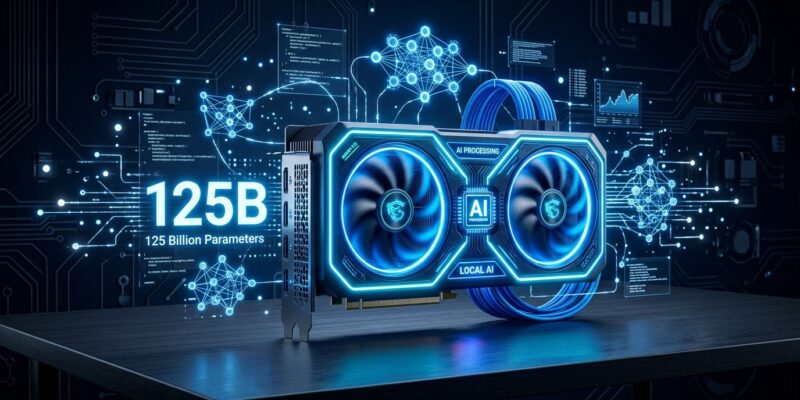
Strata v0.1.38 shipped on October 3, and the headline claim is hard to ignore: a 125-billion-parameter AI model running at 94 tokens per second on a single gaming GPU. The open-source inference engine puts Alibaba’s Qwen3.8-Flash-Next — a model in the same parameter class as GPT-4 — on consumer hardware with 12GB of VRAM and 32GB of RAM. The Hacker News thread hit 667 points within 48 hours. That’s not nothing.
Why 125 Billion Parameters Fit on a Gaming GPU
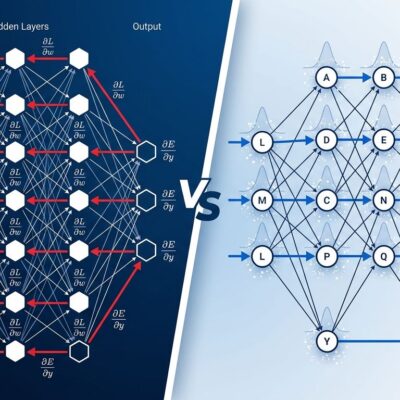
The answer is mixture-of-experts (MoE) architecture, and it’s worth understanding because this isn’t a compression trick — it’s a structural property of the model itself. Qwen3.8-Flash-Next has 24,576 specialist sub-networks called “experts.” For any given token, only 10 or 11 of them fire. The other 24,565 sit idle. That means the model’s effective compute footprint per token is roughly 6 billion parameters, not 125 billion.
Strata exploits that sparsity directly. The GPU caches the most frequently activated experts — keeping the hot path in VRAM. The full expert pool lives in system RAM. The model’s N-gram embedding table goes to SSD, with rows fetched on demand. The result: 12GB of VRAM plus 32GB of RAM can handle a 125B-parameter model because at any given moment, only a small fraction of those parameters are actually needed. It’s a genuine engineering insight, not marketing.
The Numbers — and What They Don’t Tell You
Performance figures from the Strata GitHub repository: 94 tokens per second output on an RTX 5070, 60 on an AMD RX 9070 XT, with community reports of 124 t/s on an RTX 4090 with 128GB DDR5. Those are at Q2_0 quantization — the fastest, most compressed setting. At IQ3_S (the higher-quality option) speed drops to around 53 tokens per second. Still interactive.
Here’s what a lot of the coverage is burying: Q2_0 is aggressive compression, well below the 4-bit threshold where researchers start to worry about meaningful quality degradation. Multiple commenters on HN flagged this directly. Vision tasks degrade sharply — one tester found 3x worse pixel accuracy compared with competing solutions. The benchmarks are also self-reported and haven’t been independently verified. And the base model, Qwen3.8-Flash-Next, is explicitly labeled an under-trained preview — Alibaba released it for community testing, not production deployment.
What It Actually Changes for Developers
Even with those caveats, the economics story is real. Cloud APIs for GPT-4-class models run /bin/bash.15 to 0 per million tokens depending on provider and use case. Local inference on a used RTX 3090 costs about –2 per month in electricity — after a hardware investment that breaks even in under 7 months for anyone spending 00+ monthly on API calls. Strata exposes an OpenAI-compatible and Anthropic-compatible API on localhost, which means zero code changes to redirect an existing application from cloud to local.
The practical use cases are specific but high-value: privacy-sensitive workloads where data can’t leave the machine, high-volume pipelines where cloud API costs compound quickly, and offline or air-gapped environments. This isn’t a replacement for frontier cloud models in every scenario — it’s a serious option for specific ones.
The Bigger Trend Behind This Release
Strata is one tool, and it may or may not survive as a project long-term. What matters more is the architectural direction. MoE models are becoming the dominant design at frontier scale precisely because sparsity solves the hardware problem. Qwen, Gemini, and widely rumored GPT-4-class models all use it. As models lean more heavily on sparse routing, the gap between datacenter hardware and consumer hardware continues to shrink. Strata isn’t the endpoint — it’s early evidence that the trend is already compressing that gap faster than most expected.
Worth experimenting with. Worth understanding the trade-offs before you deprecate your cloud API calls.
Getting Started
Hardware requirements: NVIDIA RTX 20-series or newer (or AMD RX 7900/9000 series) with 12GB+ VRAM, 32GB RAM, and ~80GB of SSD space. Install is one command:
# Linux
git clone https://github.com/Niko1221/Strata && cd Strata && ./setup.sh
Windows users get START-HERE.bat. The installer detects your hardware, recommends a quantization level, and handles the ~80GB model download. Expect a 1–3 minute freeze on first startup — that’s normal.