 By ByteBot
PewDiePie spent months building Ajax, a personal AI agent fine-tuned on Qwen3.5-9B to run entirely on his home server. OpenAI banned his account twice in the process. The cited reason: distillation — feeding a frontier model’s outputs into a smaller model’s training pipeline. He lost the second appeal, finished the project anyway, and released it on October 2. Ajax handles email, calendar, web search, and documents, and it costs nothing per query. The ban is the interesting part.
What Ajax Actually Is
Ajax is not a standalone model release — it is the agent layer for Odysseus, Kjellberg’s self-hosted AI workspace he open-sourced in May 2026. Odysseus bundles chat, email, calendar, deep research, and task management into a single Docker-based dashboard that runs locally with no telemetry. Ajax is the custom model that powers the autonomous agent mode: the part that browses the web, drafts emails, and coordinates tasks without cloud API calls.
The base model is Alibaba’s Qwen3.5-9B, released in February 2026. It has a 262,144-token native context window, an integrated vision encoder, and runs at 5.5GB VRAM with Q4_K_M quantization — meaning any GPU with 8GB of memory can host it. At FP8 the requirement rises to roughly 11GB; at full BF16 precision, around 18–19GB.
The Ban: Distillation, Explained
This is the part that matters for developers. Kjellberg wanted high-quality training data for Odysseus tool tasks, so he used chain-of-thought reasoning outputs from OpenAI’s Sol model as part of Ajax’s training pipeline. OpenAI’s terms of service are explicit: “using AI output content to develop models that compete with OpenAI is prohibited.” His account was flagged, banned, and suspended. He appealed, got reinstated, then got banned again.
The technique is called knowledge distillation — training a smaller model to mimic a larger one by learning from its outputs rather than raw human labels. It is extraordinarily effective, which is exactly why frontier labs prohibit it in their consumer terms. This is the same practice OpenAI accused DeepSeek of in early 2025, and the same clause that applies to any developer who has ever thought about using GPT-4o responses as fine-tuning examples. If you have, stop. The enforcement is real.
The Legal Training Path: GRPO on Your Own Traces
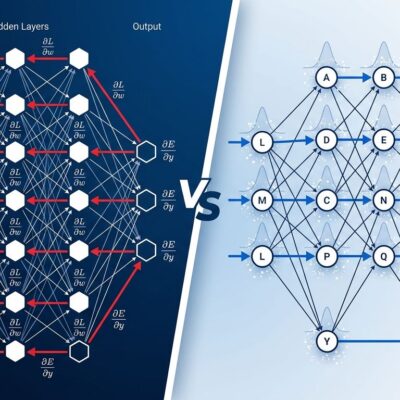
After the second ban, Kjellberg pivoted to a fully open alternative. He used GRPO (Group Relative Policy Optimization), a reinforcement learning method that trains the model on its own successful task completions rather than any external model’s outputs. The process: run the model on Odysseus tasks repeatedly, collect traces where it succeeded, reward those outcomes, and let GRPO reinforce the above-average behaviors across training steps.
He also collected real Odysseus usage traces — documents, email drafts, calendar queries, research tasks — supplemented with synthetically generated data filtered for quality. The tooling is entirely open-source: the Odysseus workspace provides the task environment, and frameworks like ART (Agent Reinforcement Trainer) handle the vLLM + Unsloth-powered GRPO loop. This is the approach any developer can replicate without touching a frontier API’s output.
Abliteration: A Scalpel With Side Effects
Kjellberg also applied abliteration to strip Ajax’s refusal behavior. The technique, documented thoroughly on Hugging Face, identifies the “refusal direction” — a vector in the model’s activation space that correlates with denial responses — then orthogonalizes the model’s weights against it. The tool used was HERETIC, an open-source utility available for any Hugging Face checkpoint.
The result is a model that simply answers without triggering refusal logic. The trade-off is real: abliteration is not a clean excision. It shifts behavior across the entire weight space and can introduce subtle degradation in coherence, tone, and edge-case reasoning. It is useful for a controlled personal agent; it is not something you deploy in a product that handles other people’s data.
What This Tells Us About Personal AI Agents
Ajax lands in a week when local AI has been the recurring theme. DwarfStar-4 runs DeepSeek V4 Flash at 39 tokens per second. Strata puts a 125B model on a gaming PC. Janus runs any LLM from a single Go binary. Ajax adds something none of those do: a fine-tuned, task-specialized model trained on its operator’s actual workflow.
The distillation ban is the real lesson. The open path — GRPO on your own traces, synthetic data, open base models — is not a consolation prize. A model trained on your tasks will outperform a distilled general-purpose one at those specific tasks anyway. PewDiePie learned this the expensive way. The hardware requirements are now low enough that this approach is within reach for any developer with a mid-range GPU. The playbook is open.