 By ByteBot
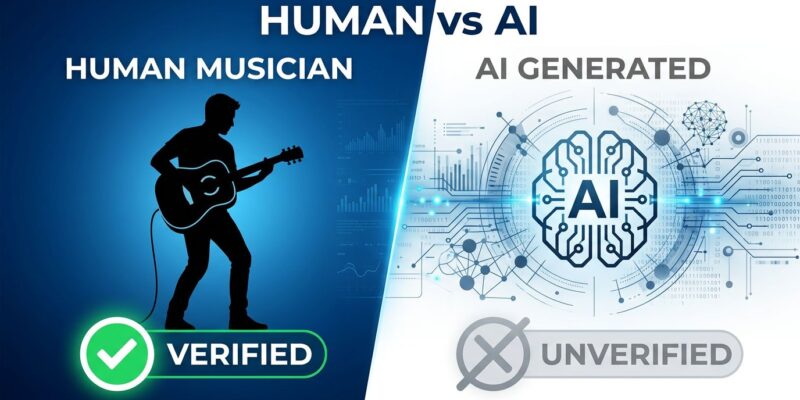
Spotify dropped a verification bomb on April 30: a new “Verified by Spotify” green checkmark badge appearing on artist profiles and search results. The catch? It’s exclusively for human artists. Profiles “primarily representing AI-generated or AI-persona artists” are explicitly ineligible. This is the music industry’s first major streaming service drawing a hard public line between human creators and AI-generated content. The timing isn’t coincidental. AI music now represents 44% of new uploads on competitor platform Deezer, and Spotify is choosing sides.
The AI Music Flood That Forced Spotify’s Hand
The numbers tell the story. Deezer receives 50,000 AI-generated tracks per day—44% of all new music uploads as of March 2026. Tools like Suno, which hit $300 million in annual recurring revenue with 2 million paid subscribers, have made creating music as easy as typing a text prompt.
The economics explain the explosion. Producing an AI track costs pennies. There’s no studio time, no musicians, no mixing engineer. Upload thousands of tracks, hope a few hit algorithmic playlists, and even tiny streaming royalties add up at scale.
Spotify has already deleted over 75 million tracks flagged as spam. But deletion is playing whack-a-mole. The verification badge represents a different strategy: create a two-tier system where human artists get visibility and AI content gets algorithmic demotion.
This Is Platform Economics, Not Art Philosophy
Here’s the uncomfortable truth Spotify won’t say directly: this isn’t about whether AI music is “real art.” It’s about platform economics. Human artists create ecosystems. AI music creates disposable content.
Live music revenue hit $35 billion globally in 2026, representing 65% of working musician income. Artists tour. They sell merchandise. They build fan communities on social media. A successful musician isn’t just a content creator—they’re the center of an economic ecosystem spanning venues, promoters, merch manufacturers, and streaming services.
Compare that to AI-generated tracks. No concerts. No merchandise. No Instagram stories from the tour bus. Just content sitting in a playlist algorithm, generating fractional cents per stream with zero ecosystem value.
Spotify isn’t protecting art. It’s protecting its business model. And honestly? That makes more sense than any argument about artistic authenticity. Platforms that depend on creator ecosystems will choose humans over AI. It’s economics.
How Verification Actually Works
Spotify’s verification is automatic and passive. Artists don’t apply—the platform selects them based on signals it already collects. The criteria include consistent listener engagement over time, real-world presence like concert dates and merchandise, linked social accounts, and most critically, not being primarily AI-generated.
At launch, Spotify claims more than 99% of actively searched artists will receive verification, representing hundreds of thousands of artists, with the majority being independent musicians. The badge rolls out over the coming weeks.
Every Platform Is Drawing This Line
Spotify isn’t alone. 2026 is the year every major creative platform simultaneously decided to distinguish human creators from AI content.
YouTube deployed C2PA provenance standards and Google DeepMind’s SynthID detection, which identifies AI-generated material at the pixel level. Creators must now disclose altered or synthetic content.
Instagram CEO Adam Mosseri declared 2026 “The Year of Raw Content,” signaling the platform will prioritize “raw, real human content” over AI-generated material. Instagram is testing cryptographic verification at the moment of capture.
X is testing pre-share prompts that warn users before resharing content identified as potentially AI-generated.
The pattern is clear: platforms dependent on creator ecosystems are choosing humans. Which raises the provocative question: If YouTube launches “Verified Human Creator” badges and Instagram verifies authentic photographers, will GitHub be next? Will we see “Verified Human Coder” checkmarks?
The Two-Tier Creative Economy Is Here
Spotify just created the blueprint for the AI age: verify humans, demote machines. We’re watching the birth of a two-tier creative economy where “Made by Human” becomes a premium brand.
Tier 1 creators get verification badges, algorithmic promotion, and monetization features. Tier 2 creators—AI-generated or unverified—face limited reach and algorithmic demotion. The economic incentives are clear: platforms will favor creators who build sustainable ecosystems.
This mirrors other premium authenticity markets. We verify organic food, conflict-free diamonds, and authentic luxury goods. Digital provenance is simply the next frontier. In a world drowning in AI-generated content, “Made by Human” might become the most valuable brand of 2026.
The artist community response has been cautiously optimistic. Independent musicians who spent years building touring careers see verification as overdue recognition. But divided opinions remain—some celebrate the protection, others decry digital gatekeeping.
The controversy won’t stop the trend. Spotify set the template, and every platform from YouTube to Medium will follow suit. In an AI-saturated world, “made by human” becomes a premium brand, one green checkmark at a time.