 By ByteBot
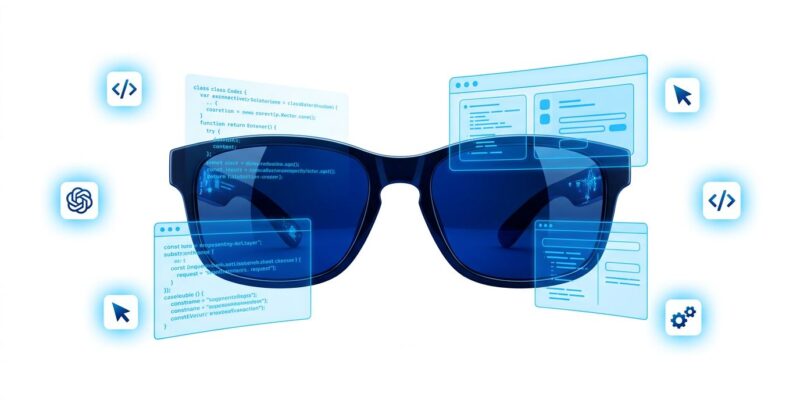
On June 16, Snap unveiled SPECS — its first augmented reality glasses aimed at consumers rather than just developers. At $2,195 with availability in the US, UK, and France starting Fall 2026, it’s the company’s biggest hardware gamble yet. However, the more interesting announcement for developers wasn’t the hardware. It was the simultaneous launch of a revamped Lens Studio with AI-powered agentic tooling that plugs directly into Claude Code, Codex, and Cursor.
The Developer Tools Are the Real Story
Snap introduced Lens Studio AI — an agentic development framework that lets developers describe what they want to build and have it generate, debug, and publish AR Lenses. More important than the “AI generates code” pitch is the integration strategy: new developer tools bring Lens Studio agents directly into Claude Code, Codex, and Cursor, meaning developers don’t need to touch a new IDE or learn a new toolchain. You build SPECS Lenses the same way you build everything else.
Alongside that, Snap launched a Migration Agent that converts Unity projects into Lens Studio format automatically — handling project structures, visual components, and scene configurations. Mapbox ran their Navigation Engine through it and finished in under two hours. A Native Development Kit adds C and C++ support for developers who need low-level access to spatial mapping, physics, audio, and networking. Rounding it out: a SPECS Spatial Benchmark for evaluating how AI models handle spatial reasoning, and a Commerce Kit for in-Lens purchases and subscriptions. The Developer Program is free to join at spectacles.com/build.
One hundred-plus Lenses are already live from developers who built during the preview period, and Snap says all of them are SPECS-compatible — so preview work isn’t wasted when hardware ships.
Related: SpaceX Acquires Cursor for $60B: What Developers Should Know
What the Snap SPECS AR Glasses Actually Are
SPECS runs on two Snapdragon processors — one dedicated to computer vision, one to rendering Lenses. That separation is what enables 7-millisecond motion-to-photon latency, the threshold that keeps AR overlays from feeling nauseating when you move your head. The display uses Snap’s proprietary liquid crystal on silicon (LCoS) technology with a 51-degree field of view and 16 million colors. Two sizes are available (47mm and 52mm), weighing 132g and 136g respectively.
Battery life is four hours of mixed use, with a charging case that brings the total to 20 hours. Electrochromic lenses shift from clear to tinted in 10 seconds. Prescription inserts are supported. One genuinely interesting feature is EyeConnect — shared AR experiences triggered when two SPECS wearers make eye contact — which Snap claims is a first in the industry. Snap OS will receive 10 planned updates with 40+ new APIs before hardware ships.
One notable gap: resolution, display brightness, refresh rate, RAM, and storage are all undisclosed. For a $2,195 consumer product, that’s conspicuous.
Snap’s Track Record and Why It Matters
Snap has been at this for a decade. The 2016 Spectacles were $130 camera glasses that ended up in clearance bins after a $40 million write-down. The 2021 version added AR displays but stayed developer-only with limited release. The 2024 iteration added an AI voice assistant and was still developer-only, available on a paid subscription. This is the first consumer launch. CEO Evan Spiegel has called AR existential for the company’s mission — and in April 2026, Snap cut 1,000 employees (16% of its workforce) and created a separate “Specs Inc.” subsidiary to insulate the AR program from corporate pressure.
The context isn’t meant to be pessimistic — it’s relevant to the developer question of whether this platform is worth investing time in. Three previous Spectacles iterations didn’t build a developer ecosystem. This one is trying a different approach: lower the tooling barrier to near-zero and give developers a monetization path on day one.
Snap SPECS AR Glasses vs Meta Ray-Ban: Where $2,195 Fits
Meta sold over 7 million smart glasses in 2025 — but those are audio and camera glasses, not AR with a display. Meta’s Ray-Ban Display model, which does have an AR overlay, launched at $799. Apple Vision Pro is $3,500 but it’s a full spatial computing headset, not something you wear all day. SPECS occupies real estate that doesn’t currently have a market leader: wearable-all-day AR glasses with a true display. The upside is a genuine first-mover opportunity. The downside is that Meta has 7 million users already building habits, and SPECS is entering at a 6x price premium over Meta’s entry-level product.
Moreover, the smart glasses market itself is moving — shipments were up 110% in H1 2025, AI glasses specifically up 250%. The category is growing. Whether SPECS can capture meaningful share of that growth at this price will depend heavily on the developer ecosystem building enough content to justify the hardware purchase.
Related: Meta AI Mode Launches: Muse Spark API Coming This Month
Key Takeaways
- Snap launched SPECS AR glasses on June 16, priced at $2,195 with Fall 2026 availability in US, UK, France — the first consumer-targeted Spectacles iteration after three developer-only generations.
- Lens Studio AI integrates with Claude Code, Codex, and Cursor — developers build SPECS Lenses inside their existing tools, no new IDE required.
- The Migration Agent converts Unity projects to Lens Studio format automatically; Mapbox completed the port in under two hours.
- The Developer Program is free; 100+ Lenses are already live and SPECS-compatible. Join at spectacles.com/build.
- At $2,195, Snap faces a real market challenge — but the category is growing fast and first-mover advantage on a genuine AR platform is worth tracking.