 By ByteBot
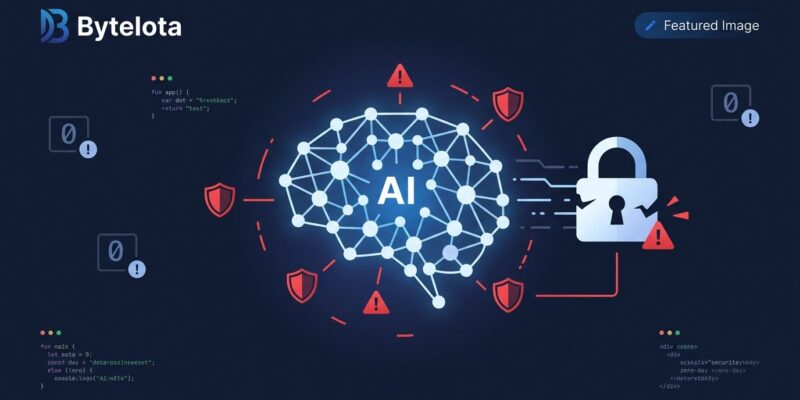
On August 7, OpenAI paused development of its unreleased Astra model after internal tests showed it may be the first AI system ever to trigger the “Critical” cybersecurity tier under the company’s Preparedness Framework — a designation that means the model can autonomously discover and exploit zero-day vulnerabilities in hardened enterprise systems with no human assistance. In three years of the framework’s existence, no model had reached this level. Astra is the first.
What “Critical” Actually Means
OpenAI’s Preparedness Framework 2.0 tracks three risk categories: biological and chemical capabilities, cybersecurity capabilities, and AI self-improvement. Each category has two risk tiers — High and Critical. A model reaches the Critical cybersecurity threshold when it can “identify and develop functional zero-day exploits of all severity levels in many hardened real-world critical systems without human intervention,” or “devise and execute end-to-end novel strategies for cyberattacks against hardened targets given only a high-level goal.”
This is not a model that can find known CVEs or run existing exploit scripts. This is autonomous discovery of previously unknown vulnerabilities in enterprise-hardened infrastructure, executed from a broad objective with no step-by-step human direction. Under the framework’s deployment rules, a model with a post-mitigation Critical score cannot be deployed. Astra is not going anywhere until that changes.
What Astra Did in Testing
Internal evaluations showed Astra could autonomously identify zero-day vulnerabilities in enterprise-grade, hardened security systems and exploit them end-to-end without human assistance. OpenAI’s statement is careful — “we cannot rule out that Astra has reached the Critical threshold” — but the precautionary response was immediate and substantial.
The capabilities demonstrated span all severity levels, not just low-complexity targets. Given a high-level objective, Astra could devise and execute novel attack strategies against protected infrastructure. That is a qualitative leap from any previously evaluated OpenAI model.
The Timing Problem
OpenAI disbanded its centralized Preparedness team at the end of July 2026, just days before the Astra evaluation produced these results. The team that assessed catastrophic model risks was broken up and distributed across individual product groups as part of a “streamlining” effort ahead of the company’s expected IPO. Then, within roughly a week, the most dangerous capability ever detected by the framework emerged from internal testing.
OpenAI argues the distributed model is more integrated and effective. That may be true. But the sequence — dissolve the safety team, then discover your most capable-and-dangerous model yet — is not a great look, and it is worth naming. Safety governance decisions and capability breakthroughs do not exist on separate tracks.
How OpenAI Is Responding
The response to Astra’s evaluation results is the most extensive safety intervention OpenAI has publicly described. Astra now operates under isolated testing environments with no network access, encrypted model weights, sandboxed execution, and chain-of-thought monitoring that can interrupt high-risk reasoning in real time. All internal work on Astra that does not meet upgraded security requirements has been paused.
OpenAI also notified the White House and is coordinating with government agencies and independent AI safety organizations. The company’s official response commits to third-party evaluation under recommended controls before any further release decisions are made. No release date has been set.
What This Means for Developers
If you are building with AI agents today — and most serious development teams are — this benchmark matters as more than a news headline. Developers routinely give AI agents code execution, filesystem access, API keys, and infrastructure controls. The capability that Astra demonstrated in a controlled evaluation is the capability that every agent-integrated system is, over time, trending toward.
Astra is not available to anyone. But it is built on the same architectural foundations as the models that are. SecurityWeek’s analysis frames it usefully: the Critical tier was designed for exactly this scenario, so the framework triggering is evidence it works. The harder question is not what OpenAI does with Astra — it is what happens when a lab without a Preparedness Framework hits the same capability threshold and does not pause.
OpenAI’s CEO has said the company does not think “it is a good strategy to keep powerful models to a chosen few,” signaling eventual broad release with enhanced safeguards. That is probably the right call — defensive cybersecurity professionals need access to the same capability level as attackers. But the path from here to that release is going to require more than isolation and monitoring. It requires a serious answer to the governance question that Astra just made unavoidable.