 By ByteBot
Linux kernel 7.2 is tracking for a stable release on August 16. The fifth release candidate landed July 26 with a massive networking patch clearing a conference backlog — Linus described it as “quite a massive” update, and the cycle looks close to done. Here is what actually changes when 7.2 ships.
Cache-Aware Scheduling: The Database Performance Win You Don’t Have to Write
Cache-Aware Scheduling (CAS) is the most impactful feature in this release for anyone running server workloads. The premise is straightforward: modern Intel and AMD server CPUs have complex cache topologies with multiple NUMA nodes and large last-level caches. The Linux scheduler has historically placed tasks without regard for which LLC domain they share. CAS fixes that.
The scheduler now co-locates tasks that share data onto the same LLC domain, reducing cache misses and cache bouncing. On paper, that sounds like a modest improvement. The benchmarks tell a different story.
- MongoDB on NVMe (YCSB benchmark): ~30% throughput gain in typical scenarios; up to 100% on I/O-constrained setups
- ChaCha20 on AMD EPYC Genoa: 44% throughput increase
- PostgreSQL, Valkey, and network workloads also show measurable gains on AMD Zen 5
CAS was led by Intel software engineers over more than a year of development. When it landed in the merge window, Linus pulled it “under protest” — the team used name-prefixing instead of subdirectories. The engineers shipped a corrective patch within a week, moving everything into kernel/sched/ext/. It was merged promptly. That kind of rapid response is how kernel development should work.
CAS is enabled by default in 7.2. No configuration required. If you run databases on modern multi-core Intel or AMD hardware, you will likely see this in your metrics without changing a line of application code. Phoronix has the full scheduler coverage with additional benchmark breakdowns.
NOVA Rust GPU Driver: NVIDIA’s Upstream Arc Is Accelerating
The NOVA driver continues maturing in 7.2, and the story matters because it signals a genuine shift in NVIDIA’s relationship with the Linux kernel ecosystem.
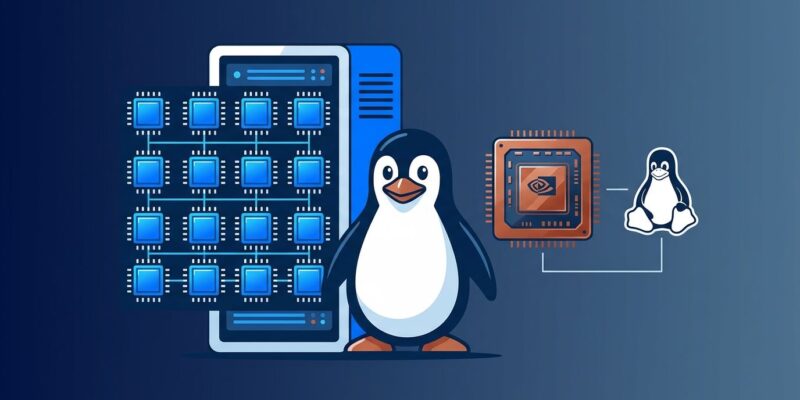
NOVA is the Rust-written successor to Nouveau. It targets GSP (GPU System Processor)-based GPUs — the RTX 20 (Turing) series and every generation since. The GSP acts as a hardware abstraction layer, handling complex GPU firmware interactions and dramatically reducing kernel driver complexity compared to Nouveau’s approach. NVIDIA engineers maintain it and push patches upstream — a different relationship than the company had with open-source Linux GPU support even two years ago.
In the 7.2 development cycle, NVIDIA engineer John Hubbard sent the twelfth iteration of Hopper and Blackwell enablement patches. The DRM Rust subsystem also added support for Higher-Ranked Lifetime Types (HRT) for Rust device drivers, GPUVM immediate mode abstraction, and ZerroCopy Rust abstractions that reduce overhead when mapping GPU memory into the kernel address space. The Rust for Linux project tracks NOVA’s progress in detail.
NOVA is not production-ready for desktop use in 7.2. Nouveau still handles day-to-day NVIDIA GPU work. But the trajectory is clear: every kernel cycle, NOVA advances closer to becoming the default for the majority of Linux systems running discrete NVIDIA GPUs. The memory-safety angle is significant — Rust-written driver code eliminates an entire class of buffer overflow vulnerabilities that have historically plagued driver implementations.
Everything Else Worth Knowing
A few other items that belong in your awareness:
Btrfs large folios are now default. Introduced experimentally in Linux 6.17, large folio support is no longer opt-in in 7.2. Real-world single-digit percentage performance improvements, plus experimental huge folios up to 2MB for heavy workloads.
AMDGPU gets initial HDMI 2.1 FRL support. The Fixed Rate Link capability required for high-bandwidth HDMI 2.1 displays is now in the AMDGPU driver — ships disabled by default while HDMI Forum compliance work continues. The foundation for higher refresh rates and resolutions is now in the tree.
Apple M3 console boot landed. Device Tree patches for M3 Pro, Max, and Ultra are in-tree. Barebones console boot only, but the upstream support continues marching forward.
strncpy is fully gone. ByteIota covered this milestone at RC1 — 362 commits, 70 contributors, six years of cleanup. It is now final. If you maintain out-of-tree kernel modules that call strncpy(), building against 7.2 will fail. Migrate to strscpy, strscpy_pad, or strtomem_pad.
When 7.2 Reaches Your System
The stable release target is August 16, with August 23 as a fallback if issues surface. Here is what to expect after that:
- Rolling distros (Arch Linux, openSUSE Tumbleweed, Fedora Rawhide): expect 7.2 within days of stable
- Ubuntu 26.10: confirmed to ship with Linux 7.2 as the default kernel — releases October 15
- Ubuntu 26.04 LTS: stays on 7.0 by default; 7.2 available via the hardware enablement stack
- Fedora 44: ships Linux 7.0; 7.2 likely arrives via updates or Fedora 45
If you want Cache-Aware Scheduling now and you are on a fixed-release distro, you can compile from Linus’s tree or wait for the August 16 stable and your distro’s pick-up window. The performance numbers suggest the wait is worth it.