 By ByteBot
Reuters reported Monday that DeepSeek is designing its own AI chip. The detail that matters: it’s an inference chip, not a training chip. Training happens once. Inference runs every time a user sends a prompt — and in 2026, inference accounts for roughly 70% of all AI compute demand, up from one-third in 2023. DeepSeek is building silicon around what its models actually do at scale. For developers already calling the DeepSeek API, this has implications that land well before any chip ships.
What DeepSeek Is Building
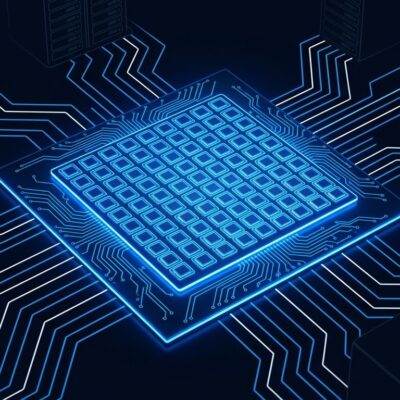
Three sources familiar with the project confirmed to Reuters that DeepSeek began the chip effort about a year ago. The chip targets inference — the phase where a trained model generates responses — not training. Bloomberg and the Japan Times corroborated the report on July 7-8, and the company has been quietly expanding its chip-engineering team without public job postings.
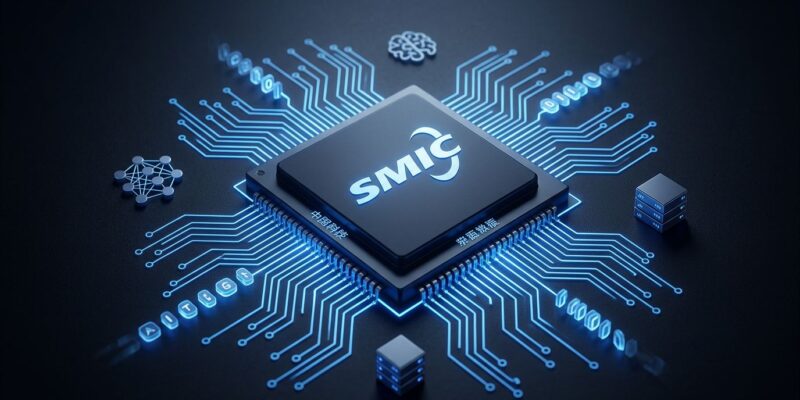
The proposed manufacturing partner is SMIC, China’s largest foundry. The project is early-stage: DeepSeek is in discussions with chip-design, foundry, and memory firms. No announced product, no roadmap, no production timeline.
Why Inference — and Why the Architecture Makes Sense
DeepSeek’s model architecture gives this project a logic that competitors can’t replicate directly. The V4 series uses Mixture-of-Experts: V4-Pro has 1.6 trillion total parameters but activates only 49 billion per token — roughly 3% of the network per forward pass. V4-Flash activates 13 billion out of 284 billion. Inference cost scales with active parameters, not total parameters. A chip co-designed around MoE sparsity patterns could extract efficiency gains a general-purpose GPU cannot.
The economics reinforce the decision. Inference can account for 80-90% of the lifetime operational cost of a production AI system because it runs continuously. OpenAI (Jalapeño, built with Broadcom), Google (8th-gen TPU now split into separate training and inference variants), Amazon (Inferentia3), and Apple all reached the same conclusion: you cannot cede control of inference economics to Nvidia indefinitely. DeepSeek is following the same logic, under more acute hardware constraints.
The SMIC Constraint Is Real
US and Dutch export controls have blocked SMIC from acquiring EUV lithography equipment, so the company manufactures advanced nodes using older DUV tools. Its best production node is 7nm — roughly equivalent to where TSMC was in 2018. TSMC’s current N3 and N5 nodes are 2-3x more power-efficient than SMIC’s 7nm according to TechInsights teardown analysis.
Separate US controls also restrict China’s access to High-Bandwidth Memory — essential for AI inference throughput. The chip will exist. Whether it competes with TSMC-fabbed inference silicon is a harder question. Realistic production timeline: 2028 at the earliest, assuming SMIC yield rates improve from current estimates of 20-40% for 7nm.
The Entity List Risk Is More Urgent Than the Chip
The chip is a 2028+ story. The Entity List risk is a 2026 story. A US interagency committee approved adding DeepSeek to the Commerce Department Entity List this year. The White House held off — reportedly to avoid escalating China tensions — but the designation was approved and remains on the table.
If DeepSeek is added to the Entity List, any production code path calling api.deepseek.com would become unrunnable for US persons and entities. Cloud marketplace listings would be pulled from Azure, AWS, and GCP. Open-weight model checkpoints on Hugging Face would survive — local inference via Ollama or vLLM remains legal — but the hosted API would not.
Developers with production dependencies on DeepSeek should have a fallback provider plan in place now. The chip announcement changes nothing about this calculus.
The Broader Signal
DeepSeek entering the custom silicon race confirms a pattern past the point of debate: full-stack AI ownership — model weights, serving infrastructure, and silicon — is now a competitive requirement. OpenAI’s Jalapeño and Google’s inference-specific TPU generation make the same strategic point. DeepSeek has more reason than most: no guaranteed access to advanced Nvidia GPUs, and Huawei Ascend chips create their own political exposure.
Custom inference silicon built around MoE sparsity is the right long-term call. The SMIC constraint is real, but building the capability now — even at 7nm — creates the engineering foundation for future nodes. DeepSeek’s API pricing is already the most competitive in its tier: V4-Flash at $0.09/M input tokens, V4-Pro at $0.435/M. If this chip reaches production, that gap widens. If the Entity List designation lands first, the pricing is irrelevant for US developers. Both timelines deserve attention.