 By ByteBot
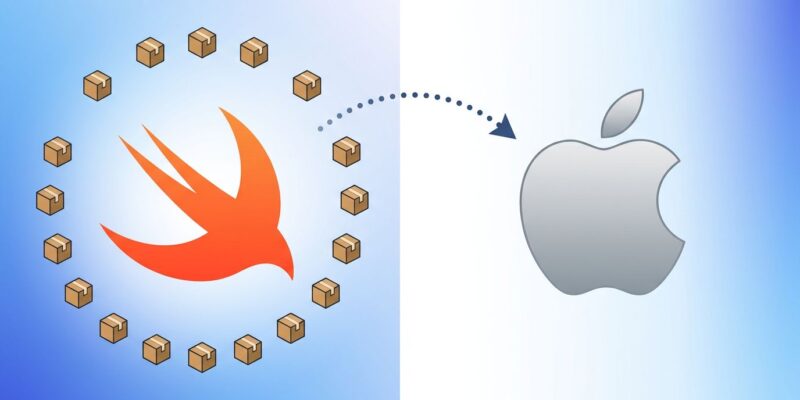
Swift Package Index (SPi) — the community-built tool Swift developers have relied on for package discovery, compatibility checking, and documentation hosting — officially joined Apple on June 23, 2026. Dave Verwer and Sven A. Schmidt, who built and maintained SPi since 2020, are now Apple employees. Apple’s immediate commitment: SPi stays open source, nothing changes for package authors or consumers today, and package signing features arrive “over time.” The Swift developer community is less sanguine.
More Than a Search Engine
SPi earns its status as critical infrastructure. Every time a Swift developer asks “does this library work on iOS 17 with Swift 6.1?” — SPi answers with real build data, not marketing claims. The platform runs 350,000+ automated compatibility builds per month across iOS, macOS, watchOS, tvOS, and Linux, on a cluster of 160 Apple Silicon cores. It indexes over 10,000 Swift packages and auto-hosts versioned DocC documentation for packages that opt in.
For context: npm has had an official registry since 2010. Go got pkg.go.dev with Go 1.11. Swift launched in 2015 and never got one — until community volunteers built SPi in 2020 and ran it for six years. Apple’s acquisition is effectively Swift’s missing official package registry arriving years late, built by the developers Apple should have employed to create it from the start.
What Apple Plans to Change
Apple’s stated roadmap focuses on package signing and identity verification — infrastructure npm, NuGet, and Go modules have long had. The more meaningful shift is the registry model itself. Today, adding a Swift package in Xcode requires a GitHub URL. Dave Verwer described the new direction as a registry that “doesn’t care where the original source is hosted,” removing the GitHub-only dependency for Swift package resolution.
The practical downstream effect: expect SPi integration directly in Xcode for in-IDE package discovery. Apple has been consolidating developer tools at WWDC26, and bringing Swift Package Index in-house fits that pattern. For package authors, Apple confirms there are no immediate changes required — indexing, compatibility builds, and documentation hosting continue unchanged.
Related: Apple Foundation Models at WWDC26: One API, Any LLM
The Question Developers Are Actually Asking
Apple’s open-source track record is genuinely credible: Swift went OSS in 2015, the Foundation framework runs the same code on Linux and Apple platforms, and Swift Build shipped under Apache 2.0 in early 2025. The concern is not that Apple will immediately vandalize SPi. The concern is structural — Apple now controls the discovery layer for its own ecosystem.
The Hacker News discussion scored 165 points within hours and surfaced a specific worry: Apple might deprioritize packages that compete with first-party Apple frameworks. The open-source pledge protects the codebase. It says nothing about curation decisions in Xcode integration or surfacing algorithms. Moreover, one commenter flagged Apple’s identity verification system as an accessibility problem — a blind developer was denied a personal account — raising questions about what friction package signing requirements might introduce.
Compare this to Apple’s App Store history: technically open, but Apple exercises significant discretion over what gets featured, approved, and removed. An SPi with Xcode-native integration and Apple-controlled ranking could look similar, regardless of what the open-source license says.
What Swift Developers Should Do Now
Nothing, for now. Package authors don’t need to re-submit, update, or change workflows. SPi operates identically today. Additionally, the official Apple statement confirms no changes to how packages are indexed or documentation is hosted. The action item arrives when Apple announces package signing requirements — that will require author action and may affect CI/CD pipelines. Watch Swift.org for the implementation roadmap.
Key Takeaways
- Swift Package Index officially joined Apple on June 23, 2026 — Dave Verwer and Sven A. Schmidt are now Apple employees; the platform remains open source
- SPi runs 350,000+ compatibility builds monthly across 10,000+ packages — it is the de facto Swift package registry Swift should have had from day one
- Apple plans package signing, identity features, and a registry model removing the GitHub URL requirement — meaningful infrastructure improvements
- The open-source pledge protects the code, not curation decisions; watch how packages get surfaced once Xcode integration arrives
- No action required today; prepare for package signing requirements when Apple announces them