 By ByteBot
Starting June 15, Anthropic is splitting how Claude subscription usage gets counted. Every developer running the Claude Agent SDK, claude -p automation, or Claude Code GitHub Actions moves off the standard subscription pool and onto a separate monthly credit billed at full API rates. Pro subscribers get $20. Max 20x users get $200. No rollover. That’s it. If you haven’t audited your pipelines, you have 14 days.
What Moves to Metered Billing
The affected surfaces are precise. These move to the new credit pool:
- Claude Agent SDK (Python and TypeScript)
claude -p(headless / non-interactive mode)- Claude Code GitHub Actions
- Third-party apps using Agent SDK authentication — OpenClaw, Zed’s Claude integration, Conductor, Jean
These stay on your subscription’s existing limits:
- Interactive Claude Code in the terminal or IDE
- Claude.ai web, desktop, and mobile
- Claude Cowork
The dividing line is whether Claude is responding to a human in a terminal session or executing inside an automated pipeline. Human-in-the-loop stays subsidized. Everything else gets metered.
The Numbers Don’t Lie
Here’s what each credit tier buys at Sonnet 4.6 API pricing:
| Plan | Monthly Credit | Sonnet 4.6 Input Tokens |
|---|---|---|
| Pro | $20 | ~6.6 million |
| Max 5x | $100 | ~33 million |
| Max 20x | $200 | ~67 million |
That sounds like a lot until you model a real workload. A modest workflow — one PR review per push, four pushes per day — burns roughly $25 per month at Sonnet 4.6 rates. Pro subscribers are already over budget before week three ends. T3.gg CEO Theo Browne estimated his community faced an effective 25x cost increase and cancelled within hours of the announcement.
For heavy Sonnet fleet operators, independent analyses put the effective ratio at 150x to 175x — the difference between what you were extracting from a flat subscription versus what you’ll pay at API list prices.
Why Anthropic Did This
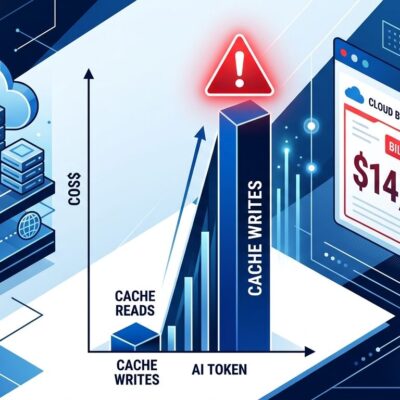
The honest explanation is that third-party agents broke the economics. Anthropic’s first-party tools — interactive Claude Code, Claude.ai — are engineered to maximize prompt cache hit rates, reusing processed context to cut compute costs significantly. Third-party SDK calls bypass that optimization entirely. Every call processes context from scratch.
One user on a $100/month plan documented consuming 10 billion tokens over eight months — API-equivalent value of roughly $15,000. A $200 subscription was extracting up to $35,000 in compute monthly at the extreme end. That’s a 175:1 ratio. Dario Cherny described sustaining this as “really hard for us to do sustainably.” He’s not wrong.
The timeline matters too. Anthropic initially banned third-party SDK access outright in April, citing capacity issues, then reversed course five weeks later with the metered credit announcement on May 13. The billing split is the middle path between “free for everyone” and “banned entirely.”
The Developer Backlash Was Telling
An Anthropic engineer posted a positive framing of the change and received a Community Note correcting it. Community Notes require cross-ideological consensus to attach — it’s not a partisan dogpile. It means a broad cross-section of users collectively decided the official framing was misleading.
The @ClaudeDevs announcement drew 1,700 quote-tweets against 8,900 likes — a ratio that signals argument, not agreement. Kun Chen, a former Meta and Microsoft engineering leader, stated GPT-5.5 had already “flipped” Anthropic’s coding quality advantage. When your most vocal developer advocates start pointing at the exit, the trust loss matters beyond any pricing spreadsheet.
Five Things to Do Before June 15
The deadline is June 15. Here’s the checklist:
- Claim your credit. Anthropic is sending a credit claim email. If you miss it before June 15, you don’t get the credit.
- Migrate deprecated models.
claude-sonnet-4-20250514andclaude-opus-4-20250514retire the same day. Migrate toclaude-sonnet-4-6-20260217andclaude-opus-4-7respectively. Ship before June 13 — Anthropic enforces hard cutoffs. - Audit your programmatic spend. Run
GET /v1/organizations/usage_report/claude_codefor a 30-day baseline. Know what you actually use before pricing changes. - Set credit alerts. Configure warnings at 50% and 80% of your monthly allocation. Running dry mid-month means requests halt or overflow to API billing.
- Route cheap tasks elsewhere. Classification, summarization, and state-checking don’t need Sonnet 4.6. Haiku 4.5 costs a fraction of the price. One practitioner found a cron checking a Discord state every 15 minutes — burning dollars on near-zero informational value.
The Bigger Picture
This change ends an era of subsidized agentic compute. AI agents consume 5–30x more compute per equivalent outcome than chat sessions, largely because re-sent context accounts for over 60% of inference costs at scale. That compute doesn’t pay for itself on a $20 monthly plan.
The developer ecosystem will adapt. Some builders will route workloads across multiple providers to reduce vendor lock-in, some will optimize token budgets aggressively, and some will migrate to direct API keys for predictable billing. Treat agent compute the same way you treat cloud infrastructure — measure it, budget it, and optimize it. The free lunch is over.