 By
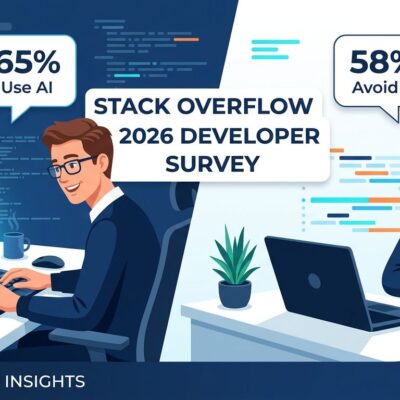
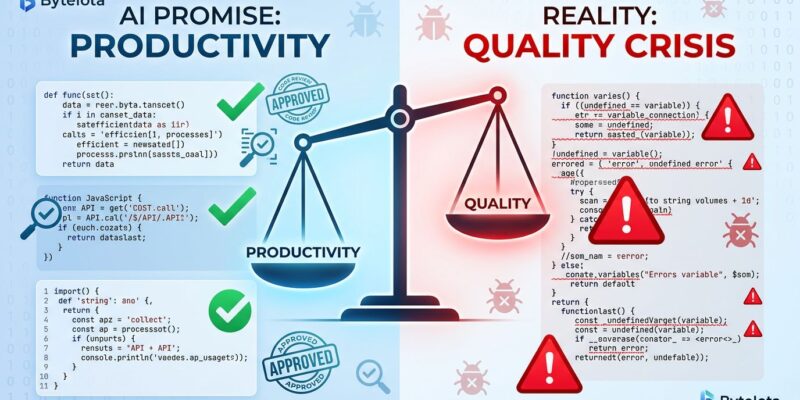
By AI coding assistants have taken over software development in 2026. 84% of developers now use these tools, with AI writing 41% of all code. Developers report impressive productivity gains of 31% on average. But here’s the problem nobody talks about: organizations adopting AI coding tools are seeing technical debt increase by 30-41% within just six months. The code ships faster, but it’s breaking in ways human code never did.
The Quality Gap Is Real and Measurable
AI-generated code contains 1.7 times more issues than human code. This isn’t speculation. Researchers analyzed 470 real GitHub pull requests—320 AI-assisted and 150 human-only—and the numbers are stark. AI pull requests average 10.83 issues compared to 6.45 for human PRs. Readability problems are three times higher. Performance inefficiencies from excessive I/O operations are eight times more common.
The security implications are worse. AI code shows 1.88 times more improper password handling, 2.74 times more XSS vulnerabilities, and a 322% jump in privilege escalation paths compared to human code. By February 2026, more than 110,000 AI-introduced issues had survived into production codebases, up from just hundreds in early 2025.
This explains why technical debt increases 30-41% after AI tool adoption. The speed is real, but so is the quality degradation.
Automation Complacency: Why It Happens
Here’s the paradox: 53% of developers don’t trust AI-generated code, yet 40-60% accept AI suggestions with minimal review. This gap is the root cause of the quality crisis.
Researchers call it “automation complacency.” AI code is plausible but unreliable. It looks correct in the happy path. It fails in edge cases. It passes initial tests but breaks in production. Security issues are the most likely to survive code review, with 41.1% remaining at HEAD. Silent logic failures make up 60% of faults—code that passes tests but fails when real users hit unexpected scenarios.
The result: 26.6% of AI-generated programs produce incorrect outputs. Trust hasn’t caught up to adoption rates, and developers are shipping code they don’t fully understand or verify.
Real Consequences Are Already Here
The cURL project shut down its bug bounty program in 2026. The reason: 20% of submissions were AI-generated junk, and the valid submission rate dropped to 5%. Maintainer time was wasted reviewing false positives instead of fixing real bugs.
In May 2026, Britain’s National Cyber Security Centre warned of an AI-fueled “patch tsunami.” Years of buried flaws are surfacing as AI-powered bug hunting tools flush out decades of code debt. Organizations need to brace for a wave of fixes.
The financial impact is tangible. One documented incident cost $47,000 in recovery efforts. Research from Aikido Security found AI code responsible for one in five security breaches. For companies that don’t manage the transition carefully, maintenance costs are reaching four times traditional levels by year two.
The productivity paradox extends beyond code quality. While individual developers report feeling faster, pull request review time has increased 91%. Companies aren’t seeing the organizational velocity improvements they expected. Developers complete 21% more tasks and merge 98% more pull requests, but the review bottleneck erases the gains.
Managing AI Code Quality: What Works
AI tools do deliver benefits when properly managed. Teams using AI report 7.5% increases in documentation quality, 3.4% better code quality, and 3.1% faster code reviews. The key phrase is “when properly managed.”
The industry is shifting. As one analysis put it: “2025 was the year of AI speed. 2026 will be the year of AI quality.”
Elite teams are finding the balance. They keep AI-assisted code below 40% of total output—exceeding this threshold causes rework to jump to 20-30%. They use a hybrid approach: AI generates 70-90% of initial code, while humans own architecture decisions and security reviews. They maintain change failure rates below 0.5% through rigorous processes.
These teams treat AI code like code from an untrusted source. Every suggestion gets reviewed like a junior developer’s pull request. They document which parts were AI-generated and what prompts were used. At least one team member must fully understand each change before it ships. They budget 20-30% of engineering capacity specifically for technical debt remediation.
Best Practices for 2026
The practices that work include:
- Automated quality gates in CI/CD pipelines
- Security audits focused on AI-generated code patterns
- Explicit tracking of AI code percentage alongside traditional velocity metrics
- “AI-Prompt Playbooks” with successful examples
- “Cautionary Tales” wikis documenting rejected patterns and why they failed
Measurement is evolving too. Traditional DORA metrics don’t track the impact of AI-generated code—most analytics tools can’t separate AI-written code from human work. Elite teams now add an explicit AI measurement layer. They monitor both productivity and quality. They watch technical debt ratios trend over time. They track change failure rates separately for AI-assisted versus human-only code.
The Path Forward for Developers
The 84% of developers using AI tools aren’t going back to manual coding. The question isn’t whether to use AI assistants—it’s how to capture the productivity gains while managing the quality risks.
The answer requires both measurement and process changes. Organizations need to track AI code percentage, establish thresholds, and intervene when quality metrics deteriorate. Code review standards must evolve: never skip review of AI-generated code, read it line by line, check for duplicate logic, and verify error handling for edge cases.
AI coding tools are powerful but not a replacement for engineering judgment. The automation complacency problem is real—when code looks plausible, developers skip verification. The cost of that assumption is 1.7 times more issues, 30-41% more technical debt, and security breaches that could have been caught in review.
2026 is revealing the hidden costs of the 2025 productivity rush. The organizations that succeed will be those that measure both speed and quality, invest in proper review processes, and recognize that going fast without quality controls creates bigger problems down the road.