 By ByteBot
GitHub shipped one of its most practically useful announcements at Build 2026, and it barely made a dent in the keynote hype: the GitHub Copilot SDK went generally available on June 2, giving any developer the ability to embed the same agentic engine behind Copilot directly into their own applications. Six languages at launch — Node.js/TypeScript, Python, Go, .NET, Rust, and Java — and you do not need a Copilot subscription to use it.
You Are Not Getting a Chat Widget
The distinction matters: this is not an API wrapper around an LLM with a prompt. The GitHub Copilot SDK exposes the full agent runtime — planning, tool invocation, file edits, multi-turn sessions, and streaming — packaged as an embeddable library. In other words, the same planning and execution loop that makes Copilot useful in VS Code is now something you can drop into your own tool.
The SDK is available to all existing Copilot subscribers, including the free tier. For teams without a Copilot subscription, GitHub added BYOK support at GA — bring your own API key from OpenAI, Anthropic, Azure, AWS Bedrock, Google AI Studio, or any OpenAI-compatible provider, and your usage bills go straight to that provider, not GitHub.
Custom Sub-Agents: The GitHub Copilot SDK Feature That Matters
The headline capability at GA is custom sub-agents. You define lightweight agent specs — each with its own system prompt, tool restrictions, and optional MCP server connections — and attach them to a session. When a user request matches an agent expertise, the Copilot runtime delegates automatically based on intent. You are not writing routing logic; the runtime infers which agent should handle which request.
Three orchestration modes are available: automatic delegation (the runtime decides at inference time), explicit handoffs (one agent transfers control to another), and structured pipelines (you define the sequence). Sub-agent lifecycle events — subagent.started and subagent.completed — stream back to the parent session, giving you full observability without wiring up a separate event bus.
The SDK also ships with fine-grained system prompt customization: replace, append, or prepend individual prompt sections without rewriting the whole thing. Additionally, OpenTelemetry tracing with W3C trace context propagation comes standard, along with a hook system for intercepting agent behavior at any meaningful point — pre/post tool use, MCP tool calls, session start, and permission requests.
The Irony of the Timing
GitHub launched the SDK BYOK option one day after usage-based billing for Copilot subscribers went live. That billing change — which replaced flat-rate requests with token-based credits — landed with a thud. Developers reported agentic sessions costing 10x to 50x what they had expected, with one Pro+ user estimating their $39/month plan would run out in two days of normal use.
However, BYOK sidesteps this entirely. Teams building with the GitHub Copilot SDK who route through their own API keys have no exposure to GitHub credit system — their inference costs are whatever their chosen provider charges. Whether intentional or not, the BYOK option is a pressure valve that lets builders keep using the agent runtime without being on the wrong end of GitHub new billing math.
What GitHub Is Actually Building
Zoom out, and the GitHub Copilot SDK is one piece of a larger move. The Copilot App — also announced at Build 2026 in preview — runs on the same SDK runtime. It ships with canvases for human-agent collaboration, an Agent Merge feature that shepherds PRs through CI and review automatically, and a My Work view spanning active sessions, issues, and background automations.
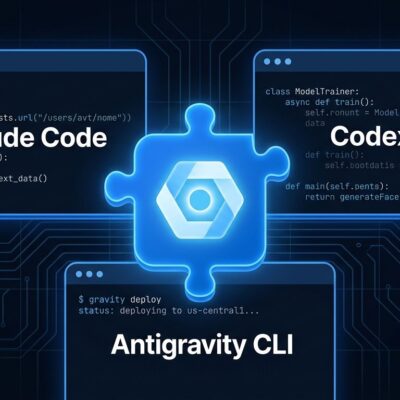
Moreover, GitHub is not just adding AI features to a code host. It is building an agent distribution platform. The pieces are all there: 4.7 million paid Copilot subscribers as a built-in user base, GitHub Actions as an execution environment, GitHub Marketplace for discovery, and now the GitHub Copilot SDK as the runtime any tool builder can embed. Google launched a direct competitor — Antigravity 2.0 — two weeks earlier at I/O. GitHub GA timing was not accidental.
If you are building developer tools, internal automation, or anything that benefits from agentic AI, the Copilot SDK changelog is worth reading. The docs for custom agents are the right starting point.