Apple quietly removed the 512GB RAM configuration option from the Mac Studio on March 5, 2026, ending availability of the $4,000 memory upgrade that made the M3 Ultra the most memory-capable Mac ever shipped. The company simultaneously raised the price of the 256GB upgrade from $1,600 to $2,000—a 25% increase—and pushed delivery estimates for 256GB configurations into May. This marks the first time Apple has removed a flagship hardware configuration due to supply constraints, driven by a global DRAM shortage as AI infrastructure consumes memory resources that previously went to professional computing.
Video editors, ML engineers, 3D artists, and developers who rely on high-RAM workstations now face limited options and higher prices. This isn’t just an Apple problem. It’s the first visible consequence of AI companies monopolizing semiconductor resources at the expense of traditional computing markets.
AI Servers Are Monopolizing Memory Resources
When factoring in “equivalent wafer usage,” AI servers effectively consume nearly 20% of global DRAM wafer capacity in 2026, despite representing a much smaller number of shipped units. The math is brutal: high-bandwidth memory (HBM) required for AI accelerators uses 4x the wafer capacity of standard DDR5 per gigabyte. GDDR7 for GPUs uses 1.7x. As a result, AI’s memory appetite devours wafer capacity that used to produce consumer and professional RAM.
The three major memory manufacturers—Samsung, SK Hynix, and Micron—have reallocated cleanroom space toward higher-margin HBM production to meet hyperscaler demand from Microsoft, Google, Meta, and Amazon. According to TrendForce, one major hyperscaler deal alone represents 35-40% of global DRAM wafer capacity. Consequently, server DRAM prices climbed 60%+ quarter-over-quarter in Q1 2026 as manufacturers prioritized AI contracts.
This explains why Apple can’t source 512GB RAM. Memory manufacturers are making a deliberate allocation choice, not facing a production failure. HBM is more profitable, AI companies have locked in multi-year contracts, and consumer markets lose.
No Relief Until 2027-2028 When New Fabs Come Online
Industry analysts do not expect meaningful DRAM supply relief until new fabrication plants come online in 2027-2028. SK Hynix’s Yongin fab completion moved up to February 2027 from May 2027 following an additional $15 billion investment announced March 5, 2026. Similarly, Micron’s Boise, Idaho facility will ship first wafers mid-2027, while Samsung’s Pyeongtaek P5 fab and Micron’s Hiroshima HBM facility target 2028. These new facilities will add 20-30% to global DRAM capacity—but not before 2027 at the earliest.
The M5 Mac Studio expected late 2026 will likely also max out at 256GB. Apple won’t restore 512GB until 2027-2028 when DRAM supply stabilizes. Therefore, professionals are stuck with limited RAM options for the next 1-2 years, minimum.
Where Professionals Go From Here
With the 512GB Mac Studio gone, affected professionals face four alternatives, all with significant trade-offs.
The first option: buy a used M2 Ultra Mac Studio with 512GB while units are still available on the secondary market. Expect to pay $6,000-8,000 with no warranty. This works if you absolutely need macOS and 512GB, but you’re locked into outdated M2 silicon and gambling on hardware longevity.
Second: Mac Pro with 192GB maximum RAM. The irony is sharp—the $12,199 Mac Pro has LESS memory capacity than the removed Mac Studio configuration. You get PCIe expansion slots and a modular design, but you’re paying double while receiving less RAM and older M2 Ultra silicon. Clearly, this is a worse option than what Apple just discontinued.
Third: PC workstations. Dell Precision 7960 offers 512GB-2TB RAM for $8,000-15,000. HP Z8 Fury scales to 2TB for $10,000-20,000. A custom Threadripper PRO build with 512GB-2TB DDR5 runs $6,000-10,000 and delivers the best value. However, you lose the macOS ecosystem, face driver complexity, and consume more power. For video editors relying on Final Cut Pro or developers tied to Xcode, this means workflow disruption.
Fourth: cloud workstations. AWS EC2 X2iedn instances scale to 4TB RAM, Google Cloud n2-highmem reaches 896GB, and Azure Dv5-series tops out at 672GB. You get unlimited RAM scaling and pay-per-use flexibility, but latency makes interactive work painful and data egress fees accumulate quickly.
None of these alternatives solve the core problem. If you need >256GB RAM and prefer macOS, there’s no good path forward.
Paying More for Less
Apple’s retreat came with a price hike. Upgrading from 96GB to 256GB now costs $2,000, up from $1,600—a $400 (25%) increase announced the same day the 512GB option vanished. Furthermore, delivery estimates for 256GB configurations have slipped into May 2026, indicating constrained supply even at the lower tier.
Customers are paying more for less. The maximum available configuration is now half what it was last week, at 125% of the previous price per GB. According to Tom’s Hardware, this double-hit shows Apple is facing serious supply pressure, not just trimming low-volume SKUs.
Expect further price increases if the DRAM shortage worsens in H2 2026. Apple is telegraphing that memory allocation favors AI infrastructure, and traditional computing bears the cost.
The Canary in the Coal Mine
The Mac Studio 512GB removal is a canary in the coal mine for what happens when AI infrastructure competes with consumer and professional computing for limited semiconductor resources. As AI server demand continues growing 80-100% year-over-year while DRAM supply grows only 16%—well below the historical 20-25% norm—expect more hardware scarcity across the tech industry.
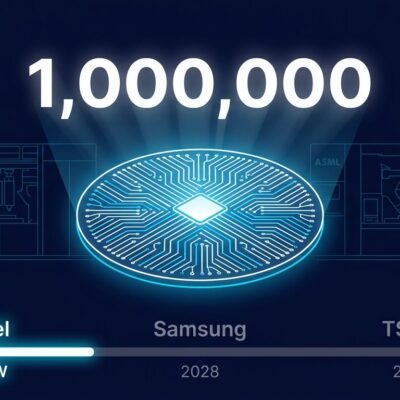
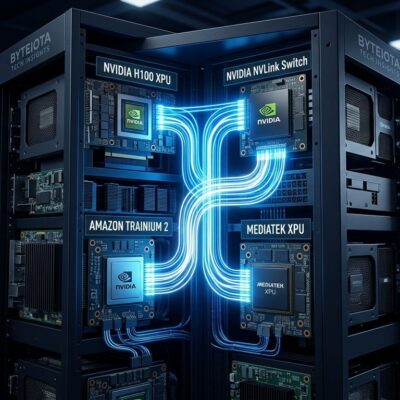
Each AI server with 8x NVIDIA H200 GPUs requires approximately 1.5TB HBM plus 2TB DDR5 system memory. AI server shipments jumped from 1 million GPUs in 2025 to a projected 2-3 million in 2026, targeting 4-5 million in 2027. Meanwhile, according to IDC’s Global Memory Shortage Crisis analysis, average DRAM prices rose 50-55% from Q4 2025 to Q1 2026 and are expected to climb 80-100% year-over-year by end of 2026.
Related: Big Tech Pledges AI Power—But Who Really Pays the Bill?
This is a multi-year reallocation of semiconductor capacity toward AI. Traditional computing is the loser. Apple’s retreat signals that even the world’s most valuable company can’t compete when AI monopolizes memory allocation. Ultimately, if you’re a professional who relies on high-RAM hardware, plan accordingly. Buy what you need now, before more configurations disappear or prices rise further. Don’t assume 2027 will bring relief—AI demand may continue outpacing supply even with new fabs.
Key Takeaways
- Apple removed the Mac Studio 512GB RAM option on March 5, 2026, raised the 256GB upgrade price 25%, and delayed deliveries to May—the first flagship config removal due to supply constraints.
- AI servers consume nearly 20% of global DRAM wafer capacity because HBM uses 4x the wafer resources of standard DDR5, and memory manufacturers prioritize higher-margin AI contracts over consumer markets.
- No relief until 2027-2028 when new fabs from SK Hynix, Micron, and Samsung come online—expect the M5 Mac Studio to also max out at 256GB.
- Mac Pro offers LESS RAM (192GB max) at higher cost ($12,199) than the removed Mac Studio config, forcing professionals to used M2 Ultra units, PC workstations, or cloud alternatives.
- This is the beginning of AI infrastructure monopolizing semiconductor resources at the expense of traditional computing—expect more scarcity and price increases through 2026-2027.
The Mac Studio 512GB removal isn’t a temporary shortage. It’s a signal that AI infrastructure wins the memory allocation battle, and professionals pay the price.