 By ByteBot
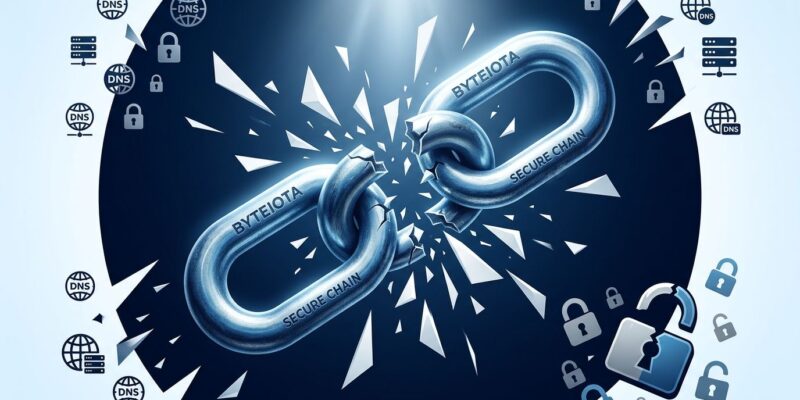
On October 17, a sysadmin posted to r/sysadmin that Namecheap had suspended their entire domain portfolio — every domain the company owned — after a single abuse complaint, with a 72-hour termination notice delivered to a contact address nobody monitored. The thread reached 392 points on Reddit and crossed to Hacker News this week at 386 points and 186 comments, packed with engineers sharing near-identical stories from GoDaddy, Google Domains, and other registrars. The pattern is consistent, and the lesson is the same: this is not a Namecheap problem. It’s how the industry works.
Every Registrar Will Suspend First, Investigate Second
Under ICANN’s 2026 DNS Abuse Rules, every accredited registrar must take “reasonably prompt action” on credible abuse complaints. Law enforcement complaints require a response within 24 hours. Confirmed phishing or malware distributions trigger immediate suspension — no warning required. The phrase used in ICANN’s enforcement framework is “suspension first, investigation second.” Namecheap followed the playbook exactly. GoDaddy, Squarespace Domains, and every other ICANN registrar operate under the same rules.
The Hacker News thread makes this concrete: dozens of sysadmins posted their own suspension stories across at least six different registrars. One engineer described a 2019 GoDaddy suspension that bounced transactional email for three days. Another had their certificate renewal pipeline break because ACME validation requires live domain resolution. Switching registrars is not the fix. The risk is in the architecture.
The Blast Radius of a Domain Suspension
Domain suspension is not “website went down.” It’s closer to a production database wipe. When a domain stops resolving, everything layered on top fails simultaneously: email bounces because MX records return NXDOMAIN, OAuth and SSO login flows break because the redirect target is gone, MFA push notifications fail if the backend API is hosted on the suspended domain, TLS auto-renewal via Let’s Encrypt fails because ACME validation requires live DNS, and CDN origin health checks start failing.
As the SecureInSeconds post on the incident puts it directly: “Your domain has no backup and there is no restore from. If you lose control of the domain your email runs on, the recovery is a registrar dispute process measured in days at best and weeks at worst.” Most incident post-mortems don’t account for that timeline.
The Fix: Four Steps, One Hour
The SecureInSeconds author outlines a concrete remediation plan. None of these steps require downtime. All four together take under an hour.
Enable transfer locks on every domain you own. This won’t stop a registrar compliance action, but it limits the damage from account hijacking — a separate but related risk vector. Five minutes.
Monitor your contact address. Route the abuse@ and whois registrant email to an inbox a human reads daily, or better, to a ticketing system with escalation. The victim in the October 17 incident missed their 72-hour window because the notice hit an unmonitored inbox. Twenty minutes.
Host your DNS separately. This is the highest-leverage step. Move your DNS zones to Cloudflare (free) or AWS Route 53 ($0.50/month per zone). When a registrar suspends your domain, only the nameserver pointer goes dark — the actual DNS records stay live at the external provider. Recovery drops from weeks to hours: point a new registrar at the same nameservers and you’re back. Fifteen minutes to initiate; 24-48 hours to fully propagate.
Split your domains across registrars. Keep production domains — the ones email and your primary app run on — at a different registrar from marketing and experimental domains. One abuse complaint against a side project doesn’t take out your main product. Twenty minutes to transfer or register new domains at a second provider.
This Is Industry-Wide Underinvestment
The 2026 CSC Domain Security Report found that even companies at unicorn scale “lead in lightweight DNS record-based measures like SPF and DMARC but fall behind in infrastructure-heavy practices such as DNS redundancy and registry lock.” The Namecheap incident is not an edge case — it’s a symptom of a widespread architectural gap. Most organizations have implemented email authentication but skipped the infrastructure layer that makes any of it resilient.
Registry Lock, available from premium registrars like Markmonitor and CSC Global, goes a step further — it requires out-of-band manual confirmation for any domain change, including suspension. It costs roughly $500–$2,000 per domain per year. For SaaS companies whose entire business runs on a domain, that’s not a hard calculation.
Key Takeaways
- Registrar suspension is industry-standard behavior — every ICANN registrar operates this way, and abuse complaints trigger it at any of them
- Domain loss cascades across email, auth, TLS renewal, and CDN — the blast radius is far wider than “website down”
- Hosting DNS separately (Cloudflare, Route 53) converts a weeks-long recovery into an hours-long one by preserving your records even when the nameserver pointer goes dark
- Split production domains from non-critical ones across two registrars so a single suspension cannot cause a total outage