 By
By Factory just raised $200 million at a $5 billion valuation — tripling its April price in five months. That’s a number worth noticing, but it’s not the actual news. The news is what Factory is claiming to have built: not a coding assistant, not even an agent, but a software factory — an autonomous, self-improving system that runs your entire software development lifecycle end-to-end. If that framing holds up under scrutiny, it changes what developers and engineering managers need to pay attention to.
A Coding Agent Is Not a Software Factory
Most AI coding tools tackle one phase of development. GitHub Copilot gives you inline suggestions. Cursor handles multi-file edits. Devin takes on async tasks like dependency upgrades and tech debt. These are useful. They are not what Factory 2.0 is positioning itself as.
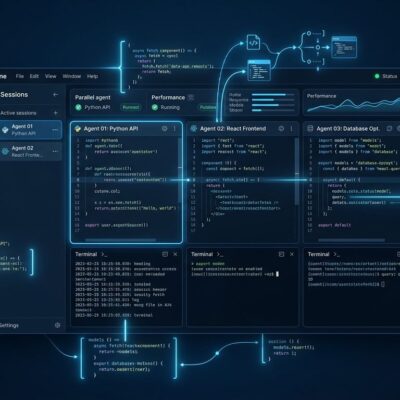
Factory’s software factory model starts upstream: bug reports, customer feedback, internal conversations, and business requirements get ingested as signals, triaged, and turned into planned changes. Droids — Factory’s autonomous agents — then handle coding, code review, security analysis, documentation, QA, and incident response. All of them share the same agent core, the same model router, and the same organizational context. That last part matters: a security finding automatically feeds into the code review. A deployment triggers a documentation update. An incident gets correlated with the PR that introduced it.
The self-improvement claim goes further: Factory says the system observes its own deployments, code review outcomes, and incident patterns to improve over time. That’s an ambitious thesis. It’s also, as of now, unverified by any independent benchmarks. Factory’s enterprise customers — Nvidia, Adobe, Palo Alto Networks, EY, Adyen — are real validation, but “it works for us” from a large org is not the same as a controlled comparison. Worth keeping that in mind.
Factory Router: The Part Developers Should Actually Evaluate
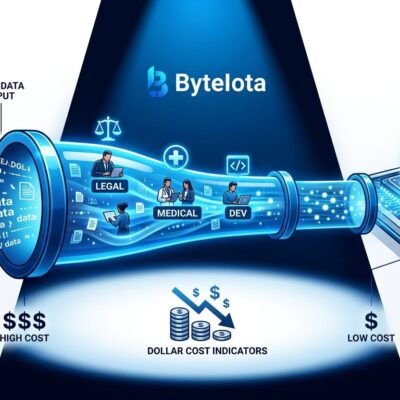
The most immediately practical piece of Factory 2.0 is Factory Router, and it deserves its own attention. Most teams running AI coding agents at any scale quickly discover that frontier model costs aren’t trivial. Factory Router addresses this directly: it reads the first user message, recent tool calls, and repository signals to assign a scalar quality probability to each available model, then routes each task to the appropriate LLM automatically.
The result, per Factory’s own reporting, is a 20-25% reduction in token spend while preserving 99% of frontier model performance on Terminal-Bench 2. Factory also provides failover when providers degrade and dedicated throughput for enterprise customers. US-hosted open-source model options extend this to air-gapped environments — a significant unlock for regulated industries and defense contractors that can’t send code to cloud providers.
Governance Is Now the Enterprise Procurement Lever
The governance layer is where Factory is quietly winning enterprise deals over Copilot and Cursor. Risk tiers per repository, validation gates, command allow/deny lists, and a full audit trail across every agent action: these aren’t flashy, but they’re what enterprise security teams need before signing. Factory puts it plainly: autonomy scales only when control comes first.
The new Agent Effectiveness dashboard gives organizations measurable ROI visibility on their AI spend — a requirement for any executive trying to justify a budget line item. That Factory can now deploy in air-gapped environments for public-sector and regulated industry customers closes the last significant objection from security-first orgs. DevOps.com has more on the enterprise play behind the funding round.
Where This Fits in a Market That’s Moving Fast
The AI coding agent market is consolidating. Devin rebranded as Windsurf’s platform play. GitHub Copilot keeps expanding its agent capabilities. Factory is making a different bet: it’s not trying to be the best agent. It’s trying to be the infrastructure layer that other agents and teams run on. SiliconANGLE’s coverage of the raise captures the investor thesis: Blackstone, Khosla Ventures, Sequoia, and NEA aren’t betting on a single Droid — they’re betting on a platform that runs the entire software organization.
For individual developers, Factory’s entry-level pricing is accessible: Pro at $20/month, Plus at $100/month, Max at $200/month. Customer code is never used for training on any tier — a written guarantee. If you’re evaluating whether to bring this into your team’s workflow, the right questions aren’t about the self-improvement loop (too early to verify). They’re more grounded: Who owns the bugs when an agent writes code that ships? How do you audit agent decisions after the fact? What’s your rollback story when an agent-written change causes an incident?
The Bet Factory Is Making
Factory’s underlying thesis is that system-level AI beats tool-level AI at enterprise scale. Individual coding tools deliver incremental productivity. A connected, self-improving system that runs the full SDLC delivers something closer to organizational leverage. The Pragmatic Engineer’s analysis of AI impact on engineering teams captures the broader dynamic: lower-performing teams see the biggest gains from AI tools, while senior engineers remain more measured in their assessment.
Whether the self-improvement loop delivers what Factory claims, we’ll know within the next 12 to 18 months. In the meantime, the Router, the governance controls, and the air-gap deployment are real today and worth evaluating if your team is scaling agent usage beyond individual developer tools.