 By ByteBot
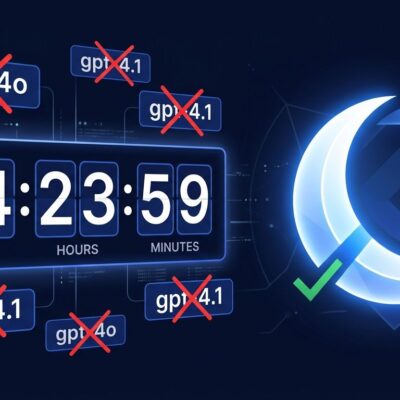
The Sora API is shutting down tomorrow — September 24, 2026. Every call to the Videos API (sora-2, sora-2-pro, or any dated snapshot) returns 410 Gone starting September 25. No grace period, no successor model, no path forward inside OpenAI’s platform. If you have video generation in production, you have a few hours to migrate or your pipeline breaks at midnight.
What Stops Working
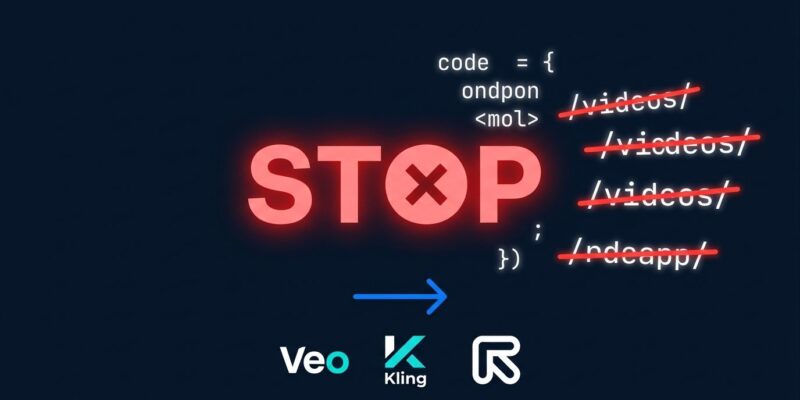
The full scope of the shutdown is wider than most developers realize. The termination covers the Videos API endpoint, plus every model alias OpenAI shipped: sora-2, sora-2-pro, sora-2-2025-10-06, sora-2-2025-12-08, and sora-2-pro-2025-10-06. According to the OpenAI deprecations page, from September 25 every request to any URL prefixed with /videos/ returns 410 Gone — a permanent HTTP status that tells your code this resource no longer exists, will not return, and retrying is pointless.
That last point matters: disable automatic retries on this endpoint now. A retry loop on a 410 does not recover — it burns credits with aggregator APIs and stalls downstream pipeline steps. Fix it before midnight.
OpenAI will also permanently delete all Sora account data on September 24. Generated videos not already downloaded are gone. There is no recovery window.
Your Three Migration Paths
There is no OpenAI replacement. The company exited video generation entirely — this is not a model upgrade, it is a product line termination. Your migration target must be a different API from a different vendor. Three options cover most production use cases.
Veo 3.1 (Google, Gemini API / Vertex AI) is the right call for most teams. It is the closest feature-parity replacement: native synchronized audio, up to 1080p resolution, and strong prompt fidelity. The Google Developers Blog covers Veo 3 availability via the Gemini API. Pricing runs $0.05/sec for Veo 3.1 Lite at 720p or $0.10/sec for Fast at 1080p. One architectural difference: Veo 3.1 is asynchronous. A 6-second 1080p clip takes 30–90 seconds to generate. Design for it — do not block a request thread waiting for a response.
Kling 3.0 (Kuaishou) is the budget option at roughly $0.10/sec, with a $6.99/month subscription tier for lighter workloads. It works well for social content but lacks Veo 3.1’s prompt fidelity on complex cinematic scenes.
Runway Gen-4.5 at $0.12/sec is the strongest option for editing-led workflows — image-to-video generation, compositing, and scenes where precise control over motion matters more than text-prompt quality. See the Runway developer API pricing docs for current rates.
For teams with volume, privacy constraints, or enterprise cost sensitivity: self-hosted open-source models are now a legitimate choice, not a compromise. Wan 2.2 (Apache 2.0, runs from 8GB VRAM) and HunyuanVideo 1.5 (RTX 4090 with FP8 offloading) have compressed the quality gap enough to take seriously. Spheron’s guide covers deploying self-hosted video generation on GPU cloud in detail.
Pricing at a Glance
| Provider | Model | Cost/sec | Audio | Max Res |
|---|---|---|---|---|
| Veo 3.1 Lite | $0.05 | Yes | 720p | |
| Veo 3.1 Fast | $0.10 | Yes | 1080p | |
| Kling | Kling 3.0 | $0.10 | Limited | 1080p |
| Runway | Gen-4.5 | $0.12 | No | 1080p |
| Self-hosted | Wan 2.2 / HunyuanVideo | GPU cost | No | Up to 4K |
Why OpenAI Actually Killed Sora
The business case never existed. Sora’s operating costs ran around $1 million per day, and the product generated $2.1 million in total lifetime revenue. That is not a product struggling to find its market — it is a demo someone forgot to turn off.
The structural problem runs deeper. Video diffusion is roughly ten times more compute-intensive than language model inference. OpenAI’s business model is built on per-token pricing — fast, cheap, margin-positive at scale. Per-second video generation inverts every assumption that model makes. Google can afford to subsidize Veo with YouTube advertising revenue. Runway built its entire company around video and has no other product line to protect. OpenAI was trying to run video generation as a feature on top of a language model business. That math never worked.
A Hacker News analysis from the March announcement thread framed it cleanly: “The writing was on the wall when they stopped posting research updates on the Sora architecture. Every other OpenAI product gets a technical report. Sora got demos and a pricing page.”
What to Do in the Next 24 Hours
- Find every integration point. Search your codebase for
videos,sora-2, andsora-2-pro. Map every API call, SDK invocation, and retry policy. - Disable retries immediately. Do not wait for midnight — change retry behavior on the Videos API endpoint now.
- Choose a replacement. Veo 3.1 for most teams. Kling 3.0 for budget-constrained workflows. Runway Gen-4.5 for editing pipelines.
- Swap SDK and base URL. This is not a model alias change — it requires a different client library, different API key, and different endpoint structure.
- Add async handling. Veo 3.1 is asynchronous. Sora was not. Architect accordingly before deploying.
- Test in staging today. Do not ship a migration directly to production on a deadline.
The broader lesson is worth internalizing: when an AI vendor treats a product as a “side quest” — OpenAI’s own framing — it is expendable. Any production dependency on a single AI vendor’s video API should have an abstraction layer above it. API aggregators like Apiframe wrap Veo 3.1, Kling, and Runway under a single key, which reduces future lock-in risk even if it does not eliminate it. For a deeper look at the Veo 3.1 API integration, the Apidog guide covers authentication, parameters, and async handling in Python.
The Sora API is gone tomorrow. Veo 3.1 is the right replacement for most teams. Make the switch today.