 By ByteBot
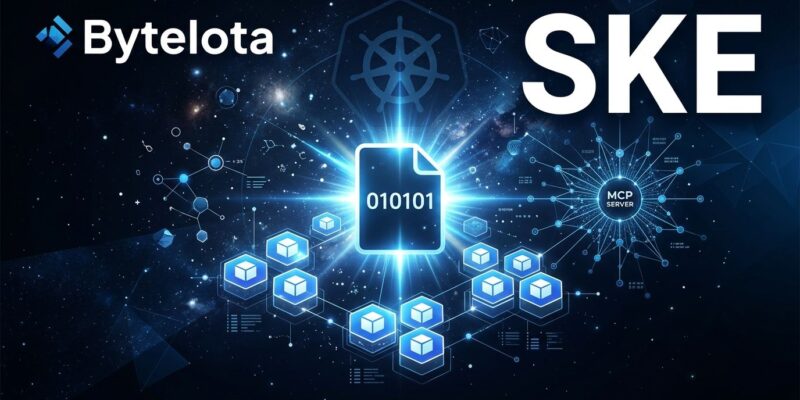
CIQ, the company behind Rocky Linux, shipped Stratum Kubernetes Engine (SKE) into general availability on November 5. It is a single signed binary that installs, configures, and upgrades a full Kubernetes cluster on Enterprise Linux 9. The packaging is tidy. The more interesting part is the built-in MCP server: 37 tools across three permission tiers that let AI agents operate the cluster with explicit, auditable controls — no gluing kubectl to a shell session, no hoping the agent knows when to stop.
One Binary, No Version Drift
The practical problem SKE solves is assembly. A production-ready Kubernetes cluster normally requires lining up kubeadm, kubelet, etcd, a CNI plugin, CoreDNS, and a container runtime — then keeping those versions in sync across upgrades. That version drift is the most common reason clusters behave differently between staging and production.
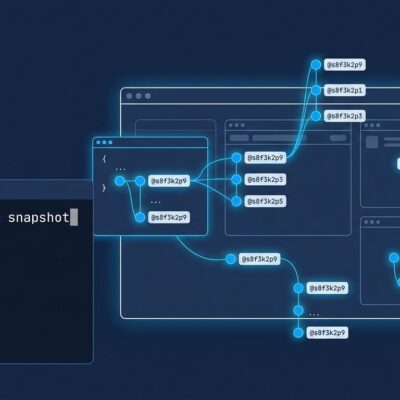
SKE bundles everything into one signed, self-extracting executable: Kubernetes, etcd 3.7.0, containerd 2.3.7, runc 1.5.2, kube-vip, Cilium for networking, and CoreDNS. The control plane runs as kubelet-managed static pods. Rolling upgrades and automatic rollbacks are built in. etcd snapshots run every 12 hours by default. Certificates auto-renew. You are not responsible for any of that coordination.
Built-in MCP Server for AI Agents
The design decision worth paying attention to is the MCP server. SKE ships with a native Model Context Protocol server that exposes 37 cluster tools in three tiers: Read, Write, and Destructive. When you start Stratum, you configure which tier ceiling to allow. Tools above that tier are never registered with the connected agent — not blocked at runtime, but structurally unavailable. An agent configured for Read access literally cannot call a Write tool, because that tool does not exist in the session.
All calls go through Kubernetes RBAC regardless of tier. Secrets are off-limits at every level. This directly addresses what platform engineering teams identified at KubeCon EU 2026 as the real AI blocker: not model capability, but governance — audit trails, controlled access, and predictable agent behavior. Connecting a coding assistant to kubectl via a shell tool gives you none of that. SKE’s tiered MCP approach gives you all of it.
Getting Started
SKE ships signed amd64 and arm64 binaries on GitHub, with software bills of materials and conformance archives alongside each release.
# Install the binary
sudo install -m 0755 stratum-linux-amd64 /usr/local/bin/stratum

# Bootstrap the control plane
sudo stratum up

# Add a worker node
stratum token create            # run on the controller
stratum up --worker --server https://<vip-or-controller>:6443
Join tokens are per-join, passed by file (never on the command line), hidden from Ansible output, and expire within 45 minutes. Once a node reaches Ready status, the token is revoked automatically.
Why Now
AI workloads account for roughly 40% of enterprise Kubernetes usage in 2026, and that share is rising. The default Kubernetes scheduler was not built for the topology-aware, gang-scheduled demands of GPU inference. Platform teams are building abstraction layers to shield data scientists from the underlying complexity — SKE is that abstraction, delivered as a single binary rather than a custom internal platform.
The timing is deliberate. KubeCon + CloudNativeCon North America runs November 9–12 in Salt Lake City. CNCF added a dedicated AI Inference + Agentic track this year. CIQ is positioning SKE as the foundational runtime for the agentic Kubernetes conversations that will dominate that conference.
What It Does Not Solve
Two things to be clear about before you download it. First, SKE runs on Enterprise Linux 9 or later — Rocky Linux, AlmaLinux, RHEL. If your team runs Ubuntu, Debian, or anything else, SKE is not an option today.
Second, SKE does not solve GPU scheduling. If you are running distributed training or high-throughput inference, you still need Volcano, the NVIDIA GPU Operator, or a topology-aware scheduler alongside it. SKE handles the cluster lifecycle and agent access layer. The workload orchestration problem is still yours.
CIQ Stratum Pro, the commercial tier at $1,800 per node per year, adds multi-cluster management, CIS hardening with per-control audit checks, an app catalog, and enterprise support. The core SKE binary is Apache 2.0 and free to download.