 By
By A Bloomberg Terminal subscription costs $24,240 per user per year. It gives you financial data, news feeds, and macro-context tools that traders and analysts have leaned on for decades. WorldMonitor gives you a real-time global intelligence dashboard — conflicts, military movements, submarine cables, AI datacenters, stock markets, geopolitical signals — and it costs nothing. Three commands to run. No API keys. The AI synthesis runs on your laptop.
That pitch sounds like GitHub marketing copy. After 66,000 stars and millions of users across 170 countries, it is clearly not.
What WorldMonitor Actually Does
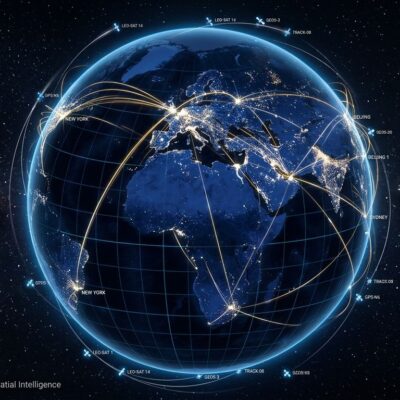
WorldMonitor is an open-source, AGPL-3.0 intelligence dashboard built by Elie Habib and 116 contributors. It aggregates more than 500 curated news feeds across 15 categories, synthesizes them into a “World Brief” using a local AI model, and visualizes everything on an interactive 3D globe powered by Three.js and deck.gl.
The range of what it tracks is the first thing that stops most developers:
- Active conflicts, protest activity, sanctions, GPS jamming, and cyber indicators
- 210+ military bases, live ADS-B flight tracking, and AIS naval vessel positions
- Undersea cable routes, pipelines, 111 AI datacenters, 83 strategic ports, 107 airports
- 29 stock exchanges with live pricing
- Earthquake alerts, wildfire maps, and weather hazards
This is what Palantir sells to governments and what Dataminr charges enterprises to access. WorldMonitor does it for free, with the source code on GitHub.
The AI Layer That Sets It Apart
Most “AI-powered” dashboards mean: send your data to OpenAI’s API and hope the answer comes back. WorldMonitor built a smarter architecture. Its “World Brief” synthesis runs through a four-tier fallback chain:
- Ollama (local) — the default. Your data never leaves your machine.
- Groq — fast cloud inference if Ollama is not running.
- OpenRouter — a model routing fallback.
- Browser-side T5 via Transformers.js — the last resort, fully offline.
Each tier gets a five-second timeout before the chain falls through to the next. The result: you always get an intelligence brief, even with no internet connection and no API keys configured. For developers building on sensitive data or working in air-gapped environments, that matters more than any feature list.
Running It in Three Commands
The installation story is deceptively simple for something this complex:
git clone https://github.com/koala73/worldmonitor
cd worldmonitor
npm install && npm run dev
That opens the dashboard at localhost:3000. The tech stack is Vanilla TypeScript + Vite on the frontend, globe.gl and Three.js for the 3D visualization, and deck.gl with MapLibre GL for the map layers.
For deployment beyond localhost, WorldMonitor supports four paths. The web app is optimized for Vercel’s edge runtime — the easiest cloud option. The Docker route runs docker compose up -d, seeds Redis, and serves at localhost:3000. For fully offline deployments, Ollama combined with PMTiles produces an air-gapped stack with no external dependencies. And if you want a native desktop app, the Tauri 2 build produces a single cross-platform binary for macOS, Windows, or Linux.
The Developer Platform
WorldMonitor is not just a dashboard you run — it is a platform you build on. The MCP server exposes 63 tools over Streamable HTTP, which means you can connect Claude, Cursor, or any MCP-compatible agent to live geopolitical intelligence data. The Python SDK is on PyPI (worldmonitor-sdk), with Go, Ruby, and JavaScript SDKs also available. A command-line tool handles scripting against the API.
That extensibility is why the project has 10,200+ forks. Developers are not just running it — they are integrating it.
The Caveat: AGPL
WorldMonitor is AGPL-3.0. For personal, research, and educational use, that means nothing — run it, modify it, keep your changes private. But if you deploy a modified version as a network service accessible to external users, AGPL requires you to share your source modifications. Most internal company deployments are fine. A SaaS product built on WorldMonitor without sharing changes is not.
Know before you build.
The Bigger Picture
Open-source projects with this scope — 500+ data sources, a local AI layer, a native desktop app, an MCP server, SDKs in four languages — usually require a team and a funding round. WorldMonitor started as one developer’s project and scaled through community contribution to something genuinely useful for anyone who needs to understand what is happening in the world.
The fact that it requires zero API keys is not just a technical decision. It is a design philosophy: tools this useful should not require you to rent access from a vendor. The Bloomberg Terminal exists because financial data is hard to aggregate. WorldMonitor proves that geopolitical intelligence does not need to work the same way.
The self-hosting guide is thorough. The MCP docs are solid. Start with npm run dev and see what 66,000 developers saw.