 By ByteBot
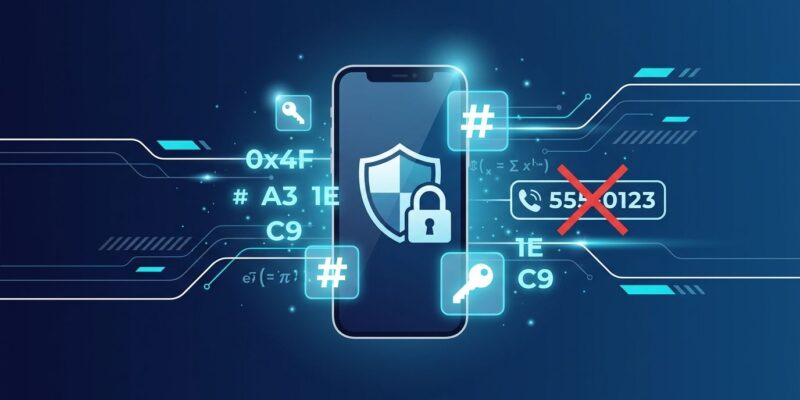
Signal is about to let you register without a phone number, and it is using zero-knowledge proofs to ensure that even Signal cannot link your payment to your identity. The feature, confirmed via Android source code under the name Signal Login, has been trending on Hacker News this week as technical implementation details have surfaced. A one-time fee replaces the phone number requirement. On Android, however, that fee goes through Google Play Billing — which is a problem, and we will get to that.
Why Phone Numbers Exist and What ZKP Replaces Them With
Signal has always required a phone number to register. Not for contact discovery — you can already hide your number behind a username — but for spam prevention. Phone numbers cost money and require carrier identity verification. That friction stops bulk account creation. Remove the number requirement and you need a substitute cost, otherwise Signal becomes a playground for spammers and bot farms.
Signal CTO Ehren Kret acknowledged this directly at the FUTO Don’t Be Evil conference in March 2026: they needed to “figure out some way to induce a cost for signing up without a phone number.” Their answer is a one-time payment, expected to be modest given Signal’s non-profit status. But a payment identifies you just as precisely as a phone number does — so Signal layered zero-knowledge proofs on top.
Here is how it works: when you complete the payment, the system issues a ZKP credential that proves you paid without recording who paid. Signal’s servers verify the credential is valid without seeing the underlying payment identity. This is the same pattern Signal already uses for its backup subscriptions, and the same cryptographic approach — custom Ristretto 25519 hashing combined with zero-knowledge proofs — that already protects usernames from being linked to phone numbers. Signal has been shipping ZKP in production for years. Signal Login extends that system to account creation itself.
Two Account Types, No Bridge Between Them
There is a permanent architectural split in Signal’s account model worth understanding before you choose. According to source code analysis from aboutsignal.com, “accounts without phone numbers can never get phone numbers, and accounts with them can never lose them.” These are two separate account types with no migration path between them. Phone-number-less accounts also carry a technical restriction: they cannot perform PNI (Phone Number Identity) key operations, which affects certain linked-device and identity verification flows. This is not a pricing tier. If you start without a phone number, you stay that way.
The Android Problem Zero-Knowledge Proofs Do Not Solve
Here is where the privacy case gets complicated. On Android, the one-time payment requires Google Play Billing. That means you need a Google account. Google knows you made the purchase. ZKP protects Signal from learning your identity — but it does nothing to hide the transaction from Google. The Hacker News community flagged this immediately: “I need a Google account on Android? That’s not going to happen,” from someone who presumably installed Signal precisely to avoid big-tech data collection. Community-suggested alternatives include Monero as a payment channel or an F-Droid sideload path. Signal has not confirmed either option as of September 2026.
Buterin’s Endorsement Comes With a Warning
Ethereum co-founder Vitalik Buterin, who donated 128 ETH to Signal in November 2025, called Signal Login “very welcome news” in August 2026. Then he explained why it is not enough. “Pseudonymity is a dead concept in 2026,” he wrote on X. His argument: AI can reconstruct identities from metadata — message timing, contact graph frequency, and message size patterns — without ever touching a phone number or payment record. His standard for real privacy is message-by-message unlinkability, which requires architectural choices like mixnets that Signal does not currently implement.
Buterin’s warning is not a dismissal of Signal’s work. It is a calibration. Removing the phone number requirement is a meaningful step that reduces carrier surveillance, complicates SIM-swap attacks, and removes a government-accessible identifier from Signal’s data model. Moreover, it signals that ZKP-based identity is mature enough to deploy in a consumer app used by hundreds of millions of people. It does not make Signal anonymous. Signal knows this.
What the ZKP Pattern Means for Developers
Signal Login is the clearest mainstream example yet of a pattern developers building auth systems should internalize: combine economic friction with ZKP credentials to prevent spam without collecting identity. You do not need to know who paid. You need to know that they paid. The ZKP proves the second thing without revealing the first. Furthermore, if your system currently uses email or phone verification purely to prevent spam, this pattern applies. The permanent account segmentation in Signal Login is a design warning: decide your identity model at account creation time, not as an afterthought, because retrofitting migration paths onto ZKP credential types is architecturally expensive.