 By ByteBot
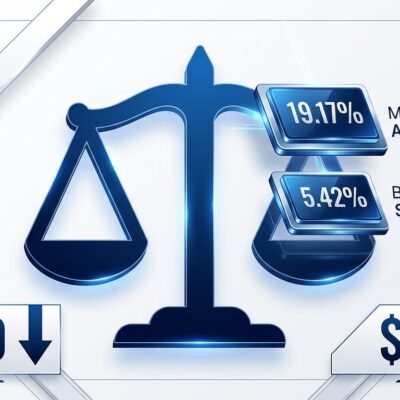
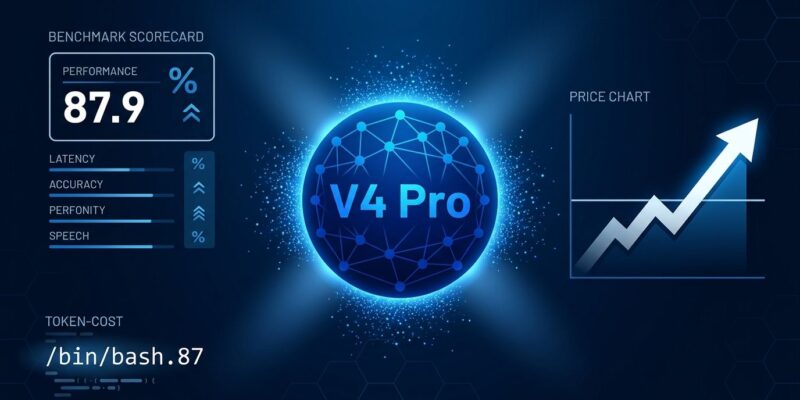
DeepSeek released V4 Pro 0813 today — August 13, 2026 — with no blog post, no tweet, and no announcement beyond a quiet API documentation update. The model is now the general-availability flagship: 1.6 trillion parameters, a 1-million-token context window, and vendor-reported benchmarks that put it 0.1 points behind Fable 5 on Terminal Bench 2.1. The problem: on August 6, DeepSeek told developers a “significant” price increase is coming, with no timeline and no numbers. Right now, V4 Pro 0813 costs $0.87 per million output tokens — roughly 1/57th of Fable 5. That window may be closing.
The Price Warning Developers Can’t Ignore
On August 6, DeepSeek published a notice on its developer platform stating it plans to raise API pricing “by a relatively large margin.” No new rates. No effective date. Just “plan your usage accordingly.” One report references September 5 as a possible effective date — DeepSeek has not confirmed this.
This matters because DeepSeek’s pricing advantage is the entire reason many developers chose it over US labs. V4 Flash currently costs $0.14/$0.28 per million tokens — a fraction of Claude Fable 5’s $10/$50. The concern isn’t just that prices will rise; it’s that developers don’t know by how much, or when, making budget planning nearly impossible. As one developer noted in SCMP’s coverage: “competing American models from Meta and OpenAI now offer comparable capabilities and pricing” — suggesting the cost moat was already narrowing before any hike.
What Changed in DeepSeek V4 Pro 0813
V4 Pro 0813 is a checkpoint update to the April 2026 preview, not a new model family. The architecture stays the same — 1.6 trillion total parameters with 49 billion active per token via mixture-of-experts routing, combined with Compressed Sparse Attention that reduces KV-cache pressure on long-context requests. The context window remains at 1,048,576 tokens with up to 384,000 output tokens. According to Unite.AI, what changed is performance — this checkpoint represents a 15.8 percentage-point Terminal Bench improvement over the April preview.
Developers already using the DeepSeek API are already running 0813 without knowing it. The deepseek-v4-pro endpoint silently updated — no migration required, but also no notification. Three reasoning modes are available: non-thinking for fast responses, high-effort for balanced reasoning, and maximum-effort (V4-Pro-Max) for full agentic workloads. The API supports OpenAI ChatCompletions, Anthropic Messages, and DeepSeek’s Responses format. MIT-licensed weights from the April preview sit on Hugging Face with 1.4 million downloads; GA weights are expected to follow.
Related: DeepSeek V4-Flash-0731 Is Official: The Budget Model That Beat Its Own Pro
Benchmarks to Trust — and Benchmarks to Question
At maximum reasoning, V4 Pro 0813 scores 87.9 on Terminal Bench 2.1, placing it 0.1 points behind Fable 5 (88.0) and above Opus 4.8 (85.0). SWE-bench Verified comes in at 80.6%. These are impressive numbers — with an important caveat: no independent third-party verification exists yet. The data traveled from DeepSeek’s internal WeChat group to a deleted Reddit post to an ASCII table on Hacker News. That’s the provenance chain for benchmarks that justify production budget decisions.
Real-world results on Hacker News tell a more complicated story. One developer paid $0.12 for a 12-minute task that produced buggy code; a competing model cost $1.41 and worked on the first attempt. Multiple users reported that performance varies heavily based on the framework — Claude Code, Pi, and OpenCode produce noticeably different results with identical prompts. The community consensus: run your own tests before committing a production workload to vendor-reported numbers.
Your Options Before the Hike
The MIT license is the escape hatch most developers haven’t fully priced in. Both V4 Pro and V4 Flash ship as open weights — commercial use, modification, and self-hosted deployment are all permitted without restriction. If DeepSeek’s official API prices rise to meet US lab rates, teams can route workloads to self-hosted instances via vLLM, or to third-party providers like Fireworks AI or Together AI who may undercut the new rates. For teams with data-egress concerns about China, self-hosting eliminates that risk entirely.
The practical playbook for right now: test V4 Pro 0813 against your actual workloads — not benchmarks — while current pricing holds. Route complex multi-file coding and long-context synthesis to V4 Pro; keep routine tasks on V4 Flash at $0.14/$0.28. Maximize prompt caching before any price change hits (cache hits cost $0.003625 per million tokens — effectively free). And have a self-hosting plan ready if the hike makes the official API uncompetitive.
Key Takeaways
- DeepSeek V4 Pro 0813 is live today — your existing API endpoint is already serving it, silently
- A “significant” price increase is coming with no confirmed timeline; current output pricing at $0.87/M tokens may not last
- Vendor-reported benchmarks claim near-Fable-5 performance, but zero independent verification exists — test on your real workloads
- The MIT license gives you a self-hosting exit ramp if official API prices rise to uncompetitive levels
- No vision support, and none planned — if your stack needs image understanding, V4 Pro is the wrong model