 By
By Google announced Gemini 4 Argon on September 30 as its most powerful model yet — purpose-built for software engineering, enterprise work, and autonomous vulnerability patching. Twelve days later, most developers who try to call it get a 404. This is not a bug. It is the launch strategy.
What Argon Is (and Why the Numbers Matter)
Argon is Google DeepMind’s flagship frontier model. The headline capability is 1 million output tokens per response — far beyond what current APIs offer — paired with benchmarks that put it near the top of most rankings. On DeepSWE v1.1, Argon scores 77.9%, beating Claude Opus 5.5’s 74.2% and GPT-6 Astra’s 74.1%. On the legal agent benchmark, it scores 19.6% against Opus 5.5’s 3.8% — a genuine gap.
But the benchmark picture is not clean. On Terminal-Bench 4.0 — which measures sustained multi-step coding, the kind of agent work where developers actually spend their time — Argon scores 57.4%. Claude Opus 5.5 scores 66.4%, a nine-point lead. On FrontierSWE v2, Argon sits at 55.0% against Opus 5.5’s 62.3%. The press coverage has been generous with Argon’s wins and quiet about its losses.
Who Has Access Right Now
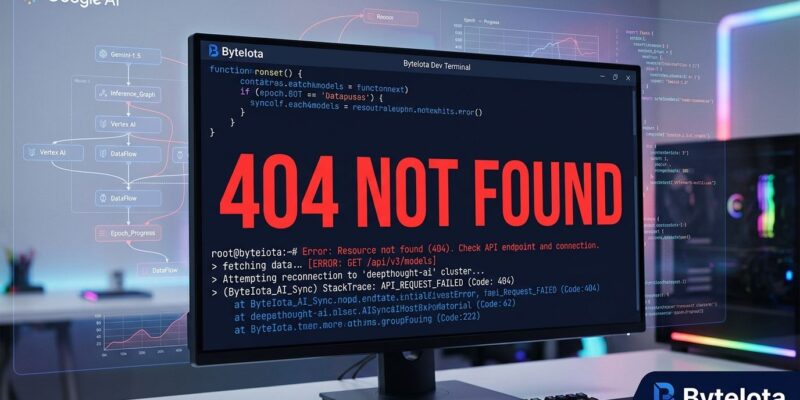
As of today, Gemini 4 Argon is available to approximately 50 trusted cyber defenders in Google’s Fairwind Program. That is it. There is no public model ID, no stable API endpoint, and no confirmed date for paid API access. Developers calling what they assume is the Argon endpoint are getting 404 NOT_FOUND. Google’s own developer guidance is explicit: “published pricing does not mean Argon is enabled in your API account.”
The safety-first framing is not entirely spin. Argon can autonomously find, validate, and patch critical software vulnerabilities — a genuinely dual-use capability that warranted the US government’s voluntary pre-release review process. Google is threading a real needle here. That said, the developer experience of an announced model with published pricing and no available endpoint has a name: pre-announcement.
# Don't assume the endpoint exists — check what's actually available
curl https://generativelanguage.googleapis.com/v1/models \
  -H "Authorization: Bearer $API_KEY" | jq '.models[].name'
The Pricing Catch
When Argon does open up, the introductory pricing is compelling. At $2 input / $10 output per million tokens, it undercuts Claude Opus 5.5 ($4/$20) by half and GPT-6 Astra ($10/$50) by 80%. But that introductory pricing has an expiration date Google hasn’t disclosed. When it ends, standard pricing doubles to $4/$20 — matching Opus 5.5 exactly, at which point the calculus becomes a straight capability comparison rather than a cost play.
If you are building cost projections that depend on Argon’s introductory rates, you are modeling against pricing that may not be available by the time the model is. Full pricing breakdown and access timeline are covered here.
Google’s Developer Experience Track Record
The Argon situation is not isolated. Google’s developer forums carry a long tail of 404 complaints across Gemini model versions — developers with active billing unable to access models listed as available, requesting refunds for billing periods with no working API. One developer in the Hacker News thread put it plainly: “the models are fine, the limits are generous, but the dev experience is shit tier.” Google’s Antigravity CLI draws consistent comparisons against Claude Code — and not favorably.
None of this means Argon will have the same problems at scale launch. But it is context developers should carry into their stack planning. The full benchmark comparison across all four frontier models is worth reading before making any decisions.
What to Do While You Wait
Three practical paths right now:
- For agent coding work today: Claude Opus 5.5 or GPT-6 Astra. Opus 5.5 leads on the sustained multi-step tasks where most engineering agent work sits. GPT-6 Astra leads on computer use and science benchmarks.
- For high-volume, cost-sensitive, well-defined tasks: Gemini 3.8 Flash is available, affordable ($0.75/$3.75), and performs well on front-end and feature-writing tasks. Note: its pricing doubles on January 1, 2027.
- To prepare for Argon without depending on it: Store the model name in an environment variable, build your evaluation dataset now, and do not hard-code any Argon endpoint. Only route production traffic once Google publishes a stable model ID and confirms your account has access.
Argon is not vaporware. The benchmarks are real, the long-context lead is significant, and if the pricing holds, it will be worth switching for the right use cases. But “worth switching to” and “available” are two different things. Right now, only one of those is true.