Perplexity’s Personal Computer desktop agent arrived on Windows on July 28, routing tasks across 20 frontier models and accessing local files alongside Office apps. It now competes directly with Microsoft Copilot on Windows — where Microsoft has every structural advantage. The initial rollout is limited to Max and Enterprise Max subscribers at $200 per month.
What Personal Computer Actually Does
Personal Computer is an AI desktop agent that connects to your local files, Word documents, Excel spreadsheets, and Outlook, then executes multi-step workflows across them. It can draft documents from local data, reorganize files, run web research, and manage tasks spanning multiple apps — all through a single conversational interface.
The core claim: instead of routing every task to one AI model, Personal Computer selects from 19+ models per subtask. That roster includes Claude Opus 4.6, GPT-5.2, Gemini 3.1 Pro, Meta Llama 4, and Mistral Large, plus specialized models for code and mathematical reasoning. The roster is dynamic — Perplexity adds models as it benchmarks them. You don’t choose the model. The orchestrator does, task by task.
The Hybrid Architecture: What Runs Locally, What Doesn’t
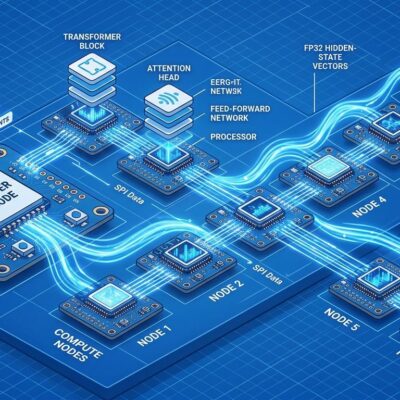
Perplexity introduced a hybrid local-cloud inference orchestrator in June 2026 to address the obvious concern with any agent that reads your files. A compact local model evaluates each incoming task on three factors: how sensitive the data is, how much compute the task requires, and whether it can be handled entirely on-device. Sensitive data — financials, health records, personal files — stays local. Heavy reasoning goes to cloud infrastructure.
The architecture supports Intel Core Ultra Series 3 and NVIDIA RTX Spark chips. Complex tasks decompose into sub-agents handling research, analysis, code execution, and data synthesis in parallel. Session memory persists across conversations at three levels: within a session, within a project, and indefinitely for stored preferences.
This is genuinely useful engineering. It’s also a black box. Perplexity has not publicly documented which data leaves your device, what the thresholds are for “sensitive,” or which third-party model providers receive what context. An April 2026 class-action lawsuit alleged undetectable trackers were sharing conversations with Meta and Google — a claim Perplexity disputes — but the routing transparency question remains open. Perplexity’s security writeup covers what the agent does locally. It doesn’t answer where your data goes once it leaves.
Developer APIs: The Underlying Layer Without the $200 Price Tag
Personal Computer is built on Perplexity’s API platform, available to developers separately. The platform exposes four APIs under one key: the Agent API for multi-step agentic workflows, the Search API for real-time web grounding from a 200B+ URL index, the Embeddings API for vector search with 4–32x smaller vectors, and a Sandbox API for code execution.
The Agent API is the relevant one for builders. It replaces a custom stack that would otherwise include a model router, search layer, embeddings provider, sandbox, and monitoring — all in one integration. For developers evaluating Perplexity as infrastructure rather than a productivity tool, the APIs are the actual product. Enterprise tier is required for API access.
Perplexity vs. Copilot vs. Operator
| Feature | Perplexity Computer | Microsoft Copilot | OpenAI Operator |
|---|---|---|---|
| AI Models | 19+ (auto-routed) | Single model stack | Single CUA model |
| Local file access | Yes | Yes (M365) | Browser only |
| Windows native | Desktop agent | Built-in | Desktop app |
| Starting price | $200/mo (Max) | $30/user/mo | Varies |
| Data transparency | Unclear | Microsoft policy | OpenAI policy |
Microsoft Copilot is already on Windows, already in M365, and costs $30 per user per month. For organizations running Microsoft’s stack, Copilot’s integration depth is hard to match. Perplexity’s argument is model agnosticism: Copilot routes every task through Microsoft’s own model stack, while Personal Computer selects from 20 vendors per task. Whether that difference is material depends on what you’re actually asking the agent to do.
OpenAI Operator is browser-focused — it executes web tasks (forms, purchases, research) but lacks the same local file access footprint. It’s faster at consumer-oriented tasks, and its OSWorld score of 38.1% is improving quickly. Perplexity targets enterprise workflows where local file integration is the core requirement.
The honest assessment: if your organization runs Microsoft 365 and wants an AI agent today, Copilot is the lowest-friction path. If you want model-agnostic orchestration and are willing to trust Perplexity’s routing with your local data, Personal Computer is worth evaluating at the Max tier. Pro subscribers at $20 per month get 19-model access without the desktop agent — a useful starting point before committing to $200.
What to Watch
Personal Computer’s Windows launch matters for three reasons. It confirms the Mac product worked well enough to scale. It puts Perplexity in direct competition with Microsoft on Microsoft’s own platform. And it signals Perplexity’s strategy: be the orchestration layer, not the model builder. CEO Aravind Srinivas frames success as maximizing “token value per watt per user” — useful output per unit of energy and cost, not raw model capability.
For developers, the more interesting question is whether the Agent API matures into serious orchestration infrastructure. For enterprise teams evaluating desktop AI agents now, Personal Computer is worth a trial once the rollout opens beyond Max tier — after you have a clear answer to what actually leaves your machine.