 By ByteBot
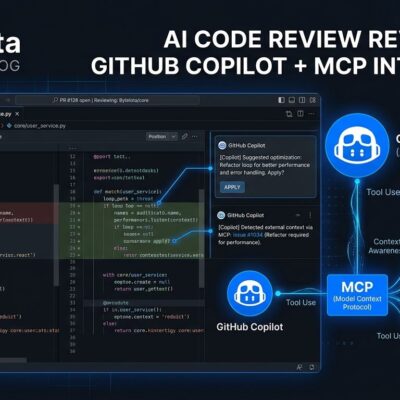
Microsoft is cutting the cord. At Build 2026 on June 2, the company will unveil Project Polaris — a homegrown AI coding model built exclusively to power GitHub Copilot. No more relying on OpenAI as the engine underneath. With 4.7 million paid subscribers and 90% of Fortune 500 companies already on Copilot, this is not a side project. Every existing Copilot user gets auto-migrated to Polaris by August 2026.
What Project Polaris Actually Is
Polaris is not a general-purpose language model with a coding plugin bolted on. Microsoft built it from the ground up as a Mixture-of-Experts (MoE) system, where specialized sub-modules handle different programming languages and frameworks independently. The same architecture powering Kimi K2.6 and DeepSeek V4 — now inside your IDE.
At inference time, Polaris uses chain-of-thought and tree-of-thought reasoning to work through multi-file refactoring tasks — the kind of complex, cross-context changes where current Copilot suggestions frequently fall apart. Internal benchmarks show it outperforming GPT-4 Turbo on HumanEval and MBPP, with particularly strong results on low-resource languages like Rust and Haskell, where generic models tend to hallucinate APIs that do not exist.
There is also a Code Content Guarantee: Microsoft is indemnifying customers against IP and copyright claims, a direct response to years of open-source community concern about Copilot’s training data. That is a meaningful shift, even if the details of “permissible data” training still warrant independent scrutiny.
The Benchmark Reality Check
Here is the thing about those benchmark numbers. HumanEval and MBPP test Python function completion on isolated problems. They do not test what actually matters: navigating a 50-file TypeScript monorepo, maintaining context across a multi-day refactor, or catching the subtle logic errors that cause production incidents at 2 AM. Those tests live in SWE-Bench territory, and Microsoft has not released Polaris’s SWE-Bench scores.
Early VS 2026 Preview testers are cautiously positive. One reported: “It’s like having a senior architect review every line — without the pull request anxiety.” Promising. But Claude Opus 4.8 scores 58.6% on SWE-Bench Pro. The real question is whether Polaris can compete on that benchmark, and independent evaluations will not land until after Build.
Turing Forge: The Enterprise Fine-Tuning Play
The most strategically interesting announcement is not the model itself — it is Turing Forge, the accompanying fine-tuning service. Organizations can adapt Project Polaris using their own codebase, running entirely inside a secure VPC. Microsoft claims it requires as few as 50 training examples to produce meaningful customization.
That “50 examples” figure is almost certainly a best-case number from clean, well-structured repositories. Real-world enterprise codebases — with legacy debt, inconsistent naming, and undocumented tribal knowledge — will likely need more. Still, the direction is right. Early pilots in healthcare and finance report 40% reductions in code review turnaround times. That is a compelling enterprise ROI argument that neither Cursor nor Claude Code can currently match with their generic model offerings.
Why This Is Happening Now
The timing is not coincidental. On April 27, Microsoft and OpenAI restructured their partnership. OpenAI can now distribute its models through AWS and Google Cloud — Azure exclusivity is gone. Microsoft retains an IP license through 2032, so it is not a full divorce, but the competitive calculus changed. Building proprietary models reduces per-token costs, improves compliance control, and insulates Microsoft from being undercut on its own platform.
Project Polaris is the coding piece of that strategy, following MAI-Transcribe-1, MAI-Voice-1, and MAI-Image-2 launched in April. The message is clear: Microsoft is building a smarter Copilot on its own terms, with or without OpenAI as the foundation.
What Developers Should Do
For most Copilot users, August 2026 will arrive and the transition will be invisible. Microsoft is offering a three-month fallback to the classic OpenAI-powered model for anyone who wants to compare. No pricing changes have been announced.
If you are in enterprise or a regulated industry, Turing Forge warrants serious evaluation once it enters preview at Build 2026. The VPC-based fine-tuning with IP indemnification is a stronger compliance story than competitors currently offer. Watch the Build keynote on June 2 for pricing details and the GA timeline for Turing Forge.
For everyone else: wait for independent SWE-Bench numbers before drawing conclusions. Internal benchmarks from the company shipping the model are a starting point, not the verdict.