 By
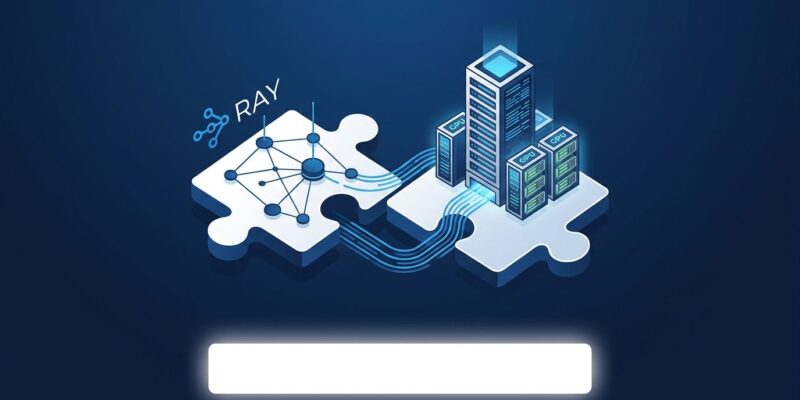
By Nscale, the British AI cloud company valued at $14.6 billion, agreed on July 30 to acquire Anyscale — the company behind the Ray distributed computing framework — for $1.65 billion. It is the third acquisition in 60 days in which an AI infrastructure provider paid over a billion dollars specifically to own the software layer running on top of its GPUs. The pattern is no longer subtle.
Who Nscale Is (And Why the Size Matters)
Nscale is not a GPU reseller. It builds and owns its data centers, generates its own power, and raised $2 billion in a Series C in March 2026. Its West Virginia Monarch campus — a partnership with Microsoft — is slated to deliver 1.35 GW of NVIDIA Vera Rubin NVL72 compute by early 2028. In July 2026 alone it closed a $900 million revolving credit line with JPMorgan, Goldman Sachs, Morgan Stanley, and MUFG. Before this acquisition, Nscale’s pitch to customers was raw scale at competitive cost. After it, the pitch changes.
What Ray Is and Why This Deal Touches Your Stack
Ray is the open-source Python framework the Anyscale team built at UC Berkeley. It handles distributed computing for AI workloads: data preprocessing, model training across thousands of accelerators, reinforcement learning rollouts, and inference serving. It has 237 million downloads. OpenAI used it to coordinate ChatGPT’s training. Cursor, xAI, and Physical Intelligence run production workloads on it.
In October 2025, Anyscale donated Ray to the PyTorch Foundation (a Linux Foundation project), placing it under neutral community governance alongside PyTorch and vLLM. That move pre-empted the obvious concern with any acquisition: that a commercial buyer might steer an open-source project toward proprietary lock-in.
The Open-Source Question, Answered
Ray will remain open source and community-governed. The PyTorch Foundation controls the roadmap, not Nscale. Nscale is joining the PyTorch Foundation as part of this deal — a concrete commitment. Teams running Ray on AWS, GCP, Azure, or bare metal will not need to change anything.
Anyscale also continues operating under its own brand. Existing customers keep their infrastructure choice. The roughly 200 Anyscale employees move to Nscale. In the near term, this acquisition looks largely invisible to existing users.
The Actual Thesis: GPU Profit Lives in the Software Layer
Here is what is really happening. Nscale CEO Josh Payne said it plainly: “Most infrastructure providers just buy GPUs and rent them.” Raw GPU capacity is commodity hardware. What is not a commodity is the software that maximizes useful work per GPU-hour — orchestration layers, observability tools, compilers. Anyscale customers report up to 90% lower total cost of ownership versus running fragmented stacks. That efficiency gap is where AI cloud margins concentrate.
Two deals in the same 60-day window make the thesis impossible to ignore:
| Acquirer | Target | Value | Software Layer |
|---|---|---|---|
| CoreWeave | Weights & Biases | $1.7B (May 2025) | Experiment tracking / observability |
| Qualcomm | Modular (Mojo + MAX) | $3.92B (July 29, 2026) | Compiler + inference engine |
| Nscale | Anyscale (Ray platform) | $1.65B (July 30, 2026) | Distributed workload orchestration |
Three different infrastructure providers, three different targets, same strategic logic: whoever controls the software above the GPUs captures the margin that the hardware providers cannot.
What Anyscale Customers Should Do
Nothing urgent. Ray is foundation-governed and portable. The Anyscale platform continues. But the 2-to-3-year view deserves attention: Nscale will likely make its own infrastructure the path of least resistance for Anyscale workloads. Deeper integrations, co-optimized performance, pricing incentives — these will accumulate. Teams with long-term Ray dependencies on competing clouds should watch whether that path of least resistance widens into a wall.
Anyscale CEO Keerti Melkote described the combined entity as “the first full-stack AI hyperscaler.” Whether Nscale executes on that matters more than the announcement. The deal still needs regulatory approval and closes later in 2026.
The Bigger Picture
AI infrastructure is consolidating around vertically integrated stacks. The neoclouds that survive this cycle will control not just the silicon but the software that decides how effectively that silicon runs. Nscale just bought a significant piece of that stack. So did CoreWeave. So did Qualcomm. Independent AI software vendors are becoming a shrinking category.