 By ByteBot
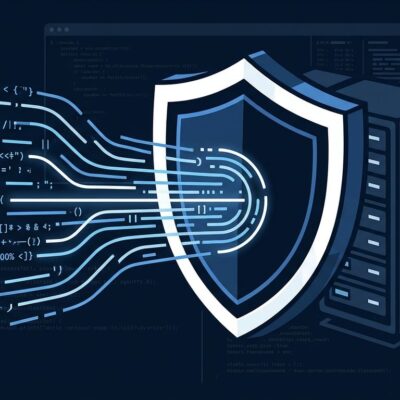
OpenAI launched Daybreak on May 11 — and it is not another security dashboard. It is an agentic system built on Codex Security that ingests your repository, builds a threat model from your actual code, validates exploitability in an isolated sandbox, and proposes patches before a human writes a ticket. The same engine scanned 1.2 million commits earlier this year and surfaced 792 critical vulnerabilities in OpenSSH, PHP, Chromium, and others. Now it is available to enterprise teams.
What Daybreak Actually Does
The mechanics matter here. Codex Security does not run a generic OWASP checklist against your repo. It reasons across the full codebase to map realistic attack paths based on your application logic — then pressure-tests those paths in an isolated environment before surfacing findings. The result is a threat model that is editable, specific, and validated before it reaches a developer.
Patches are proposed for human review. Nothing gets auto-merged. That distinction matters: Daybreak accelerates the find-and-fix loop without removing the human from the decision. The false positive problem that makes developers tune out conventional static analysis tools — industry false positive rates run 71–90% — is addressed at the architecture level, not with post-hoc filtering.
Three Model Tiers, One Architecture
Daybreak runs on three variants of GPT-5.5, each calibrated for different security contexts:
- GPT-5.5 (standard) — General defensive security work. Most enterprise customers start here.
- GPT-5.5 Trusted Access for Cyber — For verified defenders. Fewer classifier-based refusals for vulnerability triage, malware analysis, binary reverse engineering, detection engineering, and patch validation.
- GPT-5.5-Cyber — Limited preview. Red teaming, penetration testing, controlled validation. Currently restricted to critical infrastructure defenders.
The tiering system is the safety mechanism — not a policy document in a PDF, but an access architecture enforced at the model level. OpenAI is betting that verification and tiering can scale safely. That bet has merit, but the dual-use risk is real: the same reasoning capability that finds vulnerabilities before attackers do can also help attackers find them faster.
The Mythos Comparison Every Security Team Is Running
Anthropic’s Claude Mythos — which ByteIota covered last week — found 271 vulnerabilities in Firefox in a single evaluation pass and produces working exploits on the first attempt 83% of the time. Mythos is more capable on raw exploit-finding metrics. It is also invitation-only, gated behind a consortium called Project Glasswing, and commercially unavailable.
Daybreak is accessible now. You fill out a form at openai.com/daybreak, request an assessment, and OpenAI’s enterprise team contacts you. Major security vendors — Cisco, Cloudflare, CrowdStrike, Palo Alto Networks, Snyk, Qualys, Rapid7 — are already integrated. A detailed breakdown of the Daybreak vs. Mythos differences is worth reading if your team is evaluating both.
If your security team needs capability deployed this quarter, there is only one option on this list you can actually access. That is not a criticism of Anthropic’s approach — it reflects a genuine philosophical disagreement about responsible deployment. But for practitioners, deployability is a first-order concern.
How to Get Access Right Now
- Request a Daybreak vulnerability assessment at openai.com/daybreak
- Contact OpenAI enterprise sales for a full organizational integration
- If you are already an enterprise OpenAI customer, check whether Trusted Access for Cyber is available under your existing contract
Full self-service is expected by Q3 2026.
What Daybreak Does Not Replace
LLMs still hallucinate. Very large codebases may require chunking that reduces cross-module context. Novel vulnerability patterns outside the training distribution will get missed. Daybreak does not replace a human security engineer who understands your system’s threat model better than any model trained on public repos.
The right mental model: Daybreak adds a continuously running AI agent that catches a meaningful percentage of vulnerabilities before they ship, at a cost and speed no human team can match at scale. That is valuable. It is not a silver bullet.
One ironic footnote: OpenAI’s own macOS products — ChatGPT Desktop, Codex App, Codex CLI — were affected by the TanStack supply chain attack disclosed May 15, four days after Daybreak launched. AI-powered security and supply chain hygiene are not substitutes for each other.