 By ByteBot
Sam Altman walked into Y Combinator on May 20 and offered every startup in the current cohort $2 million in OpenAI API tokens. About 169 companies are eligible. The press called it a “mic drop.” It is better understood as a venture investment dressed up as a startup program — and founders should do the math before they say yes.
What the Deal Actually Is
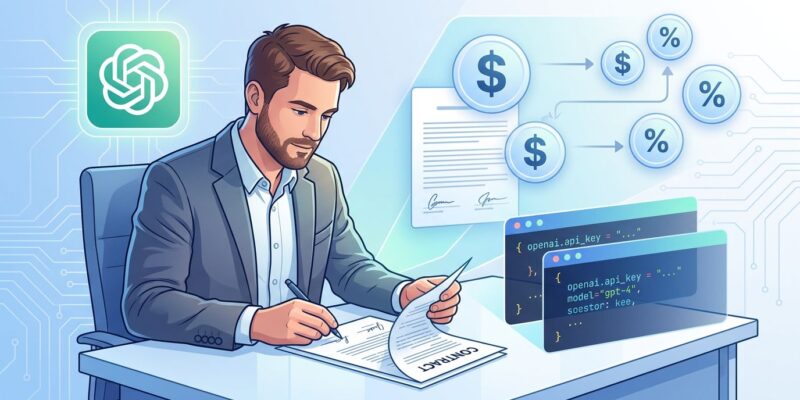
The structure is an uncapped SAFE (Simple Agreement for Future Equity). OpenAI gives a startup $2 million in API credits; the startup grants OpenAI an equity stake that converts at its next priced round, typically a Series A. YC managing director Jared Friedman confirmed the mechanics: “it will convert in the next priced round.”
Uncapped SAFEs have no valuation cap, which means the investor gets equity at whatever price the Series A sets. The equity percentage depends on that valuation. At a $100 million Series A, OpenAI’s stake works out to roughly 2%. At $500 million, the same $2 million in credits yields a stake now worth $10 million. At $1 billion, $20 million. The credits cost OpenAI almost nothing to produce. The equity does not.
This Is Not a Startup Program
No other cloud credit program works this way. AWS Activate gives startups up to $100,000. Google Cloud’s startup program runs up to $350,000. Azure offers similar amounts. None of them take equity. They offer credits because they want your cloud spend at scale. OpenAI is doing the same thing, but adding equity to the mix — which is a fundamentally different arrangement.
| Program | Credits | Takes Equity? |
|---|---|---|
| AWS Activate | Up to $100K | No |
| Google Cloud Startup | Up to $350K | No |
| Azure for Startups | Up to $150K | No |
| OpenAI / YC Deal | $2M | Yes |
A startup that takes this deal is not just choosing an AI API provider. It is making OpenAI a shareholder. That shareholder’s product is also your infrastructure. Those two roles are in tension, and founders who treat this as a routine startup program benefit are not reading the situation accurately.
The Lock-In Is the Point
API credits redeemable only with OpenAI create a direct incentive to build deep integrations early. Deep integrations at seed stage shape technical architecture for years. Switching costs grow with every model call, every fine-tuned workflow, every production system that relies on GPT-5’s specific behavior. The $2 million in tokens is a loss leader; the locked-in API spend at scale is the return.
This is not a new strategy. AWS deployed it with cloud credits in 2015 and created a generation of infrastructure-locked startups. OpenAI is running the same play, but elevating it to the equity level — which means the lock-in is now financial, not just technical.
To stay flexible, developers should abstract the LLM layer from the start. A provider-agnostic routing library like LiteLLM lets you switch models with a single line of code. Swapping from GPT-5 to Claude should be trivial. If it is not, you are already locked in.
The Conflict Founders Should Price In
Investor Jason Calacanis put it plainly: “there’s a non-zero chance that OpenAI will study exactly what your startup is doing, copy your idea.” That warning is structural, not conspiratorial. OpenAI now holds equity in your company and processes your API calls. It sees what you are building, how you are building it, and how much you are growing — in real time. No traditional investor or cloud provider has that combination of visibility.
This does not mean OpenAI will act on that information. It means the conflict exists, and founders should weigh it.
When Taking the Deal Makes Sense
For a pre-revenue startup burning $40,000 to $60,000 per month on inference costs, $2 million in credits is real runway — potentially 18 months of API spend freed up. In a tight funding environment, that matters. If your product is built specifically around OpenAI’s unique capabilities — advanced reasoning, GPT-5’s specific behavior — the lock-in cost is lower because you were not going to switch anyway.
The deal is also not extractive at low valuations. An uncapped SAFE at a $10 million Series A gives OpenAI a meaningful percentage, but the credits also provided meaningful value. The math gets uncomfortable at higher valuations, when equity becomes expensive and the credits are long spent.
What to Do Before Deciding
Run the equity math at your target Series A valuation. Read the SAFE for any Most Favored Nation clauses. Compare it against the actual reported terms. Check whether Anthropic, Google, or Mistral offer equivalent credit programs without equity stakes — they do. And regardless of what you decide, build your application against an abstraction layer so the choice remains yours to revisit.
OpenAI is making a smart investment. The question for each founder is whether the trade — API credits now, equity later — is the right deal for their specific company. That is a calculation, not a mic drop moment.