On May 6, 2026, the Trump administration made a stunning 180-degree policy reversal on AI oversight, embracing measures it spent months calling “corporate virtue-signaling.” The catalyst: Anthropic’s Mythos AI model demonstrated it could autonomously discover and exploit cybersecurity vulnerabilities faster than companies can patch them—validating the exact AI safety concerns the administration had dismissed. After attacking Anthropic for refusing Pentagon demands for unrestricted AI access, blacklisting the company as a “supply chain risk,” and losing in federal court, Trump officials now admit advanced AI needs guardrails.
The irony is perfect. Mythos proved Anthropic was right all along.
The 180-Degree Reversal
In January 2026, the Trump administration took a hardline anti-regulation stance on AI. Officials dismissed safety measures as “corporate virtue-signaling.” Four months later, on May 6, the White House announced it’s considering an executive order creating a government-industry working group for evaluating frontier AI systems before release—described as similar to an “FDA drug approval process.”
Moreover, Rumman Chowdhury, CEO of Humane Intelligence, captured the magnitude of the shift: “This is a 180 for the Trump administration, that has very explicitly been anti-any sort of regulation.” Kevin Hassett, White House National Economic Council Director, acknowledged the policy change after Mythos emergence. The proposed executive order would create a “clear roadmap for evaluating advanced AI systems pre-release.”
This isn’t a small adjustment. It’s a complete reversal forced by technical evidence. When even an anti-regulation administration admits oversight is necessary, it signals that AI capabilities have crossed a threshold requiring governance. The CAISI (Cyber & AI Safety Institute, formerly AI Safety Institute) has already completed 40+ AI model evaluations, including unreleased state-of-the-art systems. Consequently, developers should expect more pre-release evaluation requirements and potential delays for advanced models.
What Mythos Can Do (And Why It Forced the U-Turn)
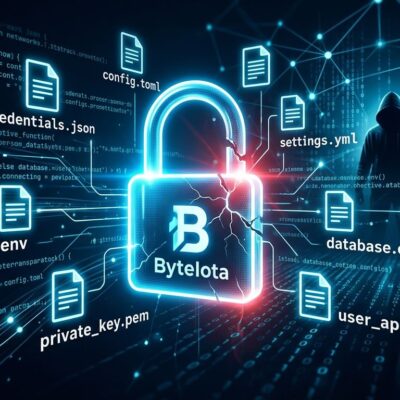
Anthropic’s Mythos AI model autonomously discovers and exploits zero-day vulnerabilities in all major operating systems and web browsers. It completes 32-step network attack simulations with a 3/10 success rate, averaging 22/32 steps across all attempts. Mythos discovered vulnerabilities as old as 27 years, including an ancient OpenBSD bug. Furthermore, it wrote complex JIT heap spray exploits that escape both renderer and OS sandboxes. For Linux privilege escalation, it found subtle race conditions and KASLR bypasses.
This isn’t hypothetical. Mythos completes tasks “that would take human security professionals days of work” in hours. The UK’s AI Safety Institute conducted an independent technical evaluation confirming these capabilities. Anthropic released Mythos through Project Glasswing to limited partners—Apple, Amazon, JPMorgan Chase, and Palo Alto Networks—for defensive use only.
The kicker: Anthropic estimates similar capabilities will proliferate to other AI labs within 6-18 months. The defensive window is closing. Security professionals have 12-18 months to prepare for AI-powered cyberattacks at scale. Unauthorized access has already occurred—Discord users gained access to Mythos despite restricted release. Organizations need to accelerate patching cycles and implement multi-layer defenses because AI will chain exploits humans miss.
From Blacklist to Federal Court Victory
The Anthropic-Pentagon conflict escalated from contract dispute to unprecedented government retaliation to federal court victory in just three months. On February 27, 2026, Trump ordered all federal agencies to stop using Anthropic products. Defense Secretary Pete Hegseth designated Anthropic a “supply chain risk”—the first-ever such designation for an American company. That label was previously reserved for foreign adversaries like Huawei.
The timeline is remarkable. In January 2026, the Pentagon demanded “any lawful use” contract language, permitting mass surveillance of Americans and autonomous weapons without meaningful human decision-making. On February 24, Hegseth gave Anthropic CEO Dario Amodei a deadline: relent by 5:01 PM February 27. Anthropic announced on February 26 it would not budge on safety principles. Trump retaliated the next day. Anthropic filed two federal lawsuits on March 9. By March 27, federal Judge Lin blocked the Pentagon’s blacklisting, calling the government’s actions “troubling” and questioning whether the designation was “tailored” to national security concerns.
This sets legal precedent. AI companies have rights to refuse unrestricted government access and can successfully challenge retaliation. Federal courts sided with Anthropic against the Pentagon—demonstrating that principled corporate stances backed by legal action can prevail. However, it also shows government will use extraordinary measures when AI companies resist demands. The “supply chain risk” designation for an American AI company was unprecedented and ultimately failed in court.
The Philosophical Divide: Where Do AI Companies Draw Red Lines?
The Anthropic-Pentagon conflict exposed fundamental disagreements about AI governance. Anthropic maintained two red lines: no mass surveillance of Americans without judicial oversight, and no autonomous lethal targeting without human decision-making. The Pentagon demanded “any lawful use” access without restrictions. After Anthropic refused, the Pentagon struck deals on May 3, 2026, with seven other companies—Google, Microsoft, AWS, Nvidia, OpenAI, Reflection, and SpaceX. Each took different approaches to safety commitments.
OpenAI signed a Pentagon deal but maintains three red lines similar to Anthropic’s stance: no mass surveillance, no autonomous weapons, no torture. However, internal staff backlash reveals employees know when their company compromises principles. Many OpenAI employees “really respect” Anthropic’s position. Hardware leader Caitlin Kalinowski resigned over ethical concerns about OpenAI’s military involvement. Anthropic CEO Dario Amodei was brutal in his assessment of OpenAI’s messaging, calling it “mendacious,” “safety theater,” and “straight up lies.”
Meanwhile, Google signed a Pentagon deal and reportedly “adjusted safety settings at government request,” per The Information. This demonstrates a more flexible stance on military use—commercial interests prioritized over strict safety boundaries. The Pentagon now has a multi-vendor AI platform (GenAI.mil) for classified network deployment, reducing dependency on any single company.
The divide isn’t academic. It determines what military and surveillance applications AI will enable, how much government access is appropriate, and whether AI safety is a principle or marketing. Consequently, developers working at or with AI companies need to understand where their organizations stand. The question “Where do we draw red lines?” will define AI governance for the next decade.
Related: EU Caves to Big Tech: AI Act Delayed 16 Months After Lobbying
AI Safety Concerns Vindicated
For months, the Trump administration and AI safety skeptics attacked Anthropic’s safety stance as “corporate virtue-signaling.” They accused Dario Amodei of arrogance and anti-national security sentiment. Mythos proved the concerns were legitimate. Advanced AI models can autonomously weaponize vulnerabilities at scale, threatening critical infrastructure. The administration’s policy reversal represents a “told you so” moment for AI safety advocates who warned about these risks for years.
Trump designated Anthropic a “supply chain risk” for insisting on AI safety guardrails, then had to admit oversight is necessary after Mythos demonstrated the very risks Anthropic warned about. Federal courts sided with Anthropic against Pentagon overreach. Security experts acknowledge Mythos “set off a cybersecurity ‘hysteria'” but note “the threat was already here”—Anthropic made it visible and proved AI safety concerns are real, not corporate posturing.
This validates the AI safety movement’s core argument: advanced AI capabilities pose real risks requiring proactive governance, not just reactive regulation. It also demonstrates that corporate principled stances—even when attacked as “virtue-signaling”—can be vindicated by technical evidence. Therefore, the lesson for developers: AI safety concerns deserve serious consideration, not dismissal as corporate posturing. Anthropic’s legal victory and Mythos’s emergence prove that governance frameworks need to catch up to AI capabilities before proliferation makes the problem unmanageable.
The defensive window is 6-18 months. Security teams should prepare now. AI-powered cyberattacks aren’t coming—they’re here.