 By ByteBot
On March 25, 2026, Anthropic’s Model Context Protocol (MCP) crossed 97 million installs—the fastest adoption curve for any AI infrastructure standard in history. To put that in perspective: Kubernetes took nearly four years to reach comparable deployment density. MCP did it in roughly 16 months. The data is clear: the protocol wars are over. MCP won.
What MCP Is and Why It Matters
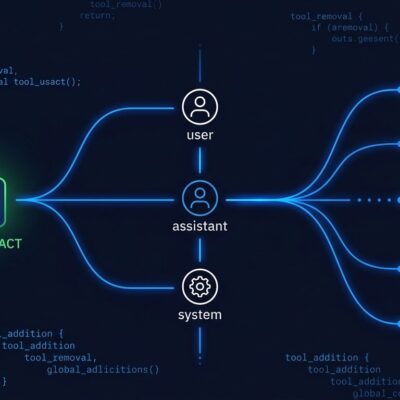
MCP is an open standard that defines how AI agents communicate with external tools, data sources, and APIs. Before MCP, developers faced the N×M integration problem: every AI provider needed custom integrations for every tool. N providers times M tools equals a lot of wasted engineering effort.
MCP solves this. Build one MCP server for your tool, and it works with all MCP-compatible AI agents—OpenAI, Claude, Gemini, the whole ecosystem. That’s N+M integrations instead of N×M. The math alone explains why adoption happened so fast.
The protocol defines three core primitives: Tools (executable functions AI can invoke), Resources (data sources for context), and Prompts (reusable templates). It uses JSON-RPC 2.0 and supports both local integrations via STDIO and remote connections via HTTP with Server-Sent Events. Simple, well-documented, works immediately.
Every Major Player Is All In
This isn’t just Anthropic’s pet project. Every major AI provider now ships MCP-compatible tooling. Not “most.” Not “some.” All of them.
On December 9, 2025, Anthropic donated MCP to the Linux Foundation’s newly formed Agentic AI Foundation. OpenAI and Block joined as co-founders. AWS, Google, Microsoft, Cloudflare, and Bloomberg signed on as platinum members. When you have that roster aligned behind one standard, the market has spoken.
The neutral governance matters. Linux Foundation oversight removes vendor lock-in fears. Developers can adopt MCP knowing no single company controls its future. That’s why the ecosystem exploded: 97 million monthly SDK downloads, 10,000+ public MCP servers, contributions from development tools companies like Zed, Replit, Codeium, and Sourcegraph.
Any developer still building custom integrations per AI provider is solving yesterday’s problem.
Real-World Impact
MCP isn’t theoretical. It’s deployed in production at scale, delivering measurable improvements. When Twilio tested MCP integrations, task success rates jumped from 92.3% to 100%. Agentic performance improved by 20%. Compute costs dropped up to 30%.
Companies like Block and Apollo have MCP in production. Real use cases span recruitment systems pulling candidate data from applicant tracking systems, real estate platforms surfacing active listings and previous offers, procurement tools aggregating vendor communications and contract terms across email and ERP systems. Financial services use MCP for real-time fraud detection with fresh transaction data. Healthcare providers stream patient histories into LLM-powered engagement tools while maintaining HIPAA compliance.
Gartner predicts that by the end of 2026, 75% of API gateway vendors and 50% of iPaaS vendors will include MCP support. That’s not a fringe technology. That’s foundational infrastructure.
What This Means for Developers
If you’re building AI agents, MCP is no longer optional—it’s the standard. Your integrations work across all major AI platforms. You can leverage 10,000+ existing MCP servers instead of building everything from scratch. Your code won’t need rewrites when new AI providers launch. Build once, compatible forever.
The ecosystem momentum is undeniable. MCP expertise is increasingly in demand. The protocol is future-proof in the way that matters: it’s not just technically sound, it has industry-wide commitment.
That said, security best practices are still emerging. Equixly’s security assessment found that 43% of tested MCP implementations have command injection vulnerabilities. MCP itself isn’t insecure—implementations vary widely in quality. As the ecosystem matures, expect security standards and auditing tools to follow. It’s the normal evolution for any young protocol.
Why MCP Won
MCP won because it solved a universal problem at exactly the right moment. When Anthropic launched MCP in November 2024, AI agents were moving from experimentation to production. Developers felt the N×M integration pain acutely. MCP offered immediate relief with a simple, well-documented standard. Then came the Linux Foundation donation, removing vendor lock-in fears. Network effects did the rest: once a few major players adopted, the rest followed.
First-mover advantage matters, but only if you execute. MCP did.
The Takeaway
The debate is over. MCP is the standard. The 97 million installs, the industry-wide adoption, the ecosystem momentum—these aren’t signals of a future trend. They’re confirmation of a present reality.
The only question left is whether you’re building with MCP yet or still catching up.