 By ByteBot
Chamath Palihapitiya just became a full-time CEO for the first time since Facebook. The company he chose is 8090 Labs, an enterprise AI coding startup that closed a $135 million Series A led by Salesforce Ventures on June 29. The premise: Cursor and GitHub Copilot work great — unless you work in healthcare, government, or financial services, in which case their architecture is functionally unusable for production workloads.
The Problem Software Factory Is Solving
Cursor runs all AI inference through AWS cloud infrastructure, even in Privacy Mode. There is no VPC deployment option. For a hospital system or federal agency with data residency requirements, that is a hard stop — not a configuration issue. GitHub Copilot Enterprise is a better story on compliance: it has audit logs, IP indemnification, and zero data retention. But it is still a code completion tool. It does not govern requirements, architecture, or the connection between the two.
This is the gap 8090 is betting on. Regulated industries do not just need faster code generation. They need a traceable record of every decision from the initial feature request through production deployment. HIPAA, SOC 2, and FedRAMP auditors want to know who changed what, when, and why — including the AI-assisted parts.
What Software Factory Actually Does
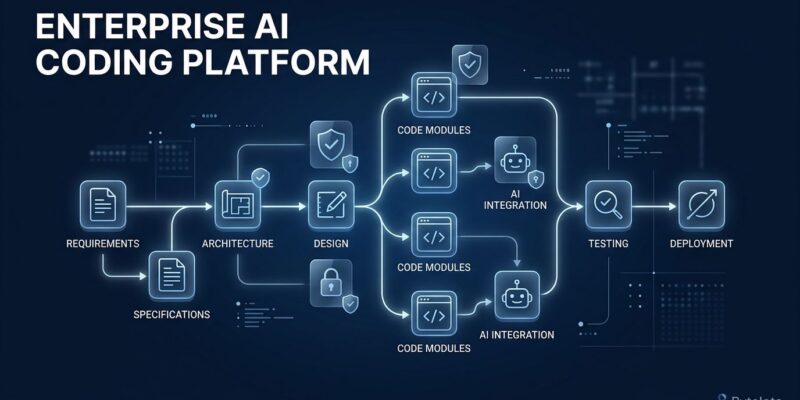
Software Factory is built around three modules that connect via a Knowledge Graph:
- Refinery — The requirements layer. Product managers author natural-language documents describing what an application should do. Refinery structures those into a single source of truth that feeds everything downstream.
- Foundry — The architectural intelligence layer. Transforms requirements into technical blueprints for each system component. Continuously monitors the codebase for drift from those blueprints and surfaces alerts when they diverge.
- Planner — The project management layer. Turns architectural intent into work orders with full traceability back to the original requirements.
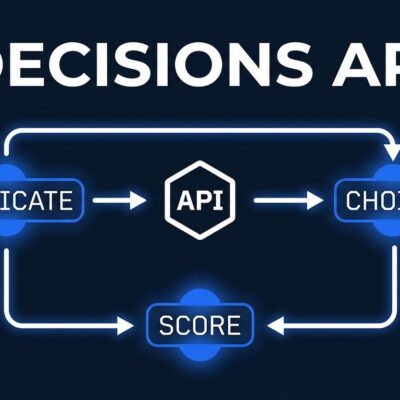
Third-party AI agents — including Claude and GPT-4 — plug into the platform via an Agent Skill toolkit and execute the actual code generation. The audit trail is generated as a natural byproduct of the workflow, not added after the fact. Every requirements version, blueprint history, work order genealogy, and code change log exists because the platform was built to produce them.
The EY Case Study and What It Actually Proves
In March 2026, Ernst and Young launched EY.ai PDLC, built entirely on top of Software Factory, and rolled it out across tens of thousands of consultants in U.S. operations. EY’s self-reported internal results: 70% improvement in development productivity and cost efficiency, delivery up to 80 times faster, and more than 95% automated test coverage.
These numbers are EY’s own — not independently verified. That matters. But EY’s willingness to deploy this platform at scale across client engagements is a signal of a different order than a press release. Consulting firms do not bet their delivery reputation on unproven tooling.
How It Compares to What You Are Already Using
| GitHub Copilot Enterprise | Cursor Business | 8090 Software Factory | |
|---|---|---|---|
| Category | Code completion | AI IDE | SDLC control plane |
| Audit trail | Basic logs | None | Full lifecycle |
| VPC / on-prem | No | No | Yes |
| Regulated-industry focus | Partial | No | Core value prop |
| Price | $39/user/month | $40/user/month | $200/user/month + tokens |
The Honest Trade-offs
Self-serve Software Factory costs $200 per user per month plus token usage. GitHub Copilot Enterprise is $39. That is a 5x price premium that needs to be justified by real compliance cost savings, not just ROI projections. The bull case is that compliance overhead and audit failures in regulated industries already cost teams far more than the price delta. That may be true, but it needs to be proven with production customers beyond EY’s internal pilots.
The Enterprise managed tier starts at $1 million per year — and 8090 retains codebase IP in that arrangement. Many enterprise legal teams will not accept that term regardless of the productivity gains on offer. This is the clause that will kill deals in procurement, and 8090 will need to revisit it.
Who Should Be Paying Attention
If you build software at a hospital system, insurance company, defense contractor, or federal agency, Software Factory is worth a serious evaluation. The compliance architecture is genuinely differentiated and the EY validation is meaningful, even accounting for the self-reporting caveat.
If you are a startup, a mid-market SaaS company, or any team without hard regulatory obligations, Cursor and Copilot will serve you better at a fifth of the cost. Turning vibe coding into enterprise paperwork sounds cynical — and it is, for most developers. For regulated-industry teams, the paperwork is not overhead. It is the job.
Chamath is betting that the $1M enterprise contracts will validate the model within 18 months. Salesforce Ventures’ involvement gives 8090 access to the exact CIO relationships they need. The product is in production — their site has live documentation and a self-serve signup. Whether it earns the price tag is the only open question.