 By
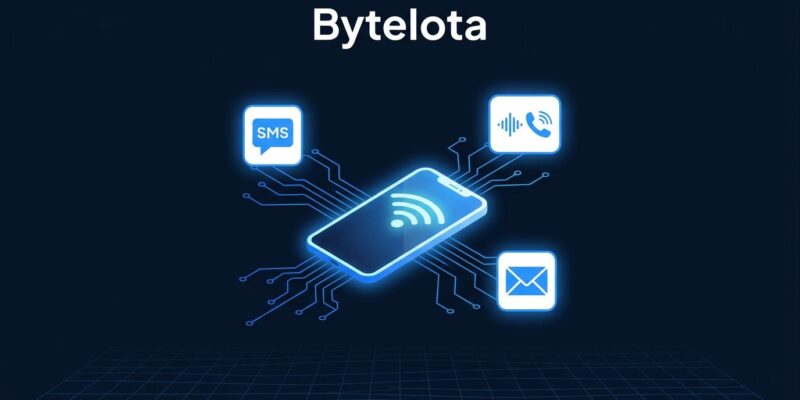
By Sinch launched Agent Tools this week — a suite that includes an MCP server, VS Code and JetBrains extensions, and a library of structured knowledge files that put SMS, voice, email, and phone verification directly inside AI coding agents. Point Claude Code or Cursor at it and your agent can send a text message, trigger a phone verification flow, or look up a number mid-task, without you touching the Sinch dashboard.
The important distinction: this is not a new SDK wrapped in MCP branding. The AI agent is calling live Sinch APIs and getting real responses — same as your production code would. That changes what you can automate.
The MCP Server: 15 Tools Across the Communications Stack
The @sinch/mcp package on npm is the core of the suite. It exposes 15 tools organized across five areas: Messaging, Voice, Verification, Email (via Mailgun), and Numbers. Any MCP-compatible client can call them — Claude Code, Cursor, GitHub Copilot, ChatGPT Desktop.
Channels covered include SMS, WhatsApp, RCS, TTS voice callouts, conference calls, email delivery, phone verification flows, and number management. Tools can be filtered by tag — if your project only needs conversation tools, pass --tags conversation and the rest are excluded from context.
There are two deployment options. The Sinch-hosted cloud endpoint requires no local setup and works well for agents running inside chat interfaces. The self-hosted option runs locally, which is better for IDE-native workflows in Cursor or Claude Code, or for regulated environments that need data sovereignty. The server is open-source on GitHub at sinch/sinch-mcp-server.
To connect it to Claude Code or Cursor, the configuration is minimal:
{
  "mcpServers": {
    "sinch": {
      "command": "npx",
      "args": ["-y", "@sinch/mcp"],
      "env": {
        "PROJECT_ID": "your-project-id",
        "KEY_ID": "your-key-id",
        "KEY_SECRET": "your-key-secret"
      }
    }
  }
}
Credentials come from the Sinch Build dashboard. Requirements are Node.js 19+ and npm 9+. RCS requires separate enablement via Sinch support but reuses the same credentials once active.
Sinch Skills: Structured Knowledge That Prevents Hallucinated Patterns
The second component is sinch/skills — a set of SKILL.md files that follow the open Agent Skills standard. Each file covers one Sinch API and contains auth setup instructions, common patterns, known gotchas, and working code examples.
The mechanism is worth understanding. At startup, the agent loads only the name and description of each skill — roughly 100 tokens. When a task matches a skill’s domain, the agent reads the full file into context, staying under 5,000 tokens. This keeps context window costs minimal while giving the agent expert-level knowledge when it needs it.
Skills work with Claude Code, Cursor, GitHub Copilot, Codex, Gemini CLI, and Windsurf — any agent that supports the SKILL.md standard. The practical effect is that your agent builds a Sinch SMS integration correctly the first time, rather than guessing at API patterns that may have changed since its training cutoff.
Simulator Mode: No Account Required to Test
Simulator Mode lets developers test the full Sinch API workflow inside their editor before creating a Sinch account or touching live credentials. This targets the standard friction point in evaluating communications platforms: you normally need to sign up, verify, and configure before you can see whether the platform fits your use case.
Being able to run through an SMS send, a verification flow, and a TTS callout before committing to an account is a meaningful UX improvement over the existing status quo. Whether it converts evaluators at a higher rate is something Sinch will measure, but the intent is sound.
Where Sinch Stands Relative to the Field
Twilio has no unified equivalent here. SendGrid offers a basic email MCP, but no Skills files, no Simulator Mode, and no IDE extension. Mailtrap leads in the email-specific niche with MCP plus Skills plus a CLI. Sinch’s advantage is breadth — one package covering SMS, voice, email, and verification — combined with the Skills concept, which no other major communications platform has shipped yet.
One thing worth flagging: MCP security is not solved. The first malicious MCP server in the wild was a fake Postmark package slipped into npm. Always install from the official @sinch/mcp package and pull Skills from the official sinch/skills repository. Verify publisher identity before adding any MCP server to your config.
Sinch Agent Tools is available now. Full details at sinch.com/ai/agent-tools. Skills documentation is at developers.sinch.com.