 By ByteBot
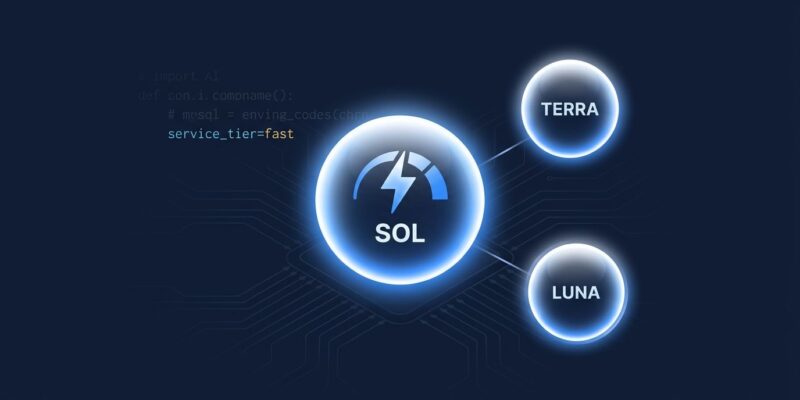
OpenAI shipped three simultaneous changes to GPT-5.6 on August 6 that touch every pricing tier at once: Sol gets a factual accuracy retune, Fast Mode lands in the API for time-sensitive workloads, and Luna becomes the unlimited default for every free user. None of these is a new model. They are behavioral, billing, and access changes — and they affect production systems starting now.
Sol Gets More Accurate — In Chat, Anyway
Plus and Pro users running GPT-5.6 Sol in ChatGPT are getting an updated model. OpenAI says it produces 68% fewer responses containing factual errors in financial, medical, and legal contexts compared to GPT-5.5 Instant. The model aims for more direct answers, tighter formatting, and less padding when extra detail does not help.
The old Instant vs. Thinking toggle is gone. It has been replaced by a unified effort slider with five positions: Instant, Medium, High, Extra High, and Pro. This is a cleaner interface, and it maps more honestly to what the model is actually doing — spending more or less compute per response.
One caveat worth noting: this retune applies to ChatGPT Chat only. API builds, Codex, and Work are unchanged. If your team runs Sol via API, nothing has changed on your end today. Also worth keeping in mind: the 68% error reduction comes from OpenAI’s own internal evaluation on curated financial, medical, and legal prompts. Independent verification will take time.
Fast Mode: 2.5x Speed, 2x the Price
For API developers, the more actionable change is Fast Mode. Set service_tier: "fast" on any gpt-5.6-sol request and you get up to 2.5x faster throughput. The tradeoff is pricing: exactly double the standard rate. For Sol, that means roughly $10 per million input tokens and $60 per million output tokens instead of $5/$30.
response = client.chat.completions.create(
    model="gpt-5.6-sol",
    messages=[{"role": "user", "content": "Review this diff for security issues"}],
    service_tier="fast"  # "priority" also works — both route identically
)
Fast Mode does not change the model’s intelligence — it is purely a speed optimization. The practical use cases are narrow but real: live coding assistants, user-facing agent steps where someone is watching the clock, real-time review flows. For batch jobs, ETL pipelines, and background processing, standard mode is the right call. Paying double for speed you do not need is just waste.
There is one edge case to know: if you exceed one million tokens per minute and ramp by 50% or more within a 15-minute window, OpenAI will auto-downgrade those requests to standard speed. The response object will reflect service_tier: "default" so you can detect it. Build your traffic ramps gradually, or use feature flags to control rollout.
The full Fast Mode documentation covers supported models, ramp limits, and enterprise spend tracking. Fast Mode does not support fine-tuned models or embeddings, but multimodal requests including images work fine.
Luna Is Now Free — Without Limits
GPT-5.6 Luna replaces the previous default model for Free and Go tier users. More importantly, text chat rate limits are gone entirely. There is no daily cap on conversations anymore.
The Think button — which gives Luna extra processing time for complex questions — rolls out the week of August 10. File uploads, image generation, and tool access remain limited; this change is text-only.
One honest limitation to flag: Luna’s long-context recall is weak. Its MRCR score sits at 41.3% versus Sol’s 91.5%. If you are pointing free-tier users at multi-document analysis or long-context synthesis tasks, Luna will underperform. For everything else — question answering, summarization, coding help, general tasks — the quality gap from the old free tier is meaningful.
Why This Is Happening: Sol Optimized Its Own Inference Stack
The efficiency gains that funded the July 30 Luna price cut — and enabled these changes — came from Sol itself. OpenAI set Sol to work inside Codex on its own serving infrastructure. It rewrote GPU kernels using Triton and Gluon, ran hundreds of experiments on its speculative-decoding architecture, and monitored its own training process. The output: 20% lower serving costs and 15% better token generation efficiency.
This is the first documented case of a production frontier model shipping efficiency improvements it generated itself. The recursive loop — model improves its own serving, savings fund access expansion — is now a real product dynamic, not a thought experiment. Vellum’s tier breakdown covers the full pricing and benchmark picture if you want the numbers.
What to Do Right Now
- If you run Sol API calls where latency matters, test
service_tier: "fast"against your p95 latency targets and check whether the 2x cost premium pays off for your use case. - If your model routing logic defaults free users to a weaker model, update it — GPT-5.6 Luna is now a credible option for most general tasks.
- If you are building for ChatGPT Plus/Pro users, the effort slider is available in Chat — but remember the retune only affects Chat, not API model behavior.
The cost curve for frontier AI has been falling faster than most infrastructure assumptions have kept pace with. “Free” now means GPT-5.6 quality without rate limits. If your product strategy still treats frontier AI as expensive and scarce, you are optimizing for a world that stopped existing months ago.