 By
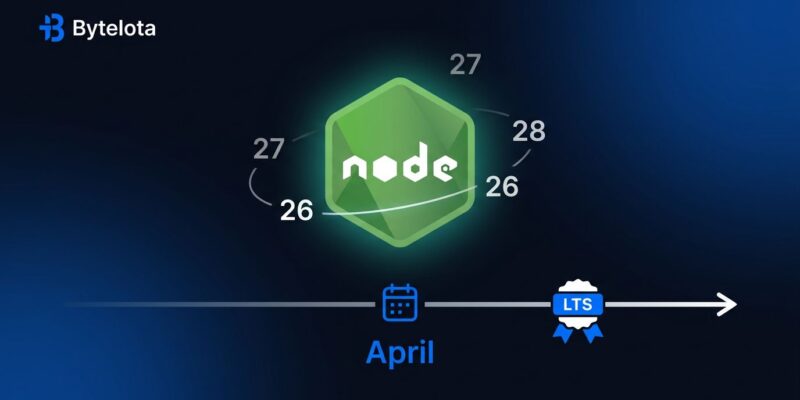
By Node.js is retiring the odd/even versioning model it has used for over a decade. Starting with Node 27, every major release gets Long-Term Support status, drops in April, and is preceded by a six-month Alpha channel. Node 26 — transitioning to Active LTS in October 2026 — is the last release under the old rules. The Node.js TSC published the official change this week, and if you maintain a library or manage a CI pipeline, there are actions to take before October.
What the New Model Actually Looks Like
Under the old model, Node.js shipped two major releases per year. Even numbers (18, 20, 22, 24, 26) got Long-Term Support. Odd numbers (19, 21, 23, 25) were six-month experimental releases that most teams skipped entirely. The unofficial rule was simple: stay on even, avoid odd.
That changes with Node 27. One major release lands in April each year, and every release gets LTS in October. The odd/even distinction is gone. Version numbers will now align to the calendar year of the initial Current release: 27.0.0 in April 2027, 28.0.0 in April 2028. If you have ever explained to a new hire why 21 and 23 should not be used in production, that conversation is over.
Support windows also extend slightly: 36 months total from first Current release to End of Life, compared to 30 months under the old LTS model.
The Alpha Channel: A Better Design Than Odd Releases
The experimental role that odd-numbered releases played is replaced by a formal Alpha channel — and it is a better design. Alpha drops in October, six months before the April Current release. Unlike odd-numbered Current releases, the Alpha channel explicitly allows semver-major changes. It uses standard semver prerelease notation (27.0.0-alpha.1) and every Alpha build is signed and tested via CITGM (Canary in the Goldmine) — a tool that runs the test suites of major open-source packages against the upcoming Node.js version to catch ecosystem breakage before it ships.
For library authors, this is not optional context. If you only test against LTS releases, you will miss breaking changes until they land in production for your users. The Node.js project is explicit: add the Alpha channel to your CI pipelines. The six-month window before Current gives you time to fix incompatibilities before the stable release, not after.
Why This Happened
This is not a feature request. It is a sustainability decision. Node.js TSC member Rafael Gonzaga documented the problem in July 2025: the volunteer-driven release team was maintaining four to five concurrent release lines, backporting security fixes to versions that saw near-zero production use. Odd-numbered releases required real maintenance effort — security patches, backports, testing — despite most organizations skipping them by default. The new model eliminates the waste without eliminating early-access testing.
What You Need to Do Now
Your action list depends on where you sit in the ecosystem.
Application developers: If you already track LTS versions, your upgrade cadence moves to annual in April. Update CI version matrices to remove odd-numbered version branches — any Node 21, 23, or 25 test jobs can go. You have until October 2026 to prepare for Node 26 Active LTS, which is the immediate priority.
Library authors: Add the Alpha channel to your CI pipeline starting October 2026, when the first Node 27 Alpha builds arrive. Update your GitHub Actions version matrix:
# Old: test on stable + LTS lines
node-version: [20, 22, 24, 26]

# New: test on current LTS + upcoming Alpha
node-version: [26, 27-alpha]
Node 26 users: Nothing changes today. Node 26.3.0 is current, goes to Active LTS on October 28, 2026, and reaches End of Life on April 30, 2029. If you recently upgraded and hit breaking changes, see our post on Node.js 26 dropping transform-types. The new schedule does not affect you until you plan your next major upgrade. Check the full Node.js EOL calendar to anchor your planning.
Old vs. New at a Glance
| Feature | Old Model | New Model (Node 27+) |
|---|---|---|
| Releases per year | 2 (April + October) | 1 (April) |
| LTS eligibility | Even numbers only | Every release |
| Experimental track | Odd-numbered Current | Alpha channel |
| Support window | 30 months (LTS) | 36 months |
| Version numbers | Sequential | Calendar-year aligned |
Socket.dev has a detailed breakdown of the npm ecosystem implications. Node 26 is the transition bridge — stable, well-supported, and the right place to land while the new model proves itself through its first full Alpha-to-LTS cycle in 2027.