 By ByteBot
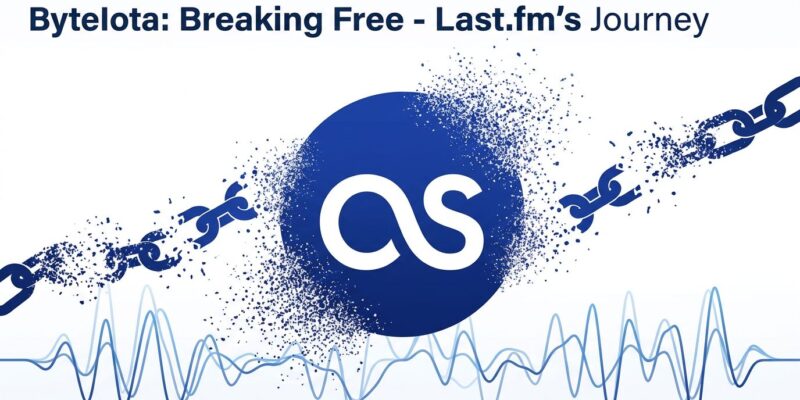
CBS paid £140 million for Last.fm in 2007. Paramount — CBS’s successor — just let it go. On May 27, 2026, Last.fm announced it had become an independent company, ending nearly two decades of corporate ownership by a media conglomerate that never quite knew what to do with a music data platform. Your account is intact. Your scrobble history is intact. The API still works. The team hasn’t changed. What changed is who signs the checks.
What Actually Changed (And What Didn’t)
The official statement is deliberately reassuring: accounts, listening history, Pro subscriptions, and API access all continue exactly as before. The team that builds Last.fm today is the same team that built it under Paramount. There’s no migration, no data export panic, no service disruption to worry about.
What independence does change is strategic. Last.fm says it can now “focus fully on building listening insights and community features for music fans.” That’s corporate-speak for: no more asking Paramount for permission. For a platform that went 12 years without restoring its own radio feature, that’s not a small thing.
How a £140M Acquisition Became a 19-Year Mistake
CBS bought Last.fm at the height of Web 2.0 mania. The platform had real momentum in 2007 — music discovery, social listening, collaborative filtering before Spotify had a recommendation engine. The acquisition made a kind of sense, except for one thing: the founders were gone by 2009. The talent that made Last.fm worth $280M walked out the door two years after the deal closed.
What remained was the infrastructure and the community — but no product vision. Streaming killed the radio model the platform was built around, and in 2014, Last.fm discontinued radio entirely. The 2012 security breach, which exposed 43 million accounts stored with unsalted MD5 password hashes, didn’t help. By the time Paramount inherited the asset, Last.fm was an orphan — valuable to its community, useless to a media company trying to compete with Netflix.
The financial ledger reflects 19 years of drift: £45.5M in net liabilities against £2.2M in annual revenue and a £690k operating loss in 2024. The business isn’t self-sustaining yet. But the revenue is growing, and now the people running it don’t have to justify its existence to a Paramount CFO.
What Developers and the Community Actually Want
The Hacker News discussion hit 545 points on announcement day — one of the top stories. The reaction wasn’t just nostalgia. Developers and power users showed up with a very specific wishlist:
- Radio streaming restored (discontinued in 2014, requested every year since)
- Reliable Apple Music scrobbling (a persistent broken integration)
- Higher API rate limits and new API endpoints
- Group listening features
- Open data access
That list matters because it tells you what Paramount never prioritized. Last.fm’s open API is genuinely useful — developers build personal listening dashboards, Discord music bots, home automation integrations, and self-hosted music stats tools on top of it. The scrobbling ecosystem is large enough that ListenBrainz — an open-source alternative created by ex-Last.fm developers specifically because they didn’t trust Paramount — has its own active community. Independence means Last.fm can finally compete for developer trust again.
The Financial Reality No One Should Ignore
Here’s the honest read: £2.2M in revenue against £45.5M in net liabilities is not a comfortable position for an independent company. The ownership structure after the spinoff is unclear — whether Paramount retained a stake, who is financing operations, and what the runway looks like are all open questions Last.fm hasn’t answered publicly.
Declaring independence doesn’t automatically equal financial viability. The platforms that fell during the same era — MySpace Music, iLike, Imeem, Grooveshark — didn’t fail because they were owned by the wrong company. They failed because the business didn’t work. Last.fm survived where others didn’t, largely because scrobbling doesn’t require streaming licenses. That structural advantage is still there. But the team is small, the liabilities are large, and the community has been promised better things before.
Why It Still Matters for the Open Web
Last.fm is one of the last standing Web 2.0 social music platforms. That makes it something worth preserving — not out of nostalgia, but because open music data infrastructure is genuinely useful and genuinely rare. An independent Last.fm, focused on its community instead of a quarterly report to a media conglomerate, is better for that ecosystem than what came before.
The alternative, ListenBrainz, is a legitimate open-source option and worth using regardless. But the communities are different, and both can coexist. The real question is whether the Last.fm team can ship fast enough to earn back the trust the Paramount years eroded. They have the runway now. Whether they use it well is the part we’ll find out.