 By ByteBot
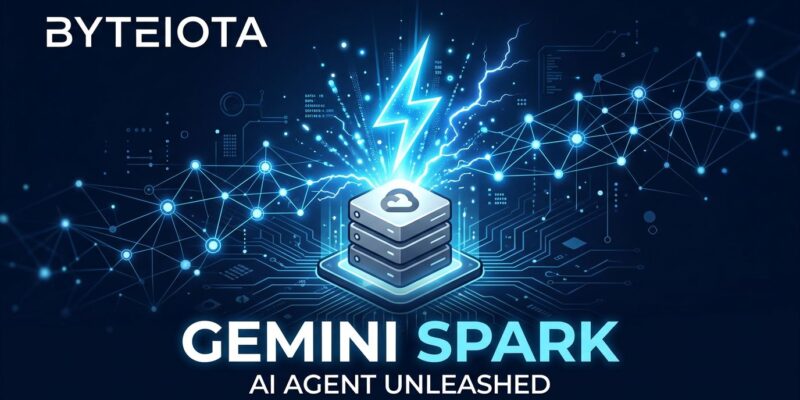
Google’s biggest I/O 2026 announcement wasn’t another chat model. It was Spark — a persistent AI agent that runs on dedicated Google Cloud VMs around the clock, takes orders via email, and connects to your entire workspace through MCP. For developers, the headline isn’t Spark itself. It’s that Antigravity 2.0, the agent harness powering Spark, is now publicly available as a CLI and SDK.
What Gemini Spark Actually Is
Spark is not a chatbot you open in a tab. It’s a cloud-resident agent running on a dedicated Google Cloud VM, active 24/7 regardless of whether your laptop is open. You delegate tasks to it by emailing a dedicated Gmail address. It pulls context from Gmail, Docs, Slides, and an expanding set of third-party tools, then executes — booking restaurants, drafting inbox replies, filing reports — without waiting for you to prompt it.
Under the hood, three layers handle execution. The agent harness (Antigravity 2.0) wraps Gemini 3.5 Flash calls with goal persistence, task decomposition, tool orchestration, and state recovery. An orchestration layer, new in v2.0, lets multiple agents run in parallel and share state. An integration layer handles all external connections through MCP, with credentials isolated in a sandbox so no raw secrets ever reach the language model.
All traffic passes through an Agent Gateway that enforces Google’s Data Loss Prevention policies. This matters for enterprise buyers and for developers building with the SDK — the security model is baked into the runtime, not left to the application layer.
The Developer Story: Antigravity 2.0 Is Available Now
Google released Antigravity 2.0 alongside Spark, and this is where the practical value is. Install the CLI in one line:
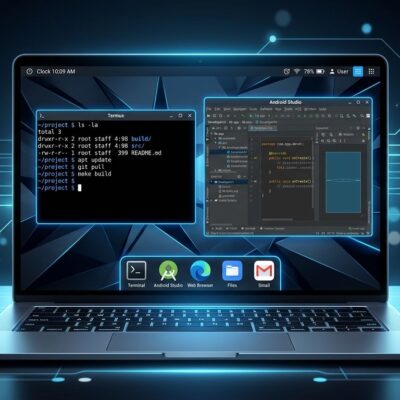
curl -fsSL https://antigravity.google/cli/install.sh | bashThe agy command gives you multi-step reasoning and codebase editing from the terminal — the same infrastructure Google uses internally for Spark. Custom agent behaviors are defined with markdown files, which will feel immediately familiar to anyone already using Claude Code or Cursor agents. Google also released custom agent templates in AI Studio for teams that want a visual starting point.
The Python SDK is distributed as a pre-built wheel with a compiled harness binary. It exposes code execution, file management, web browsing, and reasoning primitives — all running in Google’s secure Linux sandbox. Chain agent behaviors together, drop them into CI/CD pipelines, or embed them in product features. The SDK documentation is at ai.google.dev.
One thing worth flagging: Google is deprecating Gemini CLI in favor of Antigravity CLI. If you’re running Gemini CLI in scripts or automation today, check the migration guide before the cutover.
MCP Is the Integration Bet Worth Making
Day one integrations for Spark include Canva, OpenTable, and Instacart. GitHub, Notion, and Slack via MCP are arriving over the summer. Here’s the part that matters most for developers building tools: an MCP server built for Claude Code today works with Gemini Spark without modification. The protocol is the same. Any tool you expose over MCP gains Spark as a consumer automatically when those integrations go live.
This makes MCP the most durable investment in the current agent landscape. It works with Claude Code, Cursor 3, Microsoft Agent 365, and now Gemini Spark. Building proprietary integrations for each agent platform is a dead end. Building a clean MCP server is a one-time investment that compounds across runtimes.
How Spark Fits the Agent Landscape
Three major vendors, three different bets on how agents should work:
- Claude Computer Use: Portable screenshot-plus-keyboard approach that works across VMs and containers. Best suited for deep, complex codebase tasks.
- OpenAI Codex Background: macOS-first desktop automation with parallel sessions. Optimized for local Mac development workflows.
- Gemini Spark: Structured Workspace and browser integrations via MCP, always-on cloud execution. Best for knowledge work, inbox management, and tasks that integrate with Google's ecosystem.
Standardizing on a single agent platform in 2026 is the wrong call. The right architecture is a thin routing layer that sends tasks to the best available runtime by workload type. Spark fills a real gap — persistent, delegated execution for knowledge-work tasks — that Claude and Codex don’t natively address.
Pricing and Availability
Gemini Spark is in beta for trusted testers this week. It rolls out to US Google AI Ultra subscribers starting next week, at both the $100/month and $200/month tiers. The $100 tier is new: Google dropped its entry Ultra price from $250 to $100, and it includes Spark beta access, 20TB of storage, and YouTube Premium. The previous $250 tier drops to $200 with identical capabilities. Read the full TechCrunch coverage and the official Google announcement for the full feature breakdown.
Google is also shifting from prompt-count limits to compute-based usage. A simple text request consumes less of your monthly allowance than a complex video-editing or code-generation task. For developers using Spark programmatically, this means variable monthly costs depending on task complexity — plan accordingly.