 By
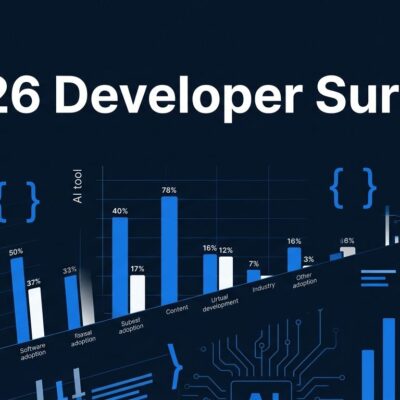
By Anthropic just published its 2026 Agentic Coding Trends Report, and the most uncomfortable finding isn’t about AI capabilities — it’s about developers. Developers now use AI in roughly 60% of their work. But they fully delegate only 0 to 20% of tasks. That gap has a name: the delegation gap. And it’s the central problem nobody in the AI tooling industry is incentivized to tell you about, because every vendor profits from usage, not delegation quality.
The Numbers That Should Surprise You
Before getting to the gap itself, the report’s usage data shows how fundamentally the nature of coding work has shifted — not just the speed. In Q1 2025, 34% of Claude Code sessions involved multi-file edits. By Q1 2026, that’s 78%. Average session length went from 4 minutes to 23 minutes. Tool calls per session now average 47. These aren’t incremental gains; this is a different category of tool use entirely.
The most underreported number: 27% of AI-assisted work is work that developers wouldn’t have attempted at all without AI. This isn’t acceleration — it’s expansion. Teams are taking on projects they previously dismissed as too complex or time-consuming. TELUS saved over 500,000 hours and shipped engineering code 30% faster after deploying agentic workflows. One enterprise in the report completed a 4-to-8 month project in two weeks. These aren’t edge cases anymore; they’re the outcomes organizations are now planning around.
Why the Delegation Gap Exists
The gap between “using AI” and “delegating to AI” comes down to three things most developers never think to provide explicitly. First, persistent context: prompts disappear after a session, and the next agent starts from zero, rebuilding understanding of codebase conventions from scratch. Second, testable outcomes: without a clear definition of done, an agent has no target, and you end up supervising rather than delegating. Third, explicit constraints: every feature you build has invisible rules — don’t break the public API, don’t introduce a new dependency, keep response time under 200ms. Developers carry these in their heads. Agents need them written down.
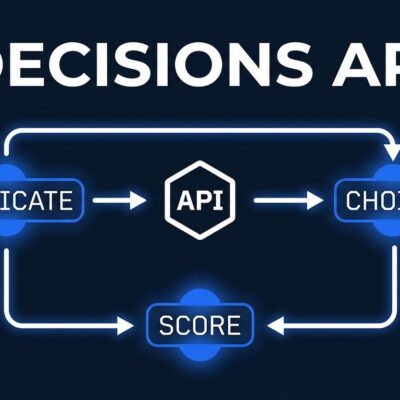
The practical fix the report points toward is what some practitioners are calling intent engineering — writing a spec that captures objective, success criteria, constraints, edge cases, and verification steps before handing a task to an agent. This isn’t documentation overhead. It’s a delegation protocol. As Pathmode frames it: as code generation gets easier, precision in description becomes more consequential. The bottleneck has moved from writing code to specifying what the code must do — and what it must not break.
Your Role Is Already Changing
The report is direct about the career implications. Engineering value is shifting toward system architecture design, agent coordination, quality evaluation, and strategic problem decomposition — and away from routine implementation. This isn’t a gradual drift; the data shows it’s already underway. As HiveTrail notes, developers who’ve internalized this are treating agent oversight and intent specification as core skills, not overhead. Those who haven’t are discovering that “using AI tools” and “working effectively with AI agents” are two very different things.
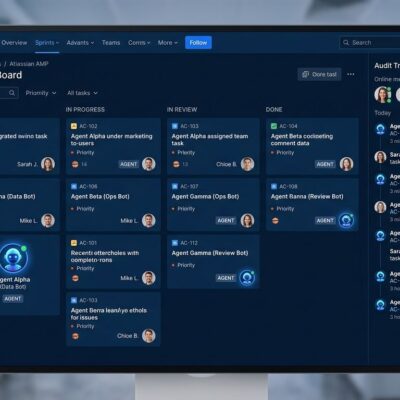
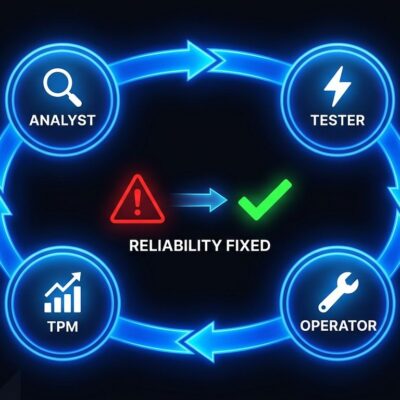
The eight trends the report identifies span foundation trends (how development work is structured), capability trends (what agents can now do), and impact trends (what organizations are actually seeing). The most consequential near-term shift is the move from single-agent workflows to coordinated multi-agent systems — one orchestrator decomposes a problem, specialized agents handle the parts, results get synthesized. This is already the architecture of choice at companies shipping production agentic systems, and it’s why the role of the orchestrating engineer matters more than the role of the implementing one. Allstacks has a strong breakdown of what this means for engineering leadership specifically.
The Take
Using AI in 60% of your work while delegating 0 to 20% of tasks isn’t a productivity win — it’s a ceiling. The AI tooling vendors celebrate usage because usage is how they bill. The developers who close the delegation gap first aren’t going to get there by using more tools. They’re going to get there by getting better at specifying intent, defining constraints, and designing workflows where agents can operate reliably between human checkpoints. That’s the skill the report is pointing at. Read it — the PDF is public — and notice what it says about your current workflow.