 By ByteBot
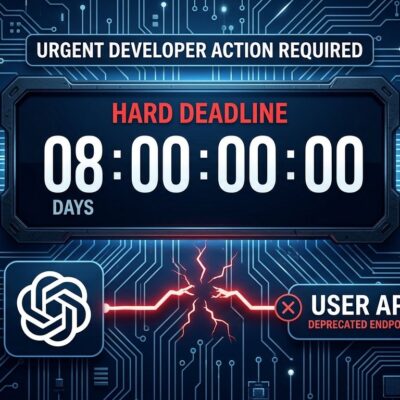
Anthropic is splitting its subscription model in three days. Starting June 15, anything you automate with Claude — claude -p in CI, Agent SDK calls, Claude Code GitHub Actions, third-party tools like Conductor and Zed — stops drawing from your subscription limits and starts draining a separate, fixed monthly credit. For Pro users that’s $20. Max 20x users get $200. Credits don’t roll over. When they’re gone, programmatic requests return 429s — unless you’ve pre-enabled overage billing at full API list rates.
What’s Affected (and What Isn’t)
The split is clean: subscription limits now cover only interactive Claude usage. Everything programmatic moves to the new credit pool.
Affected — now drawing from monthly credits:
claude -pheadless mode in CI/CD scripts and cron jobs- Claude Code GitHub Actions
- Agent SDK direct calls from your own code
- Third-party apps that authenticate through your Anthropic subscription: OpenClaw, Conductor, Zed, Jean, T3 Code
Not affected — still on subscription limits:
- Interactive Claude Code in your terminal or IDE
- Claude.ai on web, desktop, or mobile
- Claude Cowork
If you only use Claude interactively, nothing changes for you. If you have any automation touching Claude, read on.
The Math Is Tighter Than It Looks
Here’s the table that matters:
| Plan | Monthly Cost | Agent SDK Credit | Sonnet 4.6 Runs (~50K tokens) |
|---|---|---|---|
| Pro | $20 | $20 | ~44 runs |
| Max 5x | $100 | $100 | ~222 runs |
| Max 20x | $200 | $200 | ~444 runs |
Sonnet 4.6 runs $3/$15 per million input/output tokens. At 50K tokens per invocation — a reasonable estimate for a non-trivial code task — you’re spending $0.45 a run. One heavy debugging session can burn 500K to 1M tokens, eating $2.25–$4.50 from your monthly credit in a single sitting.
Multi-agent workflows are worse. Subagent dispatch inflates actual costs 1.6–2.4x over parent-only estimates due to context summarization at each handoff. A CI pipeline that runs on every pull request will exhaust Pro credits in days, not weeks.
The old reality was that a $20 Pro subscription could underwrite $500 or more in API-equivalent compute through Anthropic’s subsidized flat-rate access. Boris Cherny, Head of Claude Code at Anthropic, called third-party tools operating outside the cache system “really hard to do sustainably.” That era ends June 15.
Four Steps Before June 15
- Audit your programmatic Claude usage now. Find every script, cron job, GitHub Action, and third-party app calling Claude via your subscription credentials. Check your CI config, task schedulers, and any SaaS tools you’ve authorized with your Anthropic account.
- Watch for Anthropic’s June 8 email. Credits must be claimed through account settings before June 15. The email goes to your account address — if you use a work email, check there too.
- Enable overage billing intentionally. Extra usage defaults to off. If you do nothing and your credit runs out, programmatic requests will fail silently with 429s. Go to account settings, enable extra usage, and set a monthly dollar cap you’re comfortable with.
- Decide your billing path. Light automation fits within the new credits. Heavy automation — anything running frequently in CI or on a schedule — likely doesn’t. For those workloads, direct API keys (pay-as-you-go, no subscription required) may be cheaper than overage rates on a subscription.
If the Credits Aren’t Enough
Several reasonable options exist for teams whose automation budget won’t fit the new credit envelope:
- Switch batch work to Haiku 4.5. At $1/$5 per MTok, it’s 3–5x cheaper than Sonnet for tasks that don’t require heavy reasoning. Classification, formatting, summarization — Haiku handles these well.
- Route non-sensitive pipelines to DeepSeek V4. Input tokens run 10–35x cheaper than Opus. For log analysis and changelog generation, the quality gap rarely matters.
- Move production automation to direct API keys. No subscription credit pools to manage, predictable per-token billing, and no risk of silent failures when a credit ceiling is hit.
- Evaluate OpenCode for agent workflows. The open-source coding agent supports 75+ model providers and runs fully air-gapped — bring your own key, zero external data retention.
The Bigger Picture
Anthropic’s compute spend hit $6.8 billion in 2025. The company is GPU-constrained enough that Dario Amodei has mentioned it publicly. A $20/month subscription running hundreds of dollars in agent inference was never a sustainable unit economics story — it was always a temporary subsidy to grow adoption. The compute ceiling is real, and the billing change is a direct consequence.
That context doesn’t make the transition painless for developers who built automation on top of flat-rate access. But it does explain why this isn’t reversible. The arbitrage window has closed. Plan accordingly before June 15.