 By
By A new JavaScript runtime called Ant landed on Hacker News on July 12 with 252 upvotes and 107 comments inside twelve hours. Built in C from scratch by a solo developer, it fits in 8MB, cold-starts in 5ms, and ships with a built-in security sandbox. No other runtime on the market combines all three.
The Cold Start Numbers That Matter
Using Hono as a representative workload, Ant starts in roughly 5ms. For context: Node takes 31ms, Deno 25ms, and Bun — widely considered the fast alternative — 13ms. That is a 6x improvement over Node.js in the metric that hits your serverless bill directly.
Cold start time on AWS Lambda, Cloudflare Workers, or Fly.io maps to real latency and real money. A function that boots six times faster is not an academic win.
| Runtime | Cold Start | Binary Size | Engine |
|---|---|---|---|
| Ant | ~5ms | 8MB | Ant Silver (custom C) |
| Bun | ~13ms | 60MB+ | JavaScriptCore |
| Deno | ~25ms | 100MB+ | V8 |
| Node.js | ~31ms | 40MB+ | V8 |
One Developer Built Their Own Engine
Every major JavaScript runtime runs on an engine built by a large company: Node and Deno use V8 (Google), Bun uses JavaScriptCore (Apple). Ant Silver — the engine inside Ant — is hand-written in C by one person, known on GitHub as theMackabu.
The architecture includes NaN-boxed values for compact memory representation, a custom bytecode compiler, a JIT backend powered by a fork of MIR (a lightweight intermediate representation), and a generational mark-and-compact garbage collector. The creator documented building the entire thing in roughly a month.
The 100% pass rate on the compat-table suite — 1,511/1,511 tests across ES1 through ESNext — is genuinely impressive. The honest caveat: test262, the official ECMAScript test suite used by browser engine teams, sits at around 64%. V8 is near 100%. That gap matters for edge cases, and it will surface in complex codebases.
A Sandbox That npm Has Needed for Years
Ant ships with a VM-isolated Sandbox API. By default, sandboxed code has no network access and read-only filesystem access. Network calls and file writes require explicit grants.
const sandbox = new Sandbox({
  network: false,
  filesystem: 'readonly',
  grants: {
    write: ['/tmp/output'],
    ports: [3000]
  }
});

await sandbox.run(untrustedScript);
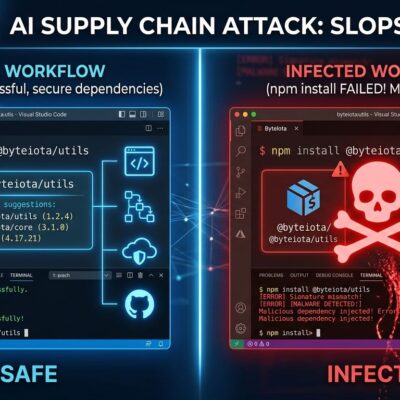
This is the feature the HN thread lit up around. npm has no equivalent by default — a malicious or compromised package runs with the same permissions as your process. Ant’s model lets you run user-submitted scripts, build plugin systems, or execute tenant code without spinning up a separate container. The supply chain attack vector that has plagued Node projects for years is addressed at the runtime level.
What Works Today, What Does Not
Hono, Elysia, React, and TypeScript all work out of the box. Package install runs in around 155ms. Ant is WinterTC (Ecma TC55) conformant, the same interoperability standard that Deno and Cloudflare Workers follow, which gives real-world npm packages a reasonable chance of running correctly.
Native .node bindings will not work. Complex dependency trees with native modules — database drivers, image processing, cryptography libraries — are likely to hit compatibility walls. There are no production examples published yet, and the project is explicitly pre-1.0 with breaking changes expected.
The scope is also ambitious for a solo project: a runtime, a custom engine, a package manager, a registry (ants.land), a desktop framework, and a deployment platform. Each of those is a multi-year engineering project at a well-funded company. Spreading effort that thin risks slowing everything down.
Where Ant Fits Right Now
The use cases where Ant makes sense today are specific: edge functions, serverless handlers, CLI tools written in JavaScript, embedded scripting engines for plugin systems, and distributable desktop apps where you do not want to bundle 100MB of V8.
For production web servers, anything with native npm dependencies, or any codebase where you need stability guarantees — stay on Node or Bun. The cold start advantage does not offset a 64% test262 score when you are shipping to customers.
Ant is the most technically audacious solo runtime project since Bun’s early days. The HN discussion is worth reading for the technical depth. The official Ant site has installation instructions if you want to run it locally. Watch the project. Do not bet your infrastructure on it yet.