OpenTelemetry hit production readiness in 2026. After years of development, 48.5% of organizations already use it in production, with 81% believing it’s ready for prime time. The project now offers stable APIs across 12+ languages, auto-instrumentation that requires zero code changes, and thousands of organizations—including Shopify, Uber, and Microsoft—running it at scale. The eBPF instrumentation project is targeting its stable 1.0 release this year, marking 2026 as a milestone for vendor-neutral observability.
The Hybrid Approach: Start Broad, Go Deep
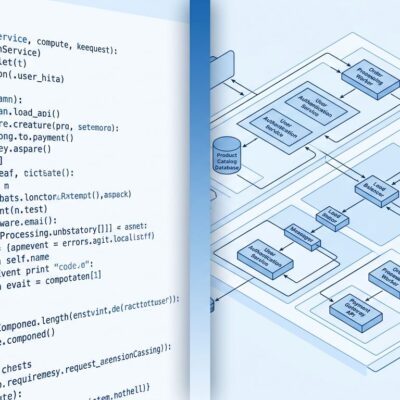
Production teams don’t choose between auto-instrumentation and manual instrumentation—they use both. The winning pattern is simple: start with zero-code auto-instrumentation for immediate visibility, then add manual instrumentation where business logic demands it.
Auto-instrumentation delivers value in under 5 minutes. Install an agent, set a few environment variables, and you get automatic span creation for HTTP requests, database calls, and external API interactions. No code changes required. It’s the fastest path from zero to observability.
Here’s what auto-instrumentation looks like in Python:
# Install and auto-instrument in under 5 minutes
pip install opentelemetry-distro opentelemetry-exporter-otlp
opentelemetry-bootstrap -a install
opentelemetry-instrument python app.py
Manual instrumentation fills the gaps. Auto-instrumentation captures framework-level interactions, but it knows nothing about your business logic. When you need to track payment processing latency, user signup flows, or custom business metrics, you write explicit instrumentation code. This gives fine-grained control over what gets tracked and what business context gets captured.
The key insight: you don’t choose one or the other. Start broad with auto-instrumentation across your entire stack. Then go deep with manual instrumentation for the 20% of code that drives 80% of business value. It’s the most practical advice for real teams.
Vendor-Neutral Means Freedom from Lock-In
OpenTelemetry’s killer feature isn’t the instrumentation—it’s what happens after. Instrument once, send telemetry anywhere. Prometheus, Jaeger, Grafana, commercial vendors, self-hosted solutions—OpenTelemetry works with all of them. This matters because vendor lock-in is real and expensive.
Datadog supports OpenTelemetry data input, but under the hood it converts everything to its proprietary format. Its agents and client libraries are custom. Migrating off Datadog requires re-instrumenting your applications. That’s lock-in by design.
New Relic took a different path. They made OpenTelemetry part of their core strategy with native support and full specification compliance. No format conversion, no proprietary agents. It’s a genuine commitment to open standards.
The self-hosted option flips the economics entirely. The LGTM stack (Loki, Grafana, Tempo, Mimir) combined with OpenTelemetry instrumentation eliminates recurring SaaS fees. You own the data, you control the costs, and you’re not locked into anyone’s ecosystem. When business requirements shift or better tools emerge, switching backends doesn’t require re-instrumenting your codebase.
Real Cost Savings: 50%+ vs Proprietary Tools
Organizations save real money with OpenTelemetry. Not “potential savings” or “estimated ROI”—actual reductions in observability costs. The data is clear: 57% of organizations reduced costs after adopting OpenTelemetry, 46.4% report over 20% ROI, and 84% saw at least 10% cost decreases. Forrester estimates savings up to 50% compared to proprietary tools.
STCLab’s case study proves the numbers aren’t hypothetical. They achieved a 72% cost reduction compared to their previous vendor while eliminating sampling constraints. They went from 5% sampled production traces to 100% APM coverage across all environments. Managing millions of concurrent connections during global events, they migrated to the LGTM stack with OpenTelemetry and cut costs by nearly three-quarters.
The math works because vendor pricing models punish scale. Per-host pricing, per-metric pricing, and ingestion-based pricing all explode as you grow. OpenTelemetry flips this: the instrumentation is free, and you choose where the data goes. Self-hosted backends have infrastructure costs, but no per-event fees. The more telemetry you generate, the more you save compared to commercial tools.
Production Best Practices That Actually Matter
Production deployments fail when teams skip fundamentals. TLS isn’t optional—it’s mandatory. Every hop from application to collector to backend must use TLS. Observability data contains sensitive information about your system’s behavior, and unencrypted telemetry is a security failure.
Sampling strategies prevent data explosions. The hybrid approach that works: probabilistic sampling for normal traffic, 100% sampling for error traces, and tail sampling for intelligent retention based on latency or business rules. Don’t sample everything at 100%—that’s how you generate more data than your backend can handle.
The pre-production checklist matters more than you think. Set sampling rates appropriate for your traffic volume. Configure authentication for your collector endpoints. Define resource attributes—service name, version, environment—so you can filter telemetry by deployment context. Exclude health check endpoints from tracing; they generate noise, not signal. Enable graceful shutdown handling so spans don’t get lost during deployments. Test trace export in staging before production. These aren’t nice-to-haves—they’re the difference between an observable system and an observability nightmare.
2026: eBPF 1.0 and the Maturity Milestone
The eBPF instrumentation project’s stable 1.0 release makes 2026 a milestone year. eBPF brings zero-code instrumentation with minimal overhead by operating at the kernel level. No agents to install, no application code changes, and lower performance impact than traditional instrumentation. Production-readiness validation is complete, comprehensive documentation is shipping, and configuration is standardizing across implementations.
Declarative configuration—currently experimental—will unify SDK setup across languages. Enhanced auto-instrumentation is delivering seamless observability across platforms. Smarter sampling algorithms are improving trace retention intelligence. The project is maturing from “emerging technology” to “production standard.”
Key Takeaways
OpenTelemetry is production-ready in 2026, with 48.5% of organizations already using it and thousands running it at scale. The hybrid approach—auto-instrumentation for quick wins, manual instrumentation for business context—is the practical pattern that works. Organizations save 50%+ on observability costs compared to proprietary tools, with proven case studies showing 72% cost reductions and 100% APM coverage. Vendor neutrality prevents lock-in: instrument once, send anywhere, and switch backends without re-instrumenting. The eBPF 1.0 release marks a major milestone, bringing zero-code instrumentation with minimal overhead to production environments.